Twohundred and sixty-first asic- Let’s Make a Rock Carving!

Many years ago I went on an excursion in the village Nyberget, Stora Skedvi, where my mum grew up. We climbed a mountain just outside the village and the view was magnificent. The striking view was however not the purpose of this excursion, but instead we had all come to see for ourselves how young people from way back when had found a lot more important things to do on Midsummer’s Eve than to sing ”Små grodorna” and dance round the May Pole…
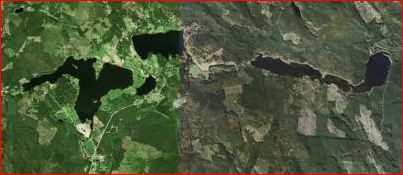
Lövåsberget med omnejd_Stora Skedvi

The lecturer, Stig Welinder, a well-known archeologist who at that time lived in the village, shared both details about many of the couples and facts found in the many church archives from the actual time. In Sweden it is possible to track our ancestors several hundred years back in time and this was also what the archeologist had done, in detail. He could tell stories of families with happy or sad moments in their lives, all facts verified and found in public archives where anyone could have found pretty much the same information if only we had spent that time. Many of the young couples in the local area had climbed this very mountain on Midsummer’s Eve to enjoy the sunset together.  To remember the day, they carved their names in the rocks on top of the mountain and also planned for a future life together. The place was well-known in the nearby villages as ”Skrivarhällen”(Welinder, 1992) and not just the teenagers from one of the villages climbed the mountain, but also those who lived on the other side of the mountain, a bit further away.

The rock carvings can still be found, if you first climb the mountain! 😀

Among other things that Welinder shared with us in his lecture, was the nature of names in Dalarna at the time when the rock carvings were made.  But there were just a few different names that seemed to be popular, and a few names were just the same, so in order to know who was who, you needed to add the name of the farm, or place, such as Petter Danielson, On the Hill. His son would be named after his father, Daniel Pettersson + On the Hill, and his son in turn, would most likely be called Petter Danielsson+ On the Hill… For women, the use of daughter would be used instead of son.

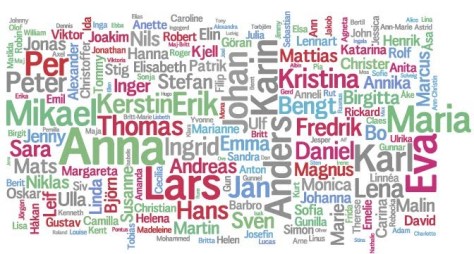
I would, for instance, have had the family name Dalkesdotter, since I am the daughter of Dalke. My brother would acoordingly have been called Dalkesson. During the 23 years I have been teaching I have noticed the change in naming. When I graduated in 1991, many of my first students had names that have been used in our country for generations. Boys names like Daniel, Peter, Mikael, Anders and girls names like Anna, Maria, Kristina, Helena, Ylva etc. But after a few years of teaching I noticed that many of the boys now rather had names like, Kevin, Justin, Jim, Tim, Tom and girls had names like Natalie, Felicia, Caroline, Nellie etc. Nowadays we find a lot of different names, a variation that can be connected to our complex world with input from not just the local area, but from other parts of the world.
namnbild.jpg (672×361)

My own name, Åsa, is from the time before Sweden was Christened and means ”goddess”. Very few little Åsa’s are to be found nowadays, but instead some of the names that I would connect to old relatives are coming up as new favourite names for kids. It’s funny how one sometimes hear parents call for their little ones and you expect a person in their seventies to approach behind a tree in the park, but instead a little toddler, called Bosse or Leif, will meet his Mom with a lovely smile!

toddlerRoundup-14.jpg (600×503)

My friend the archeologist from the mountain top is a very good example of being modern at the same time as he cherishes the value of how our ancestors chose to live their lives. What footprints or fingerprints will our generation leave? No mountains will be filled with names, but maybe we will share something else that is just as interesting and important? Let’s hope so!

Welinder, S (1992) on Skrivarhällen i southern Dalarna, Bergslagen, Sweden

Twohundred and fifty-seventh asic- A Swedish ”hen” is born!

The Swedish Royal Family is always in focus in one way or the other. This time for the reason of a little newborn, that we so far do not know much about. According to the press release a child is born… Not a girl or boy, but a child.

Swedish is a german language and generally we would use the pronouns he, she or it, to refer to anyone or anything, but a few years ago, a new pronoun was introduced, HEN, pronounced exactly as one would pronounce the feathered mother of a chicken…

HEN

For a few more minutes now, we still don’t know whether the new little ”hen” is a he or a she. What we DO know is how much attention Princess Sofia and Prince Carl Philip received by keeping the sex of the child a secret like this.

Twohundred and fortieth asic- Had The Beatles been the same without George Martin?

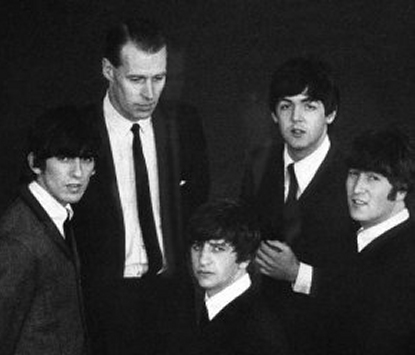
george martin_and_beatles_OLÅ

Generally speaking one might assume that producers make an impact far beyond their actual work on a daily basis… I think of famous producers like for instance Stikkan Andersson for ABBA or George Martin for the Beatles. When I heard the other day that George Martin had passed away, I simply thought that such a musician must have been a very important person for the Beatles although we all know that both John Lennon and Paul McCartney specifically are known for being just the same… I can’t help thinking that there might have been other things but musical arrangements that could have lead the Beatles in one direction or the other.

So many of the Beatles’ tunes are very different from all other current music. They were one of a kind and I’m sure you all agree… My listening starting the day when they reported on TV about the murder of John Lennon in NYC in 1980. I hadn’t even heard about the Beatles before that date. A few years earlier I had the same experience with Elvis Presley… I asked: ”who is he?” just like I did with John Lennon…

I started of a constant listening and a year or so later I had a pretty good idea of the music of the Beatles. I had also had a chance to sing-along in school, just like I guess many other youth at that time. My music teacher at school was a devoted Beatles fan who let us all sing the Beatles almost every music lesson… We also watched the movie ”Help!” and I found out more about Indian religion and all of a sudden I knew who Kali was… The very same way I learnt what the French national anthem sounded like…since that’s possible to hear in the end of All you need is love…

All you need is love

I think music is like that always… I learn completely different things but just the music when I listen to music. I also notice that we are all different… I remember when comparing with some of my friends who focused on the tune, the music, I would more likely focus on the lyrics… Having said that I can make a long list of really good Beatles lyrics that all make a difference for everyone who take the time to listen carefully. My music teacher not only shared his favorite tunes by Beatles, but also his knowledge packed in a youth-friendly way… one detail at the time… We listened to ”Julia” while learning that John Lennon’s mother was the motive for this song.

Yellow submarine

Yellow submarine

We listened to Yellow submarine and learnt the word submarine meant ”u-båt” in Swedish… Learning languages through music is such a smart thing to do, really… Every language learner knows that it may be very tricky to know what idioms to translate and use, and what idioms not to use because they don’t make sense in the other language, however sleeping like a log DID… In Swedish a line like ”Sleeping like a log” is ”sova som en stock”. By singing Beatles songs I had found a new and much more fun way of learning, than by reading boring school books… 🙂

Hey_Jude

Hey Jude… starts off in a very kind and cautious way, but musical instruments are added one on top of the other and finally a whole orchestra plays along with Paul McCartney… The chords and the lyrics, the choir and the way Paul uses his imagination to make variations of the tune, makes this song one of my absolut favorites. At the very end they sing their catchy ”da da da da, Hey Jude!” and you just have to join them…

But interestingly enough as time pass I digged deeper into the music of the Beatles. From just listening just to the most common tunes, such as ”She loves you”, ”Help” and a ”I want to hold your hand” I started to listen to other tunes, not that common. I also decided not just to listen to their ”Greatest hits” however at that time, music was more difficult to access than now. No spotify and no iTunes would be possible for us to use… Instead we had to buy the music on EP:s or LP:s and so I bought ”Abbey Road” since I had completely fallen in love with ”Here Comes the Sun”… It’s such a beautiful tune! I bought the LP for that very tune, just as we had to, back then, but being economically wise…I of course listened to all the other songs on that LP and found new favorites among the other tunes as well.

One of the surprising tunes is the 26 seconds long ”Her Majesty”, that is very interesting since it has a point, at least in my opinion… really, what DO we know about the Queen of England…?

Her Majesty

I think there are tunes we need to listen to over and over again, and yet others that we can follow easily right away. With most of the Beatles’ music, they are of the second kind. You don’t just learn the lyrics, but also the catchy melodies and their treasure of songs thus belongs to all of us. Arrangements are more important than one may think…  To conclude this blogpost I’d like to add my assumption that George Martin was one of the most important reasons why the Beatleas actually produced so much music of high quality. I think these young boys needed a person that weren’t just ”one of them” to tell them what to do and how… Am I wrong? Maybe, then so be it… but please allow me to send a thought to the memory of George Martin and thank him for what he did for my many joyful moments when consuming music by the Beatles.

One of the most lovely songs in my opinion, was , as I am told, a kind of answer to the huge impact of ”Bridge Over Troubled Water” by Paul Simon… The Beatles wanted to prove that they were still the best:

Let it Be

At Skavlan the other day, the famous pianist Lang Lang was asked to perform something by Beatles to honor George Martin. He played Blackbird. I enjoyed his version very much and thought about what impact the Beatles still have.

Twohundred and Sixteenth Asic- Snowzilla, Milk and Cookies!

The major storm Snowzilla has now started its journey through the twenty states on the east coast of the USA… It was in a way very interesting to watch TV from a completely empty Washington DC where the Swedish TV reporter seemed all alone in the streets, sharing his report with us… We have snow every winter, but according to the TV reporter from Swedish TV4, some of the states suffering from Snowzilla, hardly get any snow an ordinary winter and may have difficulties getting rid of it, once the storm has passed.

I have a few friends in the USA. They have one thing in common… They all share stories about what one would do if a storm of any kind is predicted… Obviously everyone go to the store, get loads of food in general, but milk and cookies in particular, in order not to ”starve”during the storm… I’m sure we go to the store, too, but I also notice that this desperate ”I HAVE to go to the store” doesn’t seem to be as common here as over there… Maybe we have a more ”longterm” idea for our grocery shopping than Americans do? Milk and cookies??? Meat and potatoes would be more of the Swedish way in that case… 😉

From my heart, I hope you all wake up to a wonderful white world where very little is damaged or ruined by the storm and the only remaining issue is the layer of beautiful snow everywhere…  I also hope you have your cameras ready to take photos, to share with the rest of us and with your grandchildren one day! Winter is an amazing season. Quiet, white and cold! Well… I understand the very storm isn’t quiet!!! Snowzilla is probably very loud! Light a candle and listen to her! It might be the storm of your life! Enjoy!!!

b088e-stearinljus-bmp


For those of you who would like to know the sound of Swedish… and also follow the coverage in our biggest national Newspaper regarding the storm ”Jonas” I have now added a newspaper clip with a movie.  It’s Sunday evening; and a Swedish reporter doing his job interviewing people in NYC. According to the reporter, the film is from Saturday morning:

Peter Kadhammar interview’s NYC citizens

Twohundred and Fifteenth Asic- A Day to Remember

I sit in my classroom, monitoring my students writing an essay. Since my students write in a language that is not their first language, I thought it fair to do the same… I write in MY second language, English, when they write in Swedish… Here’s my text on the topic ”A Day to Remember”, but I guess in my example it will spread over more than just one single day:

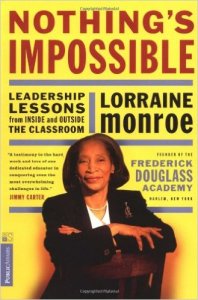
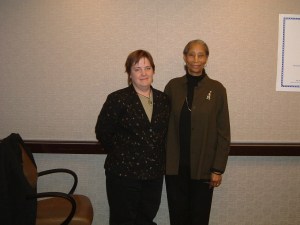
It had been a tough start filled with unexpected events and flight delays, but one memorable Monday morning in October 2003, I met up with the others in a group of Swedish teachers who had the great opportunity to meet the legendary principal Dr Lorraine Monroe for a four-day-long conference about School Development, Instruction and Teaching in NYC. During the flight I gave Dr Monroe a thought. What would she be like? According to her book, Nothing’s Impossible, she had first worked as a teacher, then she had become a principal, changed the way of teaching and instructing in her actual school and that had, in the long run, led to overwhelmingly good results in schools in Harlem, New York City. Dr Monroe’s ideas about school development were very focused on learning and in a way very strict and not at all negotiable ( Please read Dr Monroe’s book for more information!).

Nothing's impossible

We have a very democratic way of teaching in Sweden. We ask our students for their opinion in many different situations an ordinary day in school and lessons often has an element of discussion or mutual understanding. It is not meant to be a one-way-communicated ”lecture”. Learning is a joint effort…  At the time when I was in NYC I was taking a University course and thought it might be suitable to interview Dr Monroe for my project. She accepted and that was probably ”THE” most interesting talk I have ever had with anyone about ”teaching and instructing”… But let’s go back to the first meeting… The skyscrapers on Manhattan were taller than I had expected and being in NYC was fantastic! Meeting Dr Monroe in person was way beyond every anticipation I had before. She was, apart from being intelligent, also a born entertainer, wittily telling jokes. The conference was of high quality and we met brilliant teachers, devoted principals and engaged counselors from different schools in Harlem NYC. In comparison with the interesting lecturers, Dr Monroe was still outstanding. 

We made a few visits to schools in Harlem. I thought I’d check one of the things that Dr Monroe had said the day before. She had claimed that in her schools I could ask any student I liked if they could answer the question ”What did you learn during the lesson you just left?” Every student I asked, could share with me what they had learnt and since we had monitored the lessons the students were referring to, we could tell that they actually learned. The other teachers in my conference group had the same experience and we said this would be the first thing to ask our students back home! I think many students in the classes I taught back then would answer ”I don’t know… What do you mean? What did I learn??? I don’t understand your question!” At that point in my career, in 2003, I didn’t understand how important a META level is in learning… Now I try to help students gather information, draw conclusions, spend time thinking and reflecting and thus allow them to understand and comprehend. After that day in October 2003 I try to keep my lessons very strict in content. I also try to wrap it up at the end of a lesson, in order to help students to organize their thoughts. The students in my classroom now will more likely have a correct answer to the question about their learning…

My interview with Dr Monroe back in 2003 again, started off with my question ”In what way do you negotiate with your students?” She seemed to be hooked on my QUESTION, as if it was wrong… and repeatedly said ” I don’t negotiate with my students!” I thought, being Swedish and speaking my second language, that I had said something that was difficult to understand… Therefore we had a long interesting chat about what the WORD negotiate meant… Obviously we both agreed on the meaning of the word, so I again asked my question, but surprisingly enough still got the same reply! Later on, after half an hour of discussion I understood… I had taken for granted that  of course Dr Monroe did negotiate with her students, but HOW?  But, the point was taken. She actually did not negotiate with her students…simply because (and she explained that) some things aren’t negotiable… 

Ever since that day I have always thought about how different RESULTS we may get in schools were ”everything” is negotiable, compared to schools were very little is… Anyone can understand that students who never ever question their teachers have a different school situation than those who constantly say to their teacher: ”Why are we supposed to to this?”, especially if the teacher is used to give such a question an answer… Dr Monroe said many times during that week in NYC: Focus on learning! The interview with Dr Monroe was an eye-opener for me as a teacher. I didn’t change everything when I returned to Sweden, but I did change a lot. I didn’t even change it into ”The Monroe Doctrine” but I did borrow a few of her ideas and I am forever grateful to her for being there in that interview and very patiently letting me understand her thoughts about negotiation (or not!) and about teaching and instruction in general. In my teaching career meeting her was absolutely A Day to Remember


Twohundred and Third Asic- Warm or Cold is a Matter of Where…

crystals

January is one of the nicest months in my opinion. The only truly competing month is February… I enjoy the crisp air and relative chill outdoors, as long as I am properly dressed. As a child I had great fun playing in the snow or going skiing or skating, but nowadays I think a walk is enough to get that wonderful feeling of winter that I enjoy so much.

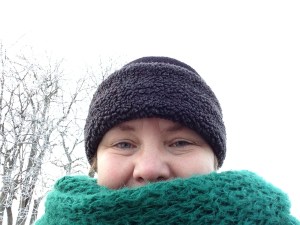
Bloggaren i kölden

The other day I went for a walk to a nearby lake, where I stopped to take some photos. Two of the photos were taken from the very same spot, although in different directions. Those photos prove that it’s a matter of angle…;)

Blått och vitt är vinterns färgpalett

Blue and white when the sun is behind me!

I motljus ser himlen ut att brinna!

…but when facing the sun, she sky seems to be on fire!

I rememeber when I was a child that we always played outdoors, both during breaks at school, but also in the afternoons when we were at home. One of the repeated instructions from every adult around us kids was; Don’t ever lick on metal! You can tell why, huh?

IMG_1696

The rewarding moment comes as you go back indoors. That’s when you either have a cup of cocoa or tea… The Swedish winter is as coldest in January and we also tend to have a lot of snow this time of the year, however this time I don’t think it’s very cold, only about -8C and only a few centimeters of snow on the ground, too… Perhaps I ought to be quiet… Who knows, I might be cursed with three weeks of Siberian chill!


One Hundred and Ninetysecond Asic- Voices from Chernobyl: The Oral History of a Nuclear Disaster by Svetlana Alexievich- A Book Review

When Svetlana Alexievich gathered the material for her book Voices from Chernobyl  she made interviews with people who shared their experiences from the time of the explosion in the nuclear power plant. Sweden was the first country where high levels of radioactivity were first noted after the event in Chernobyl. Soon enough it was clear that the radioactivity was caused by another nuclear power plant than the Swedish.

I was nineteen 1986 and learned from authorities in our country that I ought to leave the berries from the forest and not fish and hunt if I lived on the east coast of Sweden. For all my life I had picked berries and made jam and enjoyed a lot of time in the forest. Now that was supposed to be dangerous and nobody knew whether activities outdoors would be dangerous, too. I remember being angry with the authorities in the Soviet Union for building a Nuclear Power Plant that was not safe enough. Svetlana Alexievich´s book remind us that the people who died to save the rest of us are our heroes. But did they have to die?

When we read Alexievich´s book we understand that authorities sometimes lied about the danger in order to get things done. They also used the military system as an excuse. When a young soldier refused to go to Chernobyl after knowing that he was supposed to clean the place from radioactive pollution, he was forced to go, or else he would be imprisoned or executed. The book is quite open with this and I now understand why the author has not always been welcomed by authorities in her country. I am however happy that she chose to write this book. When truth is revealed, it’s always easier to deal with the messanger, but this time the messanger got her story to be printed and spread, which is good for all of us.

According to the eye witnesses in Alexievich´s book and according to interviews made in different movies, such as the one I link to below, authorities did not inform the local inhabitants of the acute danger in the nearby area round the power plant and for the first 36 hours they did not even evacuate. The people in Pripyat, the closest town, could see the fire from a distance and they noticed that the smoke was blue and shiny. Locals were soon falling ill and had symptoms like headache, vomiting etc. At first the authorities let people go on with their lives as if this accident in the Nuclear Power Plant was not such a big problem. But as they realized the danger, they arranged for an evacuation, 36 hours after the explosion. They told people to pack for three days, but most of them have never had a chance to return to their homes in Chernobyl. Still many of the things are left behind, since they are contamined with radioactivity and lots and lots of things were actually buried in the ground.

Svetlana Alexievich´s book is quite dysthopic in a way. She writes in her foreword that she thinks that although the book deals with a part of our history, she claims it deals with our future. She starts off with a shared experience with a content I almost wish I hadn’t read. The first eye-witnessed story is from the widow of one of the firemen who died shortly after the explosion. We follow her and her husband as he ends up in a hospital in Moscow where he was taken secretly without his wife’s knowing. The widow does not spare a moment, but shares every horrific detail from his last days in life with all the strange symptoms and horrific wounds and thus my reading is already destined to go on until I have read the entire book.

Many of the stories are interviews or monologs where we notice how officers tell young soldiers to follow orders and when they do, they are forced to go into the evacuated zone to do the most disgusting jobs one can imagine. Afterwards they are changed and there is nothing they can do about it. Their health is ruined and although some of them earned some extra money or were decorated with medals, they paid with their health. Some of them speak as heroes and mean that without them the disaster had been worse, but some of them speak as victims and let us know that they regret their participation in the cleaning of the nuclear power plant area, since that has ruined their lives completely.

Page after page share the same feeling of lost future and dreams that will never come true, but also meet people with a stubborn will to stay in the area despite the danger. Many of the interviews show how the Chernobyl catastrophe actually made people in the area talk. They share their feelings and thoughts in a way they didn’t do before. The people who were evacuated live in a constant connection with their lost homes and the life they used to live in Chernobyl. By reading this book I became even more aware of the danger of nuclear power and also sadly aware of the impact in people’s life such a disaster causes. The book has to be read!

Please watch this documentary in case you need to fill in the gap concerning facts about what happened in Chernobyl in April 1986:
https://www.youtube.com/watch?v=dS3WvKKSpKI
If you prefer reading, then please just follow this link:
https://en.wikipedia.org/wiki/Chernobyl_disaster#Announcement_and_evacuation
 …or want to know more:

http://www.stralsakerhetsmyndigheten.se/In-English/About-the-Swedish-Radiation-Safety-Authority1/


One Hundred and Ninetieth Asic- Let it snow!

When I first visited Great Britain long ago and also when I visited the USA I remember us talking about things that are typical for Sweden. It may have happened that I uttered ”It’s very cold in Sweden! We have lots of snow in the winter!” Well, the point is, we don’t…at least not THIS year! So far, with only three more days before the Swedish celebration of Christmas starts off on Christmas Eve, we still haven’t seen the tiniest little snowflake in my part of the country. So, Frankie, please help us out! Let it snow!!!

https://open.spotify.com/track/7inXu0Eaeg02VsM8kHNvzM

bild 4

One Hundred and Eightysixth Asic- My lack of Star Wars Experiences

I might be the only one who has never watched a Star Wars Movie… First of all, I haven’t even got a clue what the movies are all about, apart from a few caracters I couldn’t help but notice when they appeared in newspapers or on TV. Secondly, I don’t know how many movies there are, what the story is all about and what might be the over all idea. I think I owe it to my lack of interest. I’m sorry about that. I guess some of you could die for a Darth Vader dress. I notice nowadays that there must have been a release of a new Star Wars Movie, but I don’t plan to go to the movies now either…

I remember long ago when I was in Stockholm for a few days during my summer vacation. I was all alone in my brother’s flat and he said that since he didn’t have a TV at the time, I could use his computer to watch movies if I liked to. He had Star Wars and The Lord of the Rings.  That was history by now and I was trying to find something to do. The first evening I started off with Star Wars. It was not my cup of tea, but at least I tried… Luckily I had brought a book. I don’t remember what book in particular, but I am certain it was not The Lord of the Rings by Tolkien. I remember I had gotten The Lord of the Rings for my birthday a few years earlier (the BOOK, I mean), but when the giver shared the story in brief with me, I decided to let it wait until I suddenly feel an urge to know what will happen in a fantasy world… That urge is still nowhere to be found… Anyone who’d like to buy a copy of Lord of the Rings in Swedish?

Next evening I thought I’d maybe give the Lord of the Rings a chance… Honestly, what is it that people like with this movie??? I pushed the ”fast forward” and stopped here and there, but nothing in particular caught my attention for real. It must have been a rainy summer, since I didn’t just go outside to stroll down the beautiful streets of Stockholm.

rain-on-window (1)

I’m very happy that we all have a choice. Those of you who love Star Wars and Lord of the Rings, keep watching for as long as you don’t try to persuade ME. I guess I’ll stick to When Harry Met Sally!


One Hundred and Eightyfirst Asic-”War’s Unwomanly Face” written by Svetlana Alexievich (1985), A Book Review

War’s Unwomanly Face written by Svetlana Alexievich (1985),  is based on recorded witness testimonies and detailed analyses of an enormous material of interviews with female war veterans from Belarus. Each one of the women served the Soviet Union during the Second World War and find personal ways to share their stories. The stories are also very different from each other since the women all had different occupations, such as soldiers, farm workers, doctors, nurses, pilots, chefs etc. Very little from the eye witness testimonies is possible to connect to figures and places only, as usually when we read other historical data. Instead the shared memories all dig deeper into the unspoken question, what is human and what is not? We also meet emotional effects of war and mental problems, longterm health issues that the women suffer from in the aftermath of war. Was it worth it to serve the country during the war? If so, according to whom?

War’s Unwomanly Facereveal war reality as simply ugly, sad and extremely destructive. But it also share a completely new perspective since the usually male dominated genre of war stories, now consists of old women´s  stories and their sometimes shattered memories of the past.  The author has met with and listened to hundreds of women, at first unwillingly sharing memories from the past, knowing they may not be able to share without hurting themselves and the listener.  In their opinion so many of their memories are too difficult to tell….In their memories from the past we meet girls who lied about their age in order to serve the army, young girls, devoted to camrate Stalin, who never hesistated to give their lives for the future of their country. Young women who do not fully understand that the war may lead to death or to losing their friends and relatives. They welcome the sodliers marching by and they eagerly wait to serve the army themselves, not at all fully aware of the long term consequences.

Old women now, but young girls then, tell us how they never gave a second thought to their ambition to fight the enemy no matter what. They carried heavy weapons, dressed in uniforms way too big, since every equipment in the army was designed for men, not women. They experienced hardship in so many ways, but also shared the strength of comradeship, friendship and team work in impossible conditions. The women left their families, to join the army and more or less all of them recall how they during the war suffered from personal losses of friends and relatives who died or were wounded. They also experienced famine, fatigue and outbreaks of diseases. Many of their friends never returned from the war and the women who have shared their stories with Svetlana Alexievich all carry the heavy load of memories that are like a constant nightmare.

The Belarusian author Svetlana Alexievich never really hesitated whether this would be a necessary story to share or not. Others however, did… According to the author herself, people around her who read parts of the material, tried to convince her to erase some of the disgusting details and others even tried to talk her out of the whole project. They said; What could possibly be interesting with women participating in war?

War’s Unwomanly Face has made an everlasting impact on me! The many shared memories from female participants in the Second World War were so pure and realistic and told in such openhearted and individually different ways that one has to read on and on to learn more. Each one of the stories share a new angle of the war from a day to day basis and when you thought you had read the absolutely most disgusting part, there is another one, even worse. My imagination would never had reached as far as these true stories do.

#This book has to be read and spread!