The three hundred and eighty-ninth åsic- From Påskkärring to Tomten in Twenty Minutes!

A recycled blogpost from my visit in Pitman New Jersey 2014!

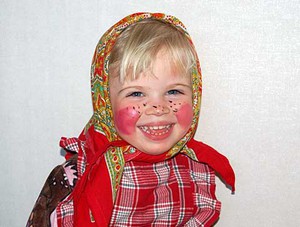
I have had another interesting day in Pitman Middle School busy with interaction with students and teachers. Today’s topic was a bit different from the other days, since one of the students wanted to know how we celebrated Halloween. I quickly commented on that, but then I shared photos of the tradition from Easter Thursday which is more like the American ”trick or treat” than anything else in our tradition. Kids dress out as witches, but not EVIL witches. They are supposed to be more CUTE than evil or ugly. A påskkärring is supposed to be a witch soon going off to ”Blåkulla” on her broomstick. The idea for the kids is to draw or write nice cards saying ”Happy Easter” and then walk from door to door with these greetings. If they are lucky people give them a little treat in return, but there is NO tricking…just the treat… They will keep the collected treats either in an old coffeepot or in a basket.

inbjudning-8-300x232.jpg (300×232)

I then got the question whether there were any other Holidays I would like to mention. I picked Midsummer, since that may be interesting if you haven’t experienced it. First of all, Midsummer is a fantastic time of the year anywhere in Sweden, thanks to the Nordic light, but in the Northern part of Sweden the sun doesn’t set at all for a couple of days, which gives your summer’s night a magic touch. Midsummer can be celebrated in many ways, but traditionally we would gather to raise a maypole covered with leaves and flowers and then dance round the maypole, both old and young. One of the most popular song has very easy lyrics and we all sang it as kids. It is called ”Små grodorna” which means ”The little frogs”.

It is said about Midsummer that you dream of your spouse to be if you gather seven flowers and jump over seven fences. But you have to be quiet if you don’t want to break the spell! You pick the flowers, put them under your pillow and in your dream you will meet the very person who will be your husband or wife. 

torsdag+011.jpg (320×240)

Suddenly someone wanted to know whether it was true that our Santa Claus doesn’t look quite like the American… so then we talked for a while about Tomten and the tradition of celebrating Christmas on Christmas Eve rather than  on Christmas Day.

20772452-origpic-bc1600.png (393×381)

I was happy to have a computer to use to show pictures and talk about different details and finally I shared what TV-show most families watch on Christmas Eve. Kalle Ankas julafton… Donald Duck!

Glad påsk! (= Happy Easter)

Glad midsommar! (= Happy Midsummer’s Eve!)

God Jul! (=Merry Christmas)

The three hundred and eighty-eighth åsic- Kids vs Adults, a comparison shows that FAQ are very different

A recycled blogpost from my visit in Pitman New Jersey 2014!

fragor.jpg (470×200)


Today I visited a few new classrooms where I haven’t been before. It was very interesting to again note that kids and adults do not ask the same kind of questions. Generally speaking I would say that kids like to know, for real, what it might be like to live in Sweden. They ask personal questions formed from their own point of view and seem happy to get an answer.

Some adults may have a real interest, too, BUT the interesting thing is that they tend to repeat each others questions. Check what adults have asked me the last week:

  1. Are you Irish?
  2. Is this your first time in the US?
  3. For how long will you be here?
  4. Have you visited other states in the USA?
  5. When does school start in Sweden?
  6. How many school days are there?
  7. What subjects do you teach?
  8. How many students are there in each class?
  9. What kind of grades do you use in Sweden?
  10. What American singer would be THE most famous, Elvis or Michael Jackson?

There have been a FEW more questions, but the above questions have tended to come back. Now look at the questions kids have asked:

  1. Do you celebrate Halloween?
  2. What cellphones brands do you have in Sweden?
  3. What clothes do you wear in Sweden?
  4. How far from China is Sweden?
  5. What does the Swedish national anthem sound like?
  6. What do the houses look like in Sweden?
  7. How old are your daughters?
  8. What music do you listen to in Sweden?
  9. What famous Americans are popular in Sweden?
  10. Are there IKEA:s all over Sweden?
  11. What sports do you do in Sweden?
  12. Do you eat the same food as we do?
  13. What kind of farms are there in Sweden?
  14. What do you grow in Sweden?
  15. What does the trees look like in Sweden?
  16. Does The Swedish House Mafia really come from Sweden?

Kids tend to want to know about things out of school more than the teachers do.Teachers tend to ask about school related topics. I find that most interesting. Another thing I find interesting is the way no lesson where I have been involved has been at all like the other. I have asked the kids what they wanted to know and that has lead to lessons that differed very much from each other. Being in a situation where I can choose what to share or not from what the students like to know, has thus been just like I prefer to work, i.e in a group oriented manner. I will miss this school and all the kids next week when I go home. They are all very open and welcoming and I have a great time learning more about this NJ school.

The three hundred and eightyseventh åsic- A light in the dark

#asaole, asa-och-zombie-i-smithsville

A recycled blogpost from my visit in Pitman New Jersey 2014!

Today I have had a wonderful day with my friends in Smithville. I had lots of time to marvel over the celebration of Halloween, that in a way already started with a planned ”Zombie Parade” that would take place this evening. People were dressed out as zombies and it was very interesting to note that there was no difference in age. Old or young didn’t seem to matter…

I am brought up with the thought of All Saints Day as a serious day when one go to the graveyard and put candles there to show respect for the dead. I have also many years sang in church in different choirs. The music was always very religious and filled with sorrow. Last year my daughters and I took a late walk to the graveyard when it was pitch dark outside. The darkness and the many nice lanterns made our walk exciting and solemn at the same time as it was creating a bonding that served as a platform for deep thoughts about life. We shared our viewpoints of what will happen after death and also what people we missed most of all when they had passed away. The moment in the graveyard was very far from my experience today.

I can’t wait to see what Friday will bring. Then I’m told that many kids in the neighbourhood will come to ask ”Trick or Treat”. I’m excited about it, but at the same time surprised at the fact that the Americans seem to go ”all in” for their celebration of Halloween. I met some of the ”walking dead” today and this couple made an impact on me, since they were no ten-year-olds. Scary!

DSC_0080


The three hundred and eighty-sixth åsic- Höstlöv, höstlov, hostlov, Fall Break!

A recycled blogpost from my visit in Pitman New Jersey 2014!

#höstlöv, #asaole

barn_host.JPG (510×315)hosta-300x252_150299504.jpg (300×252)


Four different spellings means four different things, of course they do, but let’s take a closer look at it!

  1. höstlöv= autumn leaves→ when days get colder and leaves change colours from green into more colourful yellow, orange or red
  2. höstlov=fall break→ when Swedish school kids have a week off while teachers either go to conventions or work with their local projects, or get a chance to get some busy time back.
  3. hostlov= a coughing  ”break” meaning that the planned ”höstlov” would be a week when you had to stay in bed because of coughing… 😦
  4. Fall break=höstlov
  5. Ö→In Swedish we have three different letters that you can’t find in English. They are å, ä and ö.

If I would use a computer keyboard here, in the US, I would need to find some solution to writing the Swedish letters, which would cause problems since I’m not that much of a computer person. Instead I tend to write ”Swedish” with the computers I find here, but replacing the å, ä and ö with a, a and o. There! See??? Already we have a chance to mix them up, since å and ä are not the same as a and a… So how would one tell whether the intention is to write å or ä? Knowing what reading is about, one might pretend to be Sherlock Holmes and try to find out by checking the meaning of the words around…or perhaps being Swedish might be of help…? Check these two chunks of Swedish, but spelled without the å or ä:

  1. Ett far kan braka.
  2. Titta en bat!

Let’s say you don’t know Swedish at all… Then you would think it’s something wrong with the grammar in the first sentence, I guess… or you would just assume that this person has missed out a word of maybe is dyslectic.

The first sentence may mean several things in Swedish, but knowing Swedish properly means knowing whether you would use ”en” or ”ett” (comparable to the use of ”a” or ”an” in English). A Swedish person would know that if ”far” in the first sentence actually is correct (meaning ”father”) then there has to be ”en” rather than ”ett” if written with correct use of grammar. Suppose this person assume it is a father then… On to the problem with ”braka”… That word is a verb and you would mainly use it to describe what happens if a construction of some sort break apart, such as if a tree falls over a shed in your garden, you would say that the tree fell over the shed: ”skjulet brakade sönder”. The use of ”braka” might also suggest the sound of something, not necessarily something nice… Suppose you lunch was beans… After a while you really have to fart… If that happens and you can hear a sound, you would in colloquial or dialectal Swedish say ”han brakade” meaning ”he farted”. Then, what happens with the first sentence is that you have different options now, right? Either the meaning is ”en far kan braka” meaning ”a father can fart” or we need to doublecheck the meaning of the word braka… Is there any chance for that word being spelled with either å or ä??? Oh… as a matter of fact, both would be possible to use… ”En far kan bråka” means ”a father can be messing/fighting”… ”En far kan bräka” means that the father makes the sound of a sheep. Would a father to that? Yes, maybe if he plays with his kids or something, but it is more likely that we didn’t guess right when we picked either å or ä here… So then… What next??? I suggest for us to go back to the noun… ett far… We already know that ett far is not how we would say in Swedish. We would say ”en far” if it HAD meant father…but suppose it doesn’t? ”Ett får”= a sheep, YES!!! A sheep can bleat= ”ett får kan bräka”. Guess what??? This is what you and I do in a matter of SECONDS when we read a text!!! I think that’s amazing! Don’t you?

Let’s repeat the concept…by checking the second sentence!

”Titta” means ”look”… ”en” means ”a”… bat is a word in English, but not in Swedish. A Swedish speaking person has two options here. One is to assume that the word ”bat” means the currency they use in Thailand and then also assume that the person who wrote it has missed an ”h”  in ”baht”, but more likely is for the person to read between the lines and understand that nobody would comment on Thai currency in that way and rather suggest that the ”bat” has to be spelled with either ”å” or ”ä”. When picking one of these this time it’s easy! Why is that? Well, there IS no such word as ”bät” in Swedish, so problem is solved with ”båt” meaning ”boat” and the sentence will be ”Look, a boat!”

By reading between the lines, one can get a lot of language learning, don’t you think?

The three hundred and eighty-fifth åsic- ”HALF&HALF” or Completely Wrong!

A recycled blogpost from my visit in Pitman New Jersey 2014!

I don’t drink regular milk since I have a lactose intolerance. For my visit here in the US I had to make sure there would be something to replace my usual products with and today it was time to fill the fridge again. After we got back home I wanted to comment on ”milk” in general and since ”my” family here drink something that they call ”HALF&HALF” (a mixture of milk and cream as I understand it). I wanted to know what that was. So I asked…and they both laughed. I didn’t quite get what’s wrong, but i found out soon enough. They repeated what I said and I still couldn’t get it. I said it again, ”HALF&HALF”. Then they said: ”We don’t say that!” I couldn’t understand, because on the box it clearly says ”HALF&HALF” and that was what I said, over and over again. Finally I ASKED them what THEY said then… They said, too: ”HALF&HALF”, but their sound of the ”A” was as far from mine as the distance from here to Buckingham Palace! We all laughed and made fun of the different pronunciations and what would happen if you loudly would shout out in the store HERE, but with my pronunciation: ”Dear, please go and get some ”HALF&HALF”!!

My reflection is that if my friends hadn’t pointed out that we in fact used different pronunciations for the expression, I wouldn’t have noticed. I know that may seem weird to some of you, but different accents don’t ”bother” me anymore and I know my own accent is a strange mixture of different accents. A few people in school last week suggested I’ve got an Irish accent, which I enjoyed, since I have never been there… 😀

The three hundred and eighty-fourth åsic- Fika as an ice-breaker is never wrong!

A recycled blogpost from my visit in Pitman New Jersey 2014! 

There are many times I have marvelled over the word fika and how it doesn’t seem to have any translation in many other languages. Today was another of those times! 

This morning at the ”Sweden Day” at the school I visit I shared the concept of FIKA and explained what it is to the members of the staff. I was surprised that so many seemed to like the idea of FIKA and that made me think of a completely different situation some years ago. I talked to an American woman, who was married to a Swedish man.

This woman had learned by being in Sweden what fika was, and her idea of it was pretty much like the one I wrote on the whiteboard today (which I share above). As we talked we realized that the two of us had talked to Americans about the concept of fika, but in different parts of the country. I have only met people on the East Coast and she had just talked to people in California about it. Both her friends and mine had to some extent started to USE the word fika in the American English. What I now hope for, is for both the actual WORD and also the CONCEPT to spread across the continent. That would be amazing!

One of the teachers who had fika with me this morning, came back to the classroom after a while and asked me how to use the word in a sentence if he wanted to invite someone for a fika. So now, let’s spread it! There are different ways to invite, depending of the situation, but in English you can say like this if you like:

  • Do you want some fika?
  • How about some fika?
  • Are you up to some fika?

Fika can mean just a cup of coffee or tea, or it can mean coffee+ a sandwich, or it can mean coffee+a bun, or it can mean, coffee+ bun+ cake+cookies+ tårta, which is a Swedish kind of cake with no frosting/icing, but more likely whipped cream. The funny part is that fika also can mean ALL of the mentioned categories… There are really SO many different connections to the word in Swedish that it is very difficult to explain. Instead it is necessary to see the phenomenon as something ELSE, but ”having coffee”. It is a chance to SHARE with friends. What do we share then? It is not just the COFFEE, but thoughts, ideas, gossip, memories, jokes… Having a fika with someone is paying attention to that person, having a good time together with someone for a while. That is why I want the word to spread… So please, help me ”spread the word”… 😀

TILL MINA ELEVER är här en liten ”språkruta”:

Ska vi ta en fika? Hänger du med och fikar? Kom så fikar vi! Nu skulle det sitta fint med en fika! En slät kopp (= kaffe utan något fikabröd till) fika räcker! Vi ses på fiket! Vi hinner kanske med en språngfika om vi skyndar oss? Jag har fikarast mellan nio och tio varje morgon. Men jag brukar kvällsfika vid TV:n också. Stina kör långtradare och hinner inte med så långa raster, men ibland stannar hon på ett långtradarfik. 


The three hundred and eighty-third åsic- Uppe med tuppen!- Being an early bird!

A recycled blogpost from my visit in Pitman New Jersey 2014!1946345_1200_675.jpg (612×344)

I have noticed that one good thing with travelling across time zones is that there is a good chance to change bad habits! 😀

I agree completely with the Swedish saying ”Morgonstund har guld i mund”

Generally I do get up in the morning and start my day, but I’m not really awake…Here, six hours after my regular time zone, I have decided to get up whenever I feel alert, although it’s not ”six o’clock” as usual… Today the hour I woke up was 5.30 and I didn’t mind!


väckarklocka.jpg (250×217)

Yesterday night when I accidently woke up in the middle of the night, I got a snapchat from one of my daughters. I replied…although I was tired, saying ”it’s in the middle of the night!” HER snapchat was a very alert and neat pic of herself and her friend singing and playing the guitar at school and I thought: ”Oh, NO! Not NOW! I’m TIRED!” …but it also made me aware of the wonder of TIME.

I’d say TIME is a phenomenon human beings invented. My host HERE would say ”We (the AMERICANS) invented time!” … And honestly, since time flies, I don’t have time to do my homework and find out for real who ”invented” what we all refer to as time.

time-flies.jpg (550×366)

I do however enjoy the many aspects of time that make a life worth living. What if we never had any sunsets? What if you couldn’t wake up an early morning in late May in Sweden go and get your Dalademokraten, and have a cup of coffee outdoors while letting the sun warm your face. What if you couldn’t catch a flight to the USA and try to leave the sunrise behind you? There is however one thing I don’t appreciate about the way WE adjust to time. I understand why we all need to do the daylights saving change of time but having said that, I must admit I’m probably the most tired person on earth when we change all our clocks in the spring. I am probably also the luckiest person next weekend when I get my reward for struggling every morning for several months. Kronblom might be TOO lazy, but he is for sure the caracter I think of, connected to the words ”lazy” or ”relax”.

kronblom_431628a-1.jpg (440×294)

Here, during my visit in NJ, I have noticed that I do have a serious chance to give myself the treat of feeling alert at five in the morning! That’s amazing and I love the calm and relaxed morning I get in return for getting up early. The lunch break in Sweden is up, but here we haven’t yet started our day. When I get back from school this evening, my Swedish friends will be on their way to bed… I can now see why there is a slight problem finding decent hours to chat online with a person from another part of the world. Being here is being ”right in the middle of things” when it’s a decent hour on the other side of the Atlantic Ocean… I’d better keep that in mind when I get back home to Sweden again! It has been said many times in Latin (Carpe Diem), not quite as many in Swedish, but it is an important thing to remember:

Fånga dagen! 

The three hundred and eighty-second åsic- Second Day in an American Teacher’s Hectic World

Everybody likes Pitman, #asaole

A recycled blogpost from my visit in Pitman New Jersey 2014!

At home I don’t teach English, but Swedish as a Second Language. This evening I had the great opportunity to visit an adult learner’s group in Spanish at a College not far from where I am. The students were all taking lessons in Spanish, but volunteered to talk to me about what the conditions are for adult learners at this level in the school system. I found our conversation most interesting and will share their viewpoint with both my students and my teaching friend at basic level of English.

Earlier today I first met with a few children with special needs. I shared with them a few thoughts on what it is like to live in a country where we have monopoly money and a” fairy-tale-like” reality with a king…

I also had a chance to contribute with Swedish words in grade six while they were taking a Spanish lesson about furniture in different rooms of a house. Then I discussed with a group of eightgraders why so many Swedes left Sweden a hundred years ago.

I then had a nice and long chat with one of the teachers who has been a resident of Pitman almost all her life, apart from a short period down south. She told me all there is to know about the little town and I was happy to learn all that first hand, rather than read about it.

On Friday a few of the teachers have planned for a Sweden day, where the students will be getting a whole lot of information about Sweden, but also try some typical Swedish activities. I will contribute with a slideshow about Sweden and explain why the Dala horse is a symbol for  Sweden. The collaboration with an art teacher at this school also led to an idea where we let the kids know a little about how one can paint a typical ”kurbits”.

Tomorrow we’re off to Atlantic City, my teaching friend and I. We will study ESL as the NJ authorities wants it to be. I look forward to that very much. I don’t need anyone to rock my cradle! I am exhausted, but I’m having so much fun! Teaching is my life! ❤

Trehundrasextioåttonde åseriet: Om eftertankens kranka blekhet, när allt är raderat…

I det #trehundafyrtiosjunde åseriet skrev jag om hur skönt det var att kunna gå hem vid lunch på fredagen och vila mentalt över helgen.I det #etthundratrettiofjärde åseriet skrev jag om hur jag gradvis arbetat med att spara vissa idéer i digital form, som tidigare endast funnits i pärmar och på papper. Jag skrev också då om hur rädd jag var att förlora innehållet:

#tid, #klocka

”Jag funderar starkt på att helt överge papper som ett sätt att lagra information. Men om vi antar att jag verkligen skulle löpa linan ut och göra mig av med allt jag har samlat på mig (typisk ekorre, den där Åsa!), så skulle ju det i princip innebära att jag skulle behöva ta tjänstledigt i några veckor för att gå brandvakt vid den enorma majbrasan! Lite grann som morfar när han var i skogen och vaktade milan, ungefär. Länge tänkte jag att det jag sparade på papper var helt nödvändig information som jag inte kunde nå på något annat sätt än genom att bläddra fram till den aktuella fliken i rätt pärm. Nej, oroa dig inte. Jag har INTE full koll på exakt var varje papper sitter, men när det gäller mina jobbpapper, sådant som jag lite nu och då behöver, DÅ har jag koll. Jag vet i vilken pärm jag har hängt in en viss språkövning eller en novell eller en lista med ord om vintern. Det lilla motstånd mot att bygga upp majbrasan redan nu, är att jag tror mig komma att behöva vissa papper SEDAN… Vän av ordning undrar säkert när ”sedan” är? Det måste jag medge att också jag har börjat undra. Gradvis hamnar mina bästa ”papper” inskannade, så att jag kan skicka dem i fil till eleverna. Då borde det rimligtvis vara jättelätt att slänga papperet på majbrasan, eller hur? Men ändå… Då står jag där med papperet i handen och tänker på min mormor. ”Hä kan va bra te ha!” sa hon ofta, t ex nu i juletider när hon gärna samlade in ALLA paketsnören och ALLA julklappspapper, för att återanvända. En jul fick jag och brorsan huvudbry för då fanns det två etiketter på hans julklapp. En där hans namn stod, men också en där det stod ”God jul Åsa önskar mormor” Det löste sig när vi frågade mormor. Den är till dig Åsa. ”Han fick en julklapp i det där paketet förra året”, sa mormor och pekade på brorsan. Förutom presentpapper samlade hon även på ”buttar”. Det kan kanske vara så att en butt inte är något ord som återfinns i SAOL; men buttar är i alla fall förvaringskärl av olika slag, t ex skålar eller burkar med lock som man kan hälla över matrester i när man sparar en halv potatis och tre ärtor som blev över efter middagen…typ. Buttarna sparade mormor av nästan samma skäl som snörena och papperet: ”Hä kan va bra te ha å ha i!” Nu kommer vi till den lilla språkreflektionen: Man kan förstås direktöversätta: ”Det kan vara bra att ha att ha i!” men man kan också utveckla det något för att förtydliga;”Den här vill jag spara till ett tillfälle senare när jag behöver spara något som är lagom stort för just den här burken med lock”. Med åren lärde vi oss dock det smarta med ett etablerat uttryck och anammade mormors återkommande sätt att uttrycka det nuförtiden så trendiga återvinningstänket. Därför säger vi alla, om vi vill spara något till ett senare tillfälle; ”Hä kan va bra te ha!”

kristall-jorden-atervinna_17-1221143419.jpg (585×626)

Nu kan jag utan problem redogöra för vilken omfattande mardröm det är att uppleva att det man skrivit i tjänsten är utraderat.  Det känns, kan jag säga, som OM det hade brunnit i ett kontor där du förvarar alla dina pärmar med viktiga papper eller dokument. Det rör sig om dokument du ständigt återkommer till och vill ha lättillgängliga, som du har ordnat bakom flikar, så att du säkert ska veta var de är… Ett sådant kontor har jag fortfarande på jobbet, eftersom jag är en person som likt förre finansministerna Gunnar Sträng använder både hängslen och livrem. MEN… Att ha alla papper insatta i pärmar är ju inte den här tidens melodi. Därför har jag precis som alla andra lärare jag känner, gradvis övergått till nätbaserade resurser av olika slag. Min jobbdator är en liten underdimensionerad bärbar historia, till vilken jag har en ”docka” med ett antal USB-portar. För jobbrelaterade arbeten förväntas jag lagra dokument i en specifik digital katalog, som ständigt blir överfull om jag sparar inskannade elevarbeten där. Skulle jag i stället välja att spara de inskannade arbetena direkt i Outlook där de först hamnar, så får jag meddelande från kommunen om att jag använt för stort minnesutrymme för mina filer.

Därför började jag för ett antal år sedan att spara i Dropbox, i Google Drive, i iCloud och så vidare… Men det enda som för mig kändes konsekvent och enkelt var ett USB-minne med 64GB kapacitet. Den lilla minnespluggen jag beskrivit här vägrade samarbeta med mig i morse och allt jag producerat under de senaste åren var onåbart, eventuellt också förstört. Första steget var att undersöka med IT-avdelningen om de kunde rädda materialet, men när svaret var nej återstod en lokal liten firma på stan… Där har jag lämnat mitt USB-minne…eller ska jag kanske säga att dit har jag burit mitt huvud under armen…? Jag TRODDE på USB-stickans kapacitet och därför sparade jag rutinmässigt just till stickan. Någon extern hårddisk hade jag inte, men det fick jag av IT-avdeldningen i samband med att jag berättade om problemet med USB-stickan, så NU ska jag spara noga! 🙂

Lärdom 1: Man vinner på att använda back-up… Lärdom 2: Man vinner på att använda back-up även efter det att man trodde att man inte behövde den…

Lärdom 3: Eftersom det inte har brunnit i mitt kontor fungerar min äldre lagringsmetod för mycket av det som också fanns på USB-stickan. Allt är inte borta! 🙂

De allra bästa idéerna som jag brukar kunna återkomma till ibland, skulle jag minnas ändå, men arbetet med att återigen SKRIVA dessa vill jag gärna slippa. Skulle det nu vara så olyckligt att alla de 64GB jag hade på USB-stickan skulle vara borta för evigt, trots IT-firmans ansträngningar att återfinna mina förlorade data, så är jag ändå glad att jag är som min mormor… Mycket av det jag återkommer till inom ämnet svenska som andraspråk har jag likt en hamster sparat i pärmar på jobbet. Varför då?

”Hä kan va bra te ha!”


Trehundrasextiosjätte åseriet- Bokmässan 2016, höjdpunkt nummer 2: Sven Wollter

#asaole, #Sven Wollter, #Hon Han och Döden

För första gången i mitt liv har jag köpt en flaska Calvados, öppnat den och smakat en liten försiktig klunk, allt för att jag ville förstå mystiken i Hon Han och Döden av Sven Wollter lite bättre:

”Big Foot hade rotat fram en flaska Calvados ur gömmorna och jag såg tydligt där jag svävade på uppvindarna hur det smugit sig in liksom ett leende i stugan” (ur Hon Han och Döden, s97).

Man kan lugnt påstå att jag har följt Sven Wollter och vad han har sysslat med i väldigt hög grad. Lite av vad jag menar med det, framgår i ett tidigare åseri:

Tvåhundratjugofemte åseriet- Wollter, Mankell och Miles- Vilket Dream Team!!!

Efter en lång skådespelarkarriär och med ett starkt politiskt engagemang så är det inte förvånande att Sven Wollter fortsätter med nya idéer om sådant han vill göra. Att skriva en bok är något jag själv provat på och därför vet jag också hur man ständigt ställs inför olika typer av val vad gäller texten. Det handlar naturligtvis först om vad det är man vill skriva över huvudtaget, men också om hur man vill framföra detta.

Som lärare jobbar jag mycket med texter som elever producerar. Även i undervisningen inför olika skrivuppgifter försöker jag att jobba med faktorer som språkriktighet, variation, sammanhang och röd tråd, utan inbördes ordning. Var och en av dessa ledord är viktiga, men på olika sätt. Om man är alltför fri ifrån språknormer som stavning och interpunktion, kan textens innebörd löpa risk att gå förlorad. Om man inte är tillräckligt varierad i sitt uttryck likaså. Då sitter läsaren och räknar alla upprepningar och irriterar sig på hur författaren har valt att skriva. Sammanhangssignaler är också viktiga, för att texten ska hänga ihop som en helhet. Utan dessa blir det svårt att följa den tanketråd som förhoppningsvis finns där…

När jag först öppnade Hon Han och Döden, så var det med en viss bävan inför det faktum att Wollter nu gett sig in på något han, mig veterligen, inte gjort förut. Jag kom på mig själv med att vara nervös ”å hans vägnar” eftersom jag skulle vilja unna honom att lyckas med sitt projekt att skriva en bok.

Det är min personliga uppfattning att man är summan av alla de olika roller man har i sitt liv. För egen del kan jag inte göra mig HELT fri från lärarrollen och därför var det första kapitlet i boken något svårforcerat, eftersom Wollter har valt att skriva på ett sätt där vanliga regler för interpunktion är satta ur spel. Vad gör man då? Lägger man ifrån sig boken? Kanske hade jag gjort det om den varit skriven av någon annan, men nu försökte jag i stället tänka mig Sven Wollters röst när han läste texten för mig. Det fungerade… Det blev plötsligt inte så viktigt om det fanns en punkt och en stor bokstav där jag hade tänkt mig att det skulle vara bra. Inte heller spelade det någon roll om texten kryllade av dom i stället för de och dem… Liksom Strindberg före honom, har Wollter dessutom gått fram som ett ånglok med det nyare talspråket i tanken och skrivit den mening som sticker ut allra mest i mitt tycke:

”Jaget är borta men hennet finns kvar”(s 79).

Hennet??? När jag läste psykologi i forntiden hette det kanske jaget och detet…men Wollters ”hennet” garanterar textens nutidsorientering, för jag har i alla fall inte stött på detta uttryck tidigare i någon skönlitterär skildring. Däremot har jag förstås tagit del av diverse artiklar och insändare där man försöker klargöra i vilka situationer uttrycket hen hör hemma…

Wollter är för mig en person som visar stort engagemang för både omvärldsfrågor och inrikespolitik likväl som solidaritet med medmänniskor som inte fötts med silversked i munnen. Han framstår som en människa som inte verkar rädd för att uttrycka sin personliga åsikt även om ämnet är en stridbar fråga. Där andra tiger uttalar sig Wollter och den sidan av honom har jag alltid beundrat. Men Hon Han och Döden är inte någon agitation eller någon politisk inlaga. Den är en bok om livet och hur det ibland ändrar riktning av till synes slumpmässiga orsaker. Att man träffar en viss person har en mening och att man kanske återser denna någon långt senare fyller en funktion i ens liv det också.

Göteborgsförfattaren Lars Hesslind skrev en gång texten ”Samtal med en kakelvägg” som gjorde stort intryck på mig, därför att poängen i texten var att man måste se till att ungdomar förvärvar ett godtagbart språk. Den novell jag syftar på handlar om en ung grabb som råkat kasta en ispärla (snöboll) på en större kille som är lite av en ledartyp i sitt gäng… Grabben får tips och råd av ett lokalt fyllo som påstår att om grabben lär sig att rabbla det grekiska alfabetet, så kommer den store starke killen att häpna och avstå från att spöa honom… Grabben följer rådet och överlever dagen då han skulle ha slagits sönder och samman… Invävt i den texten fanns en massa tidsmarkörer som gjorde läsningen extra spännande. Man kunde förstå hur det var i den miljö som Hesslind syftade på i sin text.

När jag läser Wollters Hon Han och Döden, så tänker jag på Lars Hesslinds sätt att uttrycka sig om sin omvärld, för Wollters stil påminner starkt om Hesslinds. Hesslind gjorde inte avkall på skriftspråkets normer, men samma anda, samma känsla som Hesslind hade, finns i Wollters text. Sven Woller föddes 1934 i Göteborg. Lars Hesslind föddes 1935 i just Göteborg… Är det månne en göteborgsanda, denna ogripbara likhet mellan de två författarnas texter?

Hon Han och Döden är en bok jag skulle ha läst oavsett dess kvalitet, just för att jag inte är speciellt neutral, utan snarare en stor beundrare av Wollter, vad han än tar sig för. Texten är överraskande på många sätt. Den kastar mellan någon slags verklighet och fullständigt overklig fantasi samtidigt som det här och där kommer mycket tänkvärda betraktelser om livet. Vad händer med en om man får en svår och obotlig sjukdom, som läkare har tidsbestämt eller åtminstone yttrat sig mycket drastiskt om?

Min egen erfarenhet sträcker sig till bröstcancer som slutade väl för min del. Oavsett vilken svår sjukdom man drabbas av så leder den till att man blir tvungen att ta sig an de stora livsfrågorna och fundera på hur det kan vara när man en gång dör. Detta kan man göra ytterst seriöst eller med glimten i ögat. Det fina med Hon Han och Döden är att Wollter balanserar på den slaka lina som är mitt emellan. Det är en läsvärd bok, främst för att den kopplar ihop så många olika sidor av den Sven Wollter jag känner till från hans offentliga liv… Det som överraskade mig och som jag inte kände till om honom är kunskapen i franska…och det var ju bra att jag fick en knuff i rätt riktning för att prova mitt första glas Calvados. Det visade sig vara en god dryck! 🙂