Fourhundred and twenty-eighth Asic- True or not, that’s the question, Mr President! Part 3

As you all know by now…President Trump has been to Florida, speaking to ”the People” about Sweden… I live in Sweden, an open democracy far away from the USA. In fact it is so far away that Mr Trump hardly knows for sure by himself whether we had a terror act here or not yesterday… We didn’t…

I wrote about this yesterday. Obviously I was right about what happened. Here’s part of what I wrote yesterday:

”Maybe he [President Trump], unlike most political administrations worldwide finds his ”facts” from the famous American TV channel Fox News instead of consulting professionals like most other presidents would?”

The Swedish Embassy in Washington DC has been in touch with the Trump administration regarding the content of the speech that President Trump held in Florida. Shortly after that, President Trump posted a comment on Twitter. According to today’s Dagens Nyheter the Swedish Government take the tweet as an answer for their inquirements:

#asaole, #donald-trump-regarding-sweden Yesterday I was suggesting that President Trump was lying. This time, however, I think he is honest! I actually believe he used Fox News as his reference for the comment on the situation in Sweden. Wouldn’t that lead to the conclusion that Fox News are now ”banned” by the President for using fake news??? 🙂

Fourhundred and twenty-seventh Asic- True or not, that’s the question, Mr President! Part 2

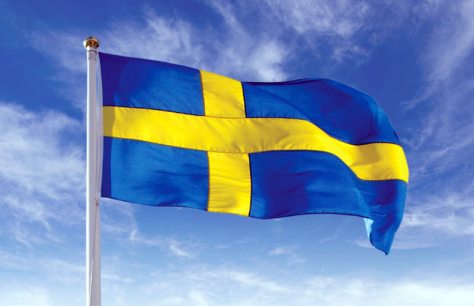
#svenska flaggan, #asaole

President Trump has been to Florida, speaking to ”the People” about Sweden… I live in Sweden, an open democracy far away from the USA. In fact it is so far away that Mr Trump hardly knows for sure by himself whether we had a terror act here or not yesterday… We didn’t…

But Mr Trump has obviously listened to advisors that he trusts and thought it wise to share his worries for this nation far away with the audience in Florida. I wonder what kind of advisors would lead their president in such a stupid trap if they were his allies…or is it possible that President Trump has his own way of finding information? Maybe he, unlike most political administrations worldwide finds his ”facts” from the famous american TV channel Fox News instead of consulting professionals like most other presidents would?

Let us assume that he has been watching Fox News when they were openly lying about a fake terror act that did not happen, but was SAID to have happened here in Sweden… He has then consumed ”fake news”, hasn’t he? Let us then assume that President Trump this time did not at all think twice, instead he, like many viewers across America, just assumed that since it is a news channel, it has to be true…What does that lead to in the end? It may lead to a bad reputation for my country, in the eyes of those who believed the nonsense on Fox News…or it may lead to a bad reputation for Mr Trump’s precidency worldwide for listening to lies and believing them without a doubt…

First of all we, the people of Sweden, who did NOT experience a terror act, would instantly know that Mr Trump is spreading lies. Secondly we, the people of Sweden would either think that he is stupid in doing so, since it shows no respect for the ambition of sharing facts instead of fake news that he so eagerly have been yelling about in a number of press conferences lately. Thirdly we would worry deeply for the American people who still watch Fox News, thinking that they are served with the truth.

The Swedish Embassy in Washington DC has been in touch with the Trump administration to ask more about the content of the speech that Mr Trump held in Florida. I believe Mr Trump no longer need to worry for Sweden. Instead he can concentrate on worries for his own country.

Four hundred and seventh åsic- Saint Lucia brings the Light in the Dark!

Lucia-13.12.06.jpg (874×691)

Saint Lucia or Saint Lucy of Syracuse, from round 300 AC, is today’s protagonist in many different settings… The legend says that Saint Lucia was born in Italy in Syracuse. She was of noble family, but since her father had died Saint Lucia and her mother didn’t have any other solution to support themselves but for the young Lucia to marry a rich man. Lucia, however, had already dedicated her heart to God and did everything in her power to prevent a marriage. According to the legend, Lucia’s eyes were very beautiful. She even tore her eyes out and gave them to one of the men who came to propose, because she wanted to discourage the man. When Lucia was buried her eyes had been restored through miracle and that was also why she was honored as a Saint during the Middle Ages (1).

Why would a country like Sweden celebrate a saint from Italy, you may think? In the winter Sweden and the other Nordic countries long for the summer not only because of the cold and snowy winter, but also because of the darkness. Saint Lucia is celebrated every year the 13th of December and in Sweden the tradition is still very important for Christmas celebration. Many of the traditional songs are sung not only the 13th, but also during Christmas.

Lucia processions are organized all over Sweden and throughout all different sectors in the society. Kids celebrate in pre-schools or schools and adults celebrate if they are choir members for instance. Many towns or cities i Sweden have their own Lucia processions and on TV they show the official Lucia show of the year.

As a young girl I was in my first Lucia procession when I was a few years old. As a teenager I started to sing in a girls choir called Bjursåsflickorna. We gave many Lucia concerts every year. One of the years we were asked to perform at a dinner in the Royal Castle in Stockholm. It was very exciting and a memorable moment. Princess Madeleine who is now a Mom herself, was climbing on the chairs and crawling under the table and was quite an active little girl at the time. The very same choir also performed a traditional Lucia concert at Lugnet’s sports stadium in April… We were pretending it was winter, because of some honorable guests from the International Olympic Comittée. One of them was the chairman at that time, Juan Antonio Samaranch. The idea was for us to sing to bring the Olympic Winter Games to Falun… Obviously that was a  mission impossible. Falun lost.

Singing for Lucia in strange places seemed to be one of the habits of this choir. I remember we even sang in the Falu Copper Mine, in almost complete darkness and with the damp vitriolic scent in our noses, helmets on our heads and just a candle to light our way down there. Very exciting and completely unique at that time. I know that later on, many other choirs have sung in the copper mine, too. Nowadays I come across Lucia processions ”by accident”, like for instance today when I visited the shopping mall Kupolen in Borlänge, or when students at school perform. I have also accompanied my own children on different occasions, but for myself, I would say my celebration of the Saint Lucia is found in memory lane…

Before I let you go, let’s just glance at a picture of a typical saffron bun, called ”lussekatt” in Swedish.#lussekatter, #asaole

But hey… Why invent the wheel??? Please check this link from youtube in order to finally understand this topic!

http://en.wikipedia.org/wiki/Saint_Lucy

The three hundred and eighty-ninth åsic- From Påskkärring to Tomten in Twenty Minutes!

A recycled blogpost from my visit in Pitman New Jersey 2014!

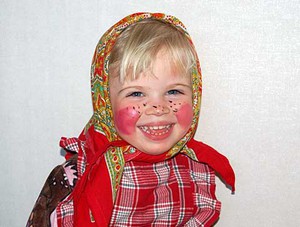
I have had another interesting day in Pitman Middle School busy with interaction with students and teachers. Today’s topic was a bit different from the other days, since one of the students wanted to know how we celebrated Halloween. I quickly commented on that, but then I shared photos of the tradition from Easter Thursday which is more like the American ”trick or treat” than anything else in our tradition. Kids dress out as witches, but not EVIL witches. They are supposed to be more CUTE than evil or ugly. A påskkärring is supposed to be a witch soon going off to ”Blåkulla” on her broomstick. The idea for the kids is to draw or write nice cards saying ”Happy Easter” and then walk from door to door with these greetings. If they are lucky people give them a little treat in return, but there is NO tricking…just the treat… They will keep the collected treats either in an old coffeepot or in a basket.

inbjudning-8-300x232.jpg (300×232)

I then got the question whether there were any other Holidays I would like to mention. I picked Midsummer, since that may be interesting if you haven’t experienced it. First of all, Midsummer is a fantastic time of the year anywhere in Sweden, thanks to the Nordic light, but in the Northern part of Sweden the sun doesn’t set at all for a couple of days, which gives your summer’s night a magic touch. Midsummer can be celebrated in many ways, but traditionally we would gather to raise a maypole covered with leaves and flowers and then dance round the maypole, both old and young. One of the most popular song has very easy lyrics and we all sang it as kids. It is called ”Små grodorna” which means ”The little frogs”.

It is said about Midsummer that you dream of your spouse to be if you gather seven flowers and jump over seven fences. But you have to be quiet if you don’t want to break the spell! You pick the flowers, put them under your pillow and in your dream you will meet the very person who will be your husband or wife. 

torsdag+011.jpg (320×240)

Suddenly someone wanted to know whether it was true that our Santa Claus doesn’t look quite like the American… so then we talked for a while about Tomten and the tradition of celebrating Christmas on Christmas Eve rather than  on Christmas Day.

20772452-origpic-bc1600.png (393×381)

I was happy to have a computer to use to show pictures and talk about different details and finally I shared what TV-show most families watch on Christmas Eve. Kalle Ankas julafton… Donald Duck!

Glad påsk! (= Happy Easter)

Glad midsommar! (= Happy Midsummer’s Eve!)

God Jul! (=Merry Christmas)

Three Hundred and Seventy-Ninth Asic – Nobel Prize in literature 2016, Part 1

What Makes a Good Book Good Enough?

That is one of the things that keeps me busy when I start reading any book whatsoever… Like many other students I was forced to read several books by Nobel Prize winners in school as a teenager, and I guess my teachers picked the novels for different reasons… One of the authors I started to like by reading in school was John Steinbeck. I was thrilled by the way Steinbeck built up his characters in ”Of Mice and Men” and how the story developed.  From a few hints on how George and Lennie had to move on again, after something terrible had happened, I realized I was already thinking; What had happened? As a young reader of a classic novel I was thrilled enough to keep reading until the very last page… I also read ”The Pearl” with great interest and without any effort, but for a novel like ”The Grapes of Wrath” it takes 455 pages before you know the end of the story. As a young reader, I did not meet that challenge, but this summer, during a vaction in California, ”The Grapes of Wrath” was my perfect companion. I drove past the road sign with ”Salinas” and I went to Monterey and the Monterey Bay Aquarium where a section in the Museum describes John Steinbeck’s writing and I was happy to know that in my car, the book was waiting for me to turn the next page and the next…

Nobelpris_medalj

John Steinbeck received the Nobel Prize in 1962,

”for his realistic and imaginative writings, combining as they do sympathetic humour and keen social perception”

To me as a Swedish reader, both when I was young and now, I  must say Steinbeck really made a difference. I can see his deep engagement concerning important issues in society and although ”The Grapes of Wrath” was written in 1938 and first published in 1939, the content is extremely important also in 2016. In Europe where I live, migration is an every day topic, since many thousands of people are on the move between different countries. Some end up in camps or in asylum seeking procedures where bureaucratic systems cannot handle the massive number of applications quickly enough. Migrants today, face the same kind of ignorance and racism as the Okies (people from Oklahoma, moving to California) in Steinbeck’s novel. Migrants both now and then, left for the thought of a better future, filled with hope, but also fear. Their plans may be delayed or sometimes changed, and for a few the plans and hopes may never be fulfilled, due to accidents or other problems along the way.

Describing the process of change in a person’s life, like Steinbeck does in ”The Grapes of Wrath”, is a delicate matter, since it is walking on a thin line between being true or being pathetic. Neither can you exaggerate too much nor be too shallow. When the story begins we meet the American state Oklahoma when the weather conditions have been very poor for a long time. Draught and winds have left the land destroyed and every corn field has a layer of dust that makes the corn worthless. The protagonist Tom Joad, is an ex-convict from Mac Alester, where he sat four years for homicide. Now he is out on parole. Tom Joad comes back home in company with an old friend of the family, Jim Casy. In order to find job and better opportunities the Joads decide to leave Oklahoma for California. During the long trip from Sallisaw, Oklahoma to California both Grandpa and Grandma die. Tom’s brother Noah, and his sister’s boyfriend Connie leave the family for different reasons, but the rest of the family stick together. Ma and Pa, Tom and his brother Al, their sister Rosasharn who is pregnant and the younger children Ruthie and Windfield all come to California after a very tough trip through several states, over mountains and finally through the desert.

The novel very closely describes the extremely poor conditions for migrant workers in California in the thirties. Racism, cruelty and violence together with greed seems to be the rule and being from Oklahoma, means being an Okie, which is a stigmatised group at the time. No matter how hard they work, they seem to face very little understanding and empathy from the Californians. The Joads and the other Okies move from one workplace to the other and get less paid for each time they move, so it seems. For several reasons Tom gets in trouble again.
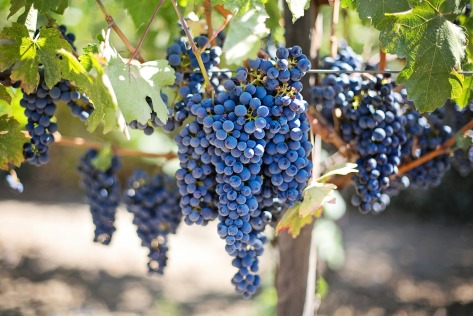
vindruvor

Throughout the novel, Steinbeck give descriptions of the surrounding landscape and certain topics of interest. One of the chapters is like a dialogue between a car salesman and an Okie buyer and written with humor, although the underlying message is that many poor Okies were fooled by the car dealers, selling off good cattle or mules in trade for a jalopy. Another such chapter is a very nice description of a few instruments, the harmonica, the guitar and the fiddle and how they blend in together for the coming dance evening, when a certain piece of music is played. That is also where ”Swedes up in Dakota” (p 342) are mentioned, which is fun to read for me as Swedish.

But apart from these humorous chapters, there are also some very critical topics, as when Steinbeck describes how land owners had too much fruit and too much potatoes, too many pigs and instead of giving the food to the extremely poor workers, they poisoned the potatoes, drowned the pigs and drenched the fruit in kerosene, only for the pleasure of not giving it to the starving workers. That is when ”The Grapes of Wrath”(p 349) is uttered…

For a period of time, the Joads live in the Weedpatch camp, which is a state camp. For the first time in their lives, Ruthie and Windfield see toilets. The workers are all involved in taking care of the camp together, making sure it is kept clean. Here the Joads meet other people they can trust and make friends with and for a moment the reader is fooled to think this book has a happy ending…

I highly recommend ”The Grapes of Wrath” if you would like to get a glimpse of migrant life from the inside. The novel reveal several complex issues and through the Joads and their discussions throughout the novel, you and I get a chance to consider those issues, too. With the coming election in the USA, the voters can decide whether there will be harder times or not for migrant workers from abroad, picking fruit and cotton in California for the benefit of American producers. Some of the migrants came there just like the Joads, with the hope of a better future. Some of the current Californians are likely to be decendants from Okies who came in the thirties.

Let us read books like ”The Grapes of Wrath” and never forget what made us the ones we are today.
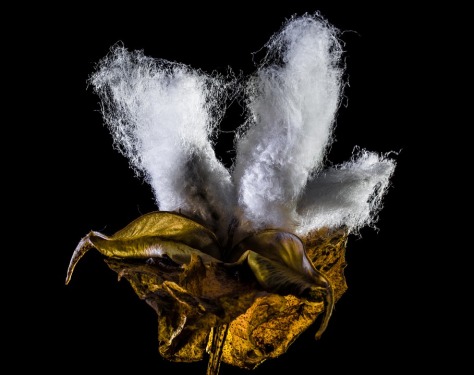
cotton-capsule

Three Hundred and Fifty-Ninth Asic- 9/11 in Retrospective

#American flag, #stars and stripes, #asaoleFifteen years ago I was on maternity leave with my youngest daughter. I spent my days breastfeeding… at least so it seems in a retrospective. My daughter was the kind of baby that you cannot really feed enough, so I found myself watching all the available soap operas… There was however one afternoon (But it was MORNING in the USA…) that was not at all like the rest. In Sweden where I live, like in most other countries, we have the tradition of ”breaking news” if something extraordinary happens. I remember the 9th of September 2001 exactly like that. I was actually watching an extra news alert with the footage of the first Tower of WTC burning when there, right then, the second tower was hit. The Swedish News reporter commented this and I remember I felt strangely aware of that particular moment, as a ”NOW” to remember forever… A truly moment of MINDFULNESS.

My first reaction after a short while, was to write to my friend in NJ. At the time he worked as a teacher in a school south of Philly. I wrote ”Are you safe?” and he pretty much replied ”Yes. Why do you ask?” and as I remember it, he and the rest of the staff in that school did NOT know from the start what had happened in NYC, but I did, 8000 km away… That was the start of a surreal experience of watching a part of our history from my livingroom. In fact, it all happened then and there in front of me and it was horrific. I remember thinking of the future then and now I think of all the things that have happened AFTER that date. There are wars and conflicts all over the globe. Terror and meaningless violence has become a part of our time, no matter what we think. It makes me sad that so many people worldwide suffer from conflicts or become the victims of terror acts.  I think the only way to change is within ourselves. Worldwide peace may not come during my lifetime, but I hope for a more generous era soon to come. It is about time we give peace a chance.

#Himmel, #asaole


Three Hundred and Thirty-First Asic – The Grapes of Wrath- A Sort of Book Review

What Makes a Good Book Good Enough?

That is one of the things that keeps me busy when I start reading any book whatsoever… Like many other students I was forced to read ”Of Mice and Men” in school as a teenager, and I guess my teacher picked the novel for a few different reasons, among one was the endurable length… I was however thrilled by the way Steinbeck built up his characters and how the story developed.  From a few hints on how George and Lennie had to move on again, after something terrible had happened, I realized I was already thinking; What had happened? As a young reader of a classic novel I was thrilled enough to keep reading until the very last page… I also read ”The Pearl” with great interest and without any effort, but for a novel like ”The Grapes of Wrath” it takes 455 pages before you know the end of the story. As a young reader, I did not meet that challenge, but this summer, during a vaction in California, ”The Grapes of Wrath” was my perfect companion. I drove past the road sign with ”Salinas” and I went to Monterey and the Monterey Bay Aquarium where a section in the Museum describes John Steinbeck’s writing and I was happy to know that in my car, the book was waiting for me to turn the next page and the next…

Nobelpris_medalj

John Steinbeck received the Nobel Prize in 1962,

”for his realistic and imaginative writings, combining as they do sympathetic humour and keen social perception”

To me as a Swedish reader, both when I was young and now, I  must say Steinbeck really made a difference. I can see his deep engagement concerning important issues in society and although ”The Grapes of Wrath” was written in 1938 and first published in 1939, the content is extremely important also in 2016. In Europe where I live, migration is an every day topic, since many thousands of people are on the move between different countries. Some end up in camps or in asylum seeking procedures where bureaucratic systems cannot handle the massiv number of applications quick enough. Migrants today, face the same kind of ignorance and racism as the Okies (people from Oklahoma, moving to California) in Steinbeck’s novel. Migrants both now and then, left for the thought of a better future, filled with hope, but also fear. Their plans may be delayed or sometimes changed, and for a few the plans and hopes may never be fulfilled, due to accidents or other problems along the way.

Describing the process of change in a person’s life, like Steinbeck does in ”The Grapes of Wrath”, is a delicate matter, since it is walking on a thin line between being true or being pathetic. Neither can you exaggerate too much nor be too shallow. When the story begins we meet the American state Oklahoma when the weather conditions have been very poor for a long time. Draught and winds have left the land destroyed and every corn field has a layer of dust that makes the corn worthless. The protagonist Tom Joad, is an ex-convict from Mac Alester, where he sat four years for homicide. Now he is out on parole. Tom Joad comes back home in company with an old friend of the family, Jim Casy. In order to find job and better opportunities the Joads decide to leave Oklahoma for California. During the long trip from Sallisaw, Oklahoma to California both Grandpa and Grandma die. Tom’s brother Noah, and his sister’s boyfriend Connie leave the family for different reasons, but the rest of the family stick together. Ma and Pa, Tom and his brother Al, their sister Rosasharn who is pregnant and the younger children Ruthie and Windfield all come to California after a very tough trip through several states, over mountains and finally through the desert.

The novel very closely describes the extremely poor conditions for migrant workers in California in the thirties. Racism, cruelty and violence together with greed seems to be the rule and being from Oklahoma, means being an Okie, which is a stigmatised group at the time. No matter how hard they work, they seem to face very little understanding and empathy from the Californians. The Joads and the other Okies move from one workplace to the other and get less paid for each time they move, so it seems. For several reasons Tom gets in trouble again.

vindruvor

Throughout the novel, Steinbeck give descriptions of the surrounding landscape and certain topics of interest. One of the chapters is like a dialogue between a car salesman and an Okie buyer and written with humor, although the underlying message is that many poor Okies were fooled by the car dealers, selling off good cattle or mules in trade for a jalopy. Another such chapter is a very nice description of a few instruments, the harmonica, the guitar and the fiddle and how they blend in together for the coming dance evening, when a certain piece of music is played. That is also where ”Swedes up in Dakota” (p 342) are mentioned, which is fun to read for me as Swedish.

But apart from these humorous chapters, there are also some very critical topics, as when Steinbeck describes how land owners had too much fruit and too much potatoes, too many pigs and instead of giving the food to the extremely poor workers, they poisoned the potatoes, drowned the pigs and drenched the fruit in kerosene, only for the pleasure of not giving it to the starving workers. That is when ”The Grapes of Wrath”(p 349) is uttered…

For a period of time, the Joads live in the Weedpatch camp, which is a state camp. For the first time in their lives, Ruthie and Windfield see toilets. The workers are all involved in taking care of the camp together, making sure it is kept clean. Here the Joads meet other people they can trust and make friends with and for a moment the reader is fooled to think this book has a happy ending…

I highly recommend ”The Grapes of Wrath” if you would like to get a glimpse of migrant life from the inside. The novel reveal several complex issues and through the Joads and their discussions throughout the novel, you and I get a chance to consider those issues, too. With the coming election in the USA, the voters can decide whether there will be harder times or not for migrant workers from abroad, picking fruit and cotton in California for the benefit of American producers. Some of the migrants came there just like the Joads, with the hope of a better future. Some of the current Californians are likely to be decendants from Okies who came in the thirties.

Let us read books like ”The Grapes of Wrath” and never forget what made us the ones we are today.

cotton-capsule

Twohundred and Ninety-Third Asic- A hint of Swedish Midsummer

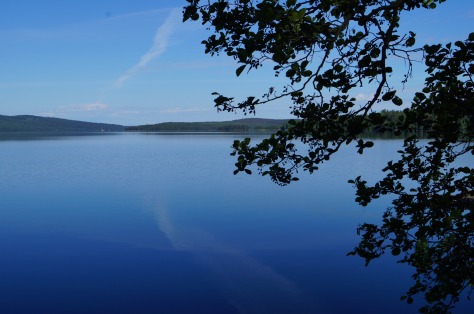
A couple of years ago, I experienced a very cold Midsummer’s Eve in the middle of Dalarna, Sweden. It was impossible to keep warm and later in the evening, I spent time in my sauna, which was indeed the very first time during summer! The lake I admire in the picture is called Siljan and that is the biggest lake in our county, however the other lake , called Väsman, close to my own town Ludvika, is also very beautiful.

Med ansiktet mot Siljan

Facing Lake Siljan

In this post I’d like to share a few photos from this morning when I was out walking. I hope you enjoy the scenery! The flowers are all typical for this time of the year and we use them when we make wreaths for our Midsummer celebration. This year I will most likely spend my Midsummer’s Eve in San Francisco, California, so I deciced to just add a little Midsummer feeling two weeks ahead of time… 😉 First a picture from long ago… Thank you Mom and Dad for sharing the typical traditions of our country!

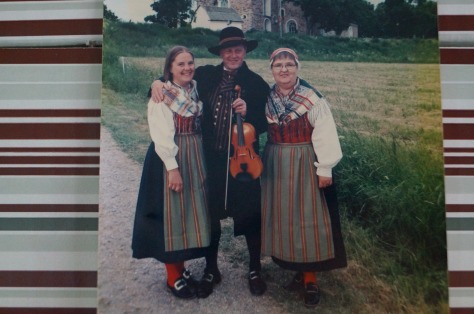
Jag och pappa och mamma

Åsa, Dalke and Inger

Almost every Midsummer’s Eve all my life, I’ve spent in a church village called Stora Skedvi. I’d like to share a few of those very typical fiddle tunes with you, although here they are not played by my father’s group of fiddlers… First a march called #Trettondagsmarschen, that is usually played as the opening of #Bingsjöstämman, a get-together for fiddlers and those who love folk music, usually held the first week of July every summer. The second march is called #Rättvikarnas gånglåt and is also very famous.

Trettondagsmarschen

Rättvikarnas gånglåt

A couple of hundred years ago, people used this kind of music to endure longer walks, such as when they walked from their part of Sweden to the capital city of Stockholm for work opportunities there. It was easier to walk when someone played the fiddle… But instead of Spotify and iTunes for us, the fiddlers also shared their music willingly for dances in the evenings when all had stopped to rest for the night. A typical dance in my part of Sweden would be a ”polska” (Polish, as in from Poland), #Karis-Pers polska which is a slow dance with a high degree of sensuality between the two dancers, a man and woman… But a valse like #Bränd-Pers vals would also be appreciated by the dancing crowd. In some parts of Sweden it is possible to still dance these more traditional dances to live groups of fiddlers.

Karis Pers polska

Bränd-Pers vals

The celebration of Midsummer in all parts of Sweden is very traditional, but Dalarna is known for the tight connection  between folkmusic and folkloristic traditions in general.  Fiddlers playing their special music first of all, but also playing to typical dances for kids and adults. Crowds gather round Maypoles dancing together for fun as in ”Små grodorna” (the little frogs), or other such songs.

In Dalarna where I live, every little village proudly present a unique variety of traditions, unlike that of the village a few kilometers away. The food may vary, too, although most people would have sill (pickled herring) and fresh potatoes with sour cream and crisp bread with butter and cheese. Many would probably also have some strawberry cake with lots of thick cream (jordgubbstårta).

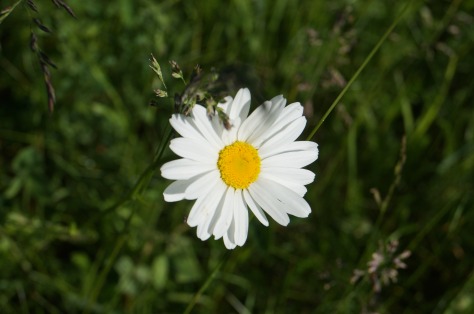
Midsommarblomster#asaolePrästkrage

This year I will not be home for Midsummer. I will most certainly think of days in the past when I celebrated Midsummer, but I will also find ways to make this year’s Midsummer’s Eve memorable, although I will spend it abroad. I wish you all a lovely summer and hope you will follow my blogposts from over there… Look out for blogposts with the hashtag #Swedish tourist in the USA

svenska flaggan


Would you like a second opinion on my version of Swedish Midsummer? 😉

http://


Twohundred and sixty-first asic- Let’s Make a Rock Carving!

Many years ago I went on an excursion in the village Nyberget, Stora Skedvi, where my mum grew up. We climbed a mountain just outside the village and the view was magnificent. The striking view was however not the purpose of this excursion, but instead we had all come to see for ourselves how young people from way back when had found a lot more important things to do on Midsummer’s Eve than to sing ”Små grodorna” and dance round the May Pole…

Lövåsberget med omnejd_Stora Skedvi

The lecturer, Stig Welinder, a well-known archeologist who at that time lived in the village, shared both details about many of the couples and facts found in the many church archives from the actual time. In Sweden it is possible to track our ancestors several hundred years back in time and this was also what the archeologist had done, in detail. He could tell stories of families with happy or sad moments in their lives, all facts verified and found in public archives where anyone could have found pretty much the same information if only we had spent that time. Many of the young couples in the local area had climbed this very mountain on Midsummer’s Eve to enjoy the sunset together.  To remember the day, they carved their names in the rocks on top of the mountain and also planned for a future life together. The place was well-known in the nearby villages as ”Skrivarhällen”(Welinder, 1992) and not just the teenagers from one of the villages climbed the mountain, but also those who lived on the other side of the mountain, a bit further away.

The rock carvings can still be found, if you first climb the mountain! 😀

Among other things that Welinder shared with us in his lecture, was the nature of names in Dalarna at the time when the rock carvings were made.  But there were just a few different names that seemed to be popular, and a few names were just the same, so in order to know who was who, you needed to add the name of the farm, or place, such as Petter Danielson, On the Hill. His son would be named after his father, Daniel Pettersson + On the Hill, and his son in turn, would most likely be called Petter Danielsson+ On the Hill… For women, the use of daughter would be used instead of son.

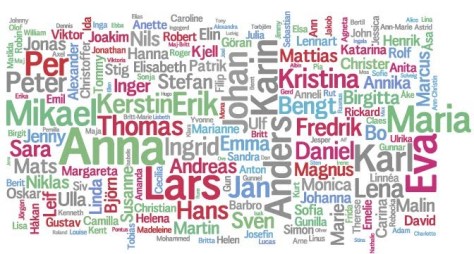
I would, for instance, have had the family name Dalkesdotter, since I am the daughter of Dalke. My brother would acoordingly have been called Dalkesson. During the 23 years I have been teaching I have noticed the change in naming. When I graduated in 1991, many of my first students had names that have been used in our country for generations. Boys names like Daniel, Peter, Mikael, Anders and girls names like Anna, Maria, Kristina, Helena, Ylva etc. But after a few years of teaching I noticed that many of the boys now rather had names like, Kevin, Justin, Jim, Tim, Tom and girls had names like Natalie, Felicia, Caroline, Nellie etc. Nowadays we find a lot of different names, a variation that can be connected to our complex world with input from not just the local area, but from other parts of the world.

namnbild.jpg (672×361)

My own name, Åsa, is from the time before Sweden was Christened and means ”goddess”. Very few little Åsa’s are to be found nowadays, but instead some of the names that I would connect to old relatives are coming up as new favourite names for kids. It’s funny how one sometimes hear parents call for their little ones and you expect a person in their seventies to approach behind a tree in the park, but instead a little toddler, called Bosse or Leif, will meet his Mom with a lovely smile!

toddlerRoundup-14.jpg (600×503)

My friend the archeologist from the mountain top is a very good example of being modern at the same time as he cherishes the value of how our ancestors chose to live their lives. What footprints or fingerprints will our generation leave? No mountains will be filled with names, but maybe we will share something else that is just as interesting and important? Let’s hope so!

Welinder, S (1992) on Skrivarhällen i southern Dalarna, Bergslagen, Sweden

Onehundred and twentyfifth åsic- Saint Lucia brings the Light in the Dark!

Lucia-13.12.06.jpg (874×691)

Saint Lucia or Saint Lucy of Syracuse, from round 300 AC, is today’s protagonist in many different settings… The legend says that Saint Lucia was born in Italy in Syracuse. She was of noble family, but since her father had died Saint Lucia and her mother didn’t have any other solution to support themselves but for the young Lucia to marry a rich man. Lucia, however, had already dedicated her heart to God and did everything in her power to prevent a marriage. According to the legend, Lucia’s eyes were very beautiful. She even tore her eyes out and gave them to one of the men who came to propose, because she wanted to discourage the man. When Lucia was buried her eyes had been restored through miracle and that was also why she was honored as a Saint during the Middle Ages (1).

Why would a country like Sweden celebrate a saint from Italy, you may think? In the winter Sweden and the other Nordic countries long for the summer not only because of the cold and snowy winter, but also because of the darkness. Saint Lucia is celebrated every year the 13th of December and in Sweden the tradition is still very important for Christmas celebration. Many of the traditional songs are sung not only the 13th, but also during Christmas.

Lucia processions are organized all over Sweden and throughout all different sectors in the society. Kids celebrate in pre-schools or schools and adults celebrate if they are choir members for instance. Many towns or cities i Sweden have their own Lucia processions and on TV they show the official Lucia show of the year.

As a young girl I was in my first Lucia procession when I was a few years old. As a teenager I started to sing in a girls choir called Bjursåsflickorna. We gave many Lucia concerts every year. One of the years we were asked to perform at a dinner in the Royal Castle in Stockholm. It was very exciting and a memorable moment. Princess Madeleine who is now a Mom herself, was climbing on the chairs and crawling under the table and was quite an active little girl at the time. The very same choir also performed a traditional Lucia concert at Lugnet’s sports stadium in April… We were pretending it was winter, because of some honorable guests from the International Olympic Comittée. One of them was the chairman at that time, Juan Antonio Samaranch. The idea was for us to sing to bring the Olympic Winter Games to Falun… Obviously that was a  mission impossible. Falun lost.

Singing for Lucia in strange places seemed to be one of the habits of this choir. I remember we even sang in the Falu Copper Mine, in almost complete darkness and with the damp vitriolic scent in our noses, helmets on our heads and just a candle to light our way down there. Very exciting and completely unique at that time. I know that later on, many other choirs have sung in the copper mine, too. Nowadays I come across Lucia processions ”by accident”, like for instance today when I visited the shopping mall Kupolen in Borlänge, or when students at school perform. I have also accompanied my own children on different occasions, but for myself, I would say my celebration of the Saint Lucia is found in memory lane…

Before I let you go, let’s just glance at a picture of a typical saffron bun, called ”lussekatt” in Swedish.

#lussekatter, #asaole

But hey… Why invent the wheel??? Please check this link from youtube in order to finally understand this topic!

http://en.wikipedia.org/wiki/Saint_Lucy