One hundred and tenth åsic- School Smart with Smartphones

A lot of facts can nowadays be easily found on the internet. Many skills will soon be forgotten and a five-year-old can google just about anything with no help from an adult. I sometimes feel old when I notice how my kids know things I spent a lot of time learning. All they need to do is google. At work I notice that the gap between those who know how to handle IT and those who don’t is increasing. There will be no equality unless students get their computers thru school and also good instruction from skilled teachers. There will always be students with parents who either cannot afford a new computer, or maybe don’t understand to what extent their kid will be left out in school if they cannot be online and use internet as the rest of the kids. Being curious is a good start!

Even if we may think some things were better THEN than they are NOW, we need to at least try to go with the flow…

Otherwise we, the teachers, would soon be relics, too… Stored and filed side by side with flanellograms,

chalkboards and sandpits with sticks…

griffeltavla.jpg (637×510)

In subjects where a smartphone is a rich resource I don’t fully understand why schools still say students cannot use their phones in class. The teacher has a great opportunity getting things done a lot more easy by accepting the use of smartphones when it IS smart to use them. When we don’t find the solutions to meanings of words, the smartphones serve as dictionaries and saves a lot of time, compared to finding out by a visit at the local library, but that is not the only way to save time with a smartphone in a classroom!

Let me share a few examples from my own classroom, which is a language learning classroom with Swedish as a Second Language as the one and only subject. The students and I talk a lot about things we read, listen to or watch. I always try to help them by writing additional examples on my white board. This is however not a classroom with a SMARTBOARD, but just an ordinary poorly equipped in-the-basement-classroom. When the whiteboard is completely filled with comments, words and phrases connected to the topic we discuss I either take a photo myself and later I re-write some of the unreadable stuff for my students, OR I ask them to simply use their smartphones and take a photo of my notes. That’s quick and easy and also a SMART way to use PHONES.

Another thing with language learning is to use the phone for pronunciation. Many students in my classroom merely meet one person who speaks Swedish and I am that person. Although I try to give them several suggestions to where they can listen to Swedish, or perhaps meet Swedish people and talk to them, it is very difficult to some of them. Their smartphones is thus an excellent way to help them out at least with pronunciation of difficult words or phrases and also more than anything else, the quality of the sounds of the nine Swedish vowels, when put in different positions of words or phrases. When students record my pronunciation and go back home and listen, repeat, and their own pronunciation improves rapidly. So, if I would stick to the rules of many classrooms and say ”Don’t use your smartphone in class!” my students would have a tougher time learning Swedish.

Ines Uusmann, Minister for Infrastructure, seemed to believe that the internet would be forgotten after a few years, although it is said that the reason why everyone remembers, is that the headline for the article was a fake quote. This is in fact (in Swedish, though…) what she said:

”Jag vågar inte ha någon alldeles bestämd uppfattning men jag tror inte att folk i längden kommer att vilja ägna så mycket tid, som det faktiskt tar, åt att surfa på nätet. […] Att sitta och surfa på nätet tar en himla massa tid. Vad är det bra för? […] Det kanske är så att det är något som vuxit upp nu. Alla pratar om internet men kanske är det övergående och sedan blir inriktningen mer specificerad”

Ines Uusman citerad i Svenska Dagbladet, 12 maj 1996.

Källa: Rydén, Daniel, ”Dimmor på nätet”, Sydsvenskan, 4 mars 2007.
One hundred and sixth åsic- What’s your name? Let’s make a rock carving!

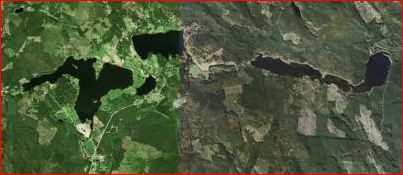
Many years ago I went on an excursion in the village Nyberget, Stora Skedvi, where my mum grew up. We climbed a mountain just outside the village and the view was magnificent. The striking view was however not the purpose of this excursion, but instead we had all come to see for ourselves how young people from way back when had found a lot more important things to do on Midsummer’s Eve than to sing ”Små grodorna” and dance round the May Pole…

Lövåsberget med omnejd_Stora Skedvi

The lecturer, Stig Welinder, a well-known archeologist who at that time lived in the village, shared both details about many of the couples and facts found in the many church archives from the actual time. In Sweden it is possible to track our ancestors several hundred years back in time and this was also what the archeologist had done, in detail. He could tell stories of families with happy or sad moments in their lives, all facts verified and found in public archives where anyone could have found pretty much the same information if only we had spent that time. Many of the young couples in the local area had climbed this very mountain on Midsummer’s Eve to enjoy the sunset together.  To remember the day, they carved their names in the rocks on top of the mountain and also planned for a future life together. The place was well-known in the nearby villages as ”Skrivarhällen”(Welinder, 1992) and not just the teenagers from one of the villages climbed the mountain, but also those who lived on the other side of the mountain, a bit further away.

The rock carvings can still be found, if you first climb the mountain! 😀

Among other things that Welinder shared with us in his lecture, was the nature of names in Dalarna at the time when the rock carvings were made.  But there were just a few different names that seemed to be popular, and a few names were just the same, so in order to know who was who, you needed to add the name of the farm, or place, such as Petter Danielson, On the Hill. His son would be named after his father, Daniel Pettersson + On the Hill, and his son in turn, would most likely be called Petter Danielsson+ On the Hill… For women, the use of daughter would be used instead of son.

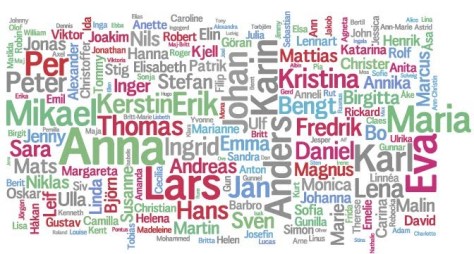
I would, for instance, have had the family name Dalkesdotter, since I am the daughter of Dalke. My brother would acoordingly have been called Dalkesson. During the 23 years I have been teaching I have noticed the change in naming. When I graduated in 1991, many of my first students had names that have been used in our country for generations. Boys names like Daniel, Peter, Mikael, Anders and girls names like Anna, Maria, Kristina, Helena, Ylva etc. But after a few years of teaching I noticed that many of the boys now rather had names like, Kevin, Justin, Jim, Tim, Tom and girls had names like Natalie, Felicia, Caroline, Nellie etc. Nowadays we find a lot of different names, a variation that can be connected to our complex world with input from not just the local area, but from other parts of the world.

namnbild.jpg (672×361)

My own name, Åsa, is from the time before Sweden was Christened and means ”goddess”. Very few little Åsa’s are to be found nowadays, but instead some of the names that I would connect to old relatives are coming up as new favourite names for kids. It’s funny how one sometimes hear parents call for their little ones and you expect a person in their seventies to approach behind a tree in the park, but instead a little toddler, called Bosse or Leif, will meet his Mom with a lovely smile!

toddlerRoundup-14.jpg (600×503)

My friend the archeologist from the mountain top is a very good example of being modern at the same time as he cherishes the value of how our ancestors chose to live their lives. What footprints or fingerprints will our generation leave? No mountains will be filled with names, but maybe we will share something else that is just as interesting and important? Let’s hope so!

Welinder, S (1992) on Skrivarhällen i southern Dalarna, Bergslagen, Sweden

One hundred and eighth åsic- A quiet wish from a poor teacher

I note that a media issue here in Sweden right now is whether teachers without a certificate will be able to study for free with full pay or not. All teachers I know have either worked to earn money enough to pay their studies, or they have a loan from CSN that they still pay monthly, in my case I still pay, 23 years after graduation…

If people who are not yet teachers, will be fully paid while they study, I wish the Government would pay my CSN-loan for me.

spargris_1.jpg (446×267)

One hundred and fourth åsic- To choose or not to choose is the question

148948_63610672.jpg (475×356)

When I was in NJ a couple of weeks ago I noticed that I am not very good at choosing and find myself ambivalent and indecisive, If there are a lot of options. At least when it comes to choosing food from a menu… 😀

I wonder if I possibly have inherited this from my daughter? We are just the same when we are in a situation of choice. If we get stuck, we do however have different solutions to our problem. My daughter would most likely go for a choice similar to some of her friends, and thus avoid the risk of feeling her own choice was in any way bad. I, myself, on the other hand, sometimes want to follow the stream, not be the one to be a nuisance to others. SO although we both may do as others do, we seem to do so for completely different reasons. We also both tend to pick ”both” when it may be difficult to pick ”either…or”…

One of my friends have decided for herself to give herself a kind of punishment if she cannot make a decision when she is picking something for her (fika)coffee. If she cannot make up her mind about what nice pastry to choose, she simply says: ”En kanelbulle, tack!” (A cinnamon bun, please!). I remember many different situations when this friend and I have lined up to buy a cup of coffee and she and I both try hard to make a decision, but when it’s our turn at the check-out, we realize that it’s impossible… Luckily a cinnamon bun is a great treat along with a cup of coffee!

kanelbullar2_2352.jpg (3648×2736)

But…what if my reluctance to make a choice is the very reason why I find it so difficult to be decisive in my classroom, too? The Swedish School System allows a lot of democratic processes for students to be involved in. We are supposed to engage our students in decision-making and students have a right to make an impact and be active in evaluating their school situation from many different perspectives. I don’t mind that situation at all… In fact I enjoy being interactive with my students in order to develop the learning process from year to year. Having said that, I also notice that Swedish students tend to be used to this collaboration with their teachers and they are also interested in sharing their opinion, suggest possible improvements to instruction or lessons, but my current students from different parts of the world seem more or less new to the idea of sharing their ideas and views.

I remember a lesson I had planned for a group of SVA3, where the students were all supposed to act and also to reveal a certain personality in a dialogue with friends. I had hoped for the group to pick a card with a personality and then ”go for it”, but obviously they were all worried about the situation and thought it was a better idea if I handed out the cards and thus made the choice more of a ”random” situation. After the activity I asked the students why they didn’t want to take part in the process of choice and they all said that they thought it was scary and unusual to decide for themselves in a school situation. It didn’t matter that they were all adults. They were all facing their old school situations where teachers make decisions and students do as they are told.

Centralskolan-en-skola-foer-alla_large.jpg (470×313)

Is there a difference between situations where one wants to choose or not? I don’t know if that would be universal, but I think from my point of view that when the decision is important to me FOR REAL, then I don’t give away my chance to choose voluntarily, but if there is no real and deep meaning to me personally, then I don’t mind letting someone else pick a choice of their taste. That is also why I completely trusted my friends when we decided what food to buy when I was in the US a couple of weeks ago. I trusted their taste and I didn’t want to be a pain…so instead of making a decision they wouldn’t appreciate, I’d rather let them choose. I guess we are all different. I notice that I am a person with a ”decision disorder” 😀

So… To choose or not to choose, will also in the future be the most important question, in every situation there is.


A mini åsic- Rain, rain go away, come again another day…

I remember a long time ago, when I was sitting by the campfire together with a lot of friends. It was raining and we were still happy since the fire kept us warm. We sang a lot of nice and warming songs and among them was a canadian song that one of the participants knew from her time in Canada. It was said to be of indian origin. Of course I don’t know whether that’s true or not, since it’s so long ago, but the song was like a mantra, a short melody one would repeat over and over in order to scare the rain off… The very simple lyrics is still there in my head every rainy day, such as today: ”Rain, rain, go away, come again another day!”

I’ve been writing about rain here today, but most of the memories I shared was very Swedish and also very connected to typical Swedish things to do during summer. I do however want to contribute with two memories from abroad. One is from Britain and one is from the US.

The British memory is not just ”a memory” but rather a long long long MONTH… I visited Britain during fall the yearof  2000. I was pregnant with my second daughter and a bit nauseous because of that. On top of my feeling of nausea, I stayed in a very strange Bed & Breakfast where the landlady was a true pain… She forced me and my friend Eva to stay outdoors for certain hours and also didn’t offer any help to dry our clothes. Now… who cares? If it had been a lovely New England fall with colourful maples and crisp air and sunshine, I wouldn’t care anyway… Now, however, it was for sure OLD England with all that it takes…so it poured for a month… At home, before I left, I had bought a strange kind of rain cap, a really cheap one, since I didn’t anticipate any rain… I tend to think that if I plan for sunshine, there WILL be sunshine… Obviously my plans aren’t always heard…

The whole month I didn’t get my clothes completely dry. Why? Because the landlady didn’t think it was cold enough to put any heat on yet… I didn’t bring my wellingtons from Sweden, but rather walked around in very wet sneakers. My feet were a complete ”wrinkle” when I finally returned to Sweden. I understand why Britons tend to joke about the weather. It may be their only chance to cope. I’m happy I live in a country where fall season MIGHT conclude some SUNSHINE, too…

The US memory is from the time to depart from my dear friends the Groffs in the summer of 2004. At the time when we decided to go to the airport in Philly the sky opened and I bet ALL that summer’s rain fell on the road where we drove… My flight was delayed with a couple of hours and I remember I was a little bit scared of flying. Being in the airport for two extra hours wasn’t that nice, but luckily the flight went well and I got back home to the sunny country of Sweden again. We hardly ever have any rain, nudge,nudge… Today is an exception…

Rain, rain go away, come again another day…

Sjuttonde åseriet- A World of Language Learning Starts in Your Computer

I’d like to share with you how learning can become interesting to young students if focus on learning derives from questions raised by the students rather than the teacher. I was teaching a mixed group of students in grade four and five in the Swedish compulsory school system. The students all had very few contacts with native speakers of English or with students from other countries. I wanted them to improve both their written an oral English and thought of different ways. It was in the middle of the annual summer vacation and as usual I spent time thinking of the coming school year. Isn’t that typical for a teacher? I know I’m not the only teacher who spends time planning for future teaching while their off of school.
Anyway, I thought of the idea of getting some kind of pen-pal for each and every one of my students. At this time I had just got my first personal computer through work and I wasn’t very familiar with how to use internet as a resource. I was therefore searching for different websites in order to find addresses to PEN-pals. It wasn’t until I came across the website http://www.epals.com with the very new word #epals, that I realized that PEN-pals were completely outdated! I was thinking like a dinosaur! Briefly, Epals is a website where teachers or students or for that matter teachers AND students can get in touch with each other in order to collaborate in different projects. It doesn’t have to be international projects, but in my case it was.
From the start I didn’t plan to collaborate at all with any American teachers. I was focused on the UK, since I was going to the UK in September in 2000. I spent a couple of hours reading different profiles in the epals website and then I wrote my own profile. Already while I was browsing the site, I got a few mails in my inbox. There were two of them from American teachers and one of them was from a British teacher. They all seemed very nice, but since I was in a hurry to get my project going, I wrote to the British teacher, telling him about my plans to go to the UK and I also fired off my question about the two of us meeting each other to plan our future collaboration with our students. I wrote “Since I come to the UK in September, I hope we can meet and plan for our mutual project!” Then, since I was in a hurry and also because I know that teachers don’t like to spend time doing the wrong things, I wrote back to the two other teachers politely telling them that unfortunately I had already found a teacher in Britain whom I wanted to collaborate with and thus I didn’t need to write to them…
The “British” teacher replied to my email saying something like “It’s not that I don’t WANT to meet you, but how exactly did you think we could meet if you go to the UK and I live in New Jersey?”
Anyone who gets an email with that comment could have given up, but I’m not that kind of person. I wrote back. The “British” teacher wasn’t at all British and the REAL British teacher, whom I mistaken for being American, was of course already lost and gone, so what options did I have??? I started off brushing up my own English, by writing back and forth to this particular American teacher, who seemed to be a nice person already from the start. He was a teacher in a class in the same age span as my students, so after a few weeks of planning we started off writing emails between the two different schools.
At first, we instructed our own classes to write more general letters about themselves and share photos and details about the school system or what the school looked like. But gradually as the students got to know each other a little better, they started to ask their own questions and compared the learning situations in Sweden and New Jersey. My students, who were used to several breaks during school days, were shocked to notice that the students in the American school had fewer breaks and also lacked a nice lawn and a playing-ground at school. Outside the American school was instead a parking lot.
There were a lot of similar topics that gave students in both ends of our mutual collaboration a chance to challenge their language skills. In the American end students had a more cultural based viewpoint to our project, whereas in Sweden the focus was mainly on language and how to express oneself. One thing lead to another and the American teacher and I also visited each other’s schools and got the opportunity to see through teaching what it was like to teach in a completely different school setting than the one we were used to, respectively. I remember from MY teaching during one single day in the American school, that it was weird to be addressed with my Mrs Olenius. I also found it interesting to interact with the student in MY way, rather out spoken and joking, and notice how a few of the American TEACHERS frowned. It seemed to me as if they were taking their ROLE as teachers much more seriously than I do, which was interesting to note.
Later, my American friend visited me and my class in Sweden. He had brought with him a few interesting lessons to teach and one of them was in Physics, where he wanted to show the students how an American Hurricane builds up, by using two large bottles that he quickly moved in order to make it seem like a hurricane within the bottles. An interesting thing with his experiment is the obvious difference between the ways we would do such and experiment and the way he did. He ended up getting eager students around him who wanted to do the experiment themselves, not just look at him doing it. In Sweden I’d say most teachers would give their students the opportunity to try out such an experiment by themselves. Another thing the American teacher probably noticed is that his usual reference to the famous Wizard of Oz didn’t work in Sweden. Why not?
A Swedish student in grade five generally wouldn’t know what kind of movie that is.
I’m happy to say that this American teacher and I have been friends for a long time now and thanks to him, I have learnt a lot about America that is more positive than I could ever imagine. Maybe it was meant to be that I mixed the American teacher with the British?

Tolfte åseriet- Hello Mr Magpie! How is your wife?

Years ago, when I first visited a dear friend in Kent, England, she showed me around and we took a car ride in the lovely countryside. If you have ever been in Kent, you already know its beauty. I was admiring the scenery when my friend suddenly hit the brakes, opened the car door and in fact got out of the car, saying: “Hello Mr Magpie! How is your wife?” I had by then never  heard of such behavior among magpies, but a year later I could connect to magpies in general and a couple of magpies in particular. It was when a lovely movie was released. It is called “Pica pica” and as you may know, pica pica is the latin name for magpies. If you read in English, you may want to read another blog post about magpie experiences:

Two Hundred and Seventy-First Asic- If you give a Magpie a Cookie…

DSC_1079-5.jpg (1200×788)

Jag satt hemma i TV-soffan, på den tiden då min TV inte hade fjärrkontroll och inte heller ett stort programutbud med många olika kanaler från världens alla hörn. Kvällens event var en film med titeln “Pica pica” Följ gärna länken:

http://sv.wikipedia.org/wiki/Pica_pica_(film)

Filmen är 97 minuter lång, står det i wikipedias information. Jag har ingen anledning att ifrågasätta det. Jag minns nämligen hur jag å ena sidan uppfattade filmen som längre än jag hade förväntat mig och å andra sidan hela tiden mycket fin, spännande, intressant och ovanlig i sitt slag. Skator fascinerar mig. I morse när jag tittade ut genom fönstret såg jag mina nya grannar, herr och fru skata. De har flyttat in i en risig etta i toppen av mitt äppelträd och nu innan lövverket döljer det, kan jag ägna tid åt att tjuvkika på parets ansträngningar att rusta upp ettan.

Det är helt uppenbart att de inte är helt eniga om hur det ska se ut i ettan. Jag är inte någon ornitolog, så jag vet inte vem som är herr och vem som är fru, för båda äro de varandra så lika. Men ett vet jag… De kivas… Den ena vill lägga kvisten åt det ena hållet och den andra flyttar genast samma kvist under högljutt tjatter. Kvistläggaren knuffas åt sidan och ordningen återställs tillfälligt och ett visst lugn infinner sig. Ettan vilar i frid, men se då kommer kvistläggaren åter, med en annan kvist, kanske för en utbyggnad åt söder? Jag börjar misstänka att kvistläggaren är en han och att den som funnit sig till rätta i ettan och börjar inreda densamma är en hon…

”Skator ska man hålla sig väl med!” brukar min pappa säga. Själv tycker jag att de är vackra, med sin svartvita fjäderdräkt och kloka ögon. De har något klokt över sig, tycker jag. Mamma berättade när jag var liten om en kvinna från hennes barndom. Kvinnan var på besök i mammas hem och tittade ut genom fönstret och sa: ”Vilken vacker fågel!” Min mormor gick genast fram till fönstret för att se vilken fågel kvinnan refererade till, men mormor såg inte någon jättevacker fågel, utan utbrast: ”Men det är ju en vanlig skata!” varpå kvinnan replikerade: ”Heter den så?”

Det kunde ha varit jag, som inte visste fågelns namn. Jag hör deras vackra sång, ser hur de anstränger sig den här tiden på året och jag kan namnge våra egna grannar. Min vän nötväckan som har bor i höghus, högt upp i tallen på vår tomt brukar jag prata med när ser henne och skatorna pratar jag också med, för jag är tillräckligt skrockfull för att minnas varför min väninna stannade sin bil så abrupt i England. Hon menade att man MÅSTE hälsa på skator, för annars betyder det otur. Eftersom jag inte gärna vill ta reda på i vilken grad det betyder otur, fortsätter jag hälsa på skator. I smyg… när ingen hör…

Elfte åseriet– En sörjande bokmals funderingar

Nyfikenheten har tagit med mig på utforskande lärande i många olika sammanhang och miljöer och min främsta källa till lärande har varit och är alldeles vanlig traditionell läsning. Läsning av böcker! En av mina elever skrev för något år sedan i en inlämningsuppgift att en bok är som dörren till en helt annan värld. Så är det definitivt för mig också, men många av eleverna läser väldigt lite. När jag jobbade i grundskolan läste jag varje dag för eleverna. Det gör många lärare. Lärare uppmanar ibland föräldrar att läsa med sina barn och diskutera det lästa med barnen.

Det är svårt för mig att hantera, eftersom jag själv finner en så stor glädje i att läsa. Jag har nästan vänt ut och in på mig själv för att entusiasmera elever att läsa. Min främsta drivkraft i arbetet med att få elever att bli aktiva och intresserade läsare, är förstås min egen läslust. Det är nästan läge att lansera ett nytt ord i svenskan, som kanske bättre beskriver min läslust, nämligen ordet lästvång. Det är nästan så att jag har ett tvingande behov av att läsa. Detta tvingande behov är mest påtagligt under skolloven, eftersom jag dels VILL läsa och dels i alla år som lärare har haft uppfattningen att jag bör hålla mig à jour med det senaste inom skönlitteraturen. Självklart är det ett helt omöjligt mål, men det är en fin ambition som har lett till att jag känner mig tillräckligt insatt för att kunna hjälpa mina vuxenelever att hitta intressanta läsupplevelser.

Genom åren har många böcker i olika genrer var och en för sig betytt oändligt mycket just i det läsögonblicket och de har även tjänat som källa till lärande, nöje, förströelse eller flykt. För någon dag sedan tittade jag igenom en lista över ”Åsas boktips till eleverna”. Där fanns böcker som jag just då ansåg var oersättliga, oförglömliga och omöjliga att klara sig utan. Nu tedde sig listan ofullständig. Varför då? Självklart för att så många NYA läsupplevelser pockade på att få vara med på listan! En lista är aldrig komplett. Den utgör i sig någon form av val och samtidigt väljer man bort och vore den statisk så vore den tråkig. Ibland har jag läst OM böcker som jag läst i min ungdom. En sådan bok som jag läst med ungefär tio års mellanrum är ”Jane Eyre” av Charlotte Brontë.

Första gången jag läste den, var jag jävligt mogen. Jag var typ sjutton och året var typ 1984! Jag läste jag den på svenska, för engelska är assvårt att läsa! Man fattar typ ingenting och orden är skitsvåra ju! Jane Eyre hade nyss gått som följetong på TV med en JÄTTESNYGG snubbe i huvudrollen som Mr Rochester (tyckte JAG i alla fall!). Första delen av boken var ju SÅÅÅÅÅÅ tråkig, ba!

Den handlade typ om nån trist unge på ett barnhem och alla var astaskiga mot ungen hela tiden. Jag skummade typ halva texten för att hitta honom, Mr Rochester! Men han dumpade Jane och drog och då blev det astråkigt igen! Men sen ba, va… Sen, så ba, ÅÅÅÅÅÅ. Då KOM han tillbaka va! Och då, ba, blev det typ asknäppt, för då drog JANE i stället! Då när han hade kommit, typ, så ba, DROOOOG hon! Det var ju typ jättekorkat! Jag bläddrade tills jag såg att dom fick varann och sen sumpade jag hela boken. TV är ju typ MYCKET bättre än en astjock bok!

Mr Rochester

Den andra gången läste jag boken på engelska och då kändes det helt annorlunda. Barnhemsvistelsen blev viktig och intressant för att förstå Janes beslut i resten av romanen. Jag tyckte dessutom att de vackra ljunghedarna gick att föreställa sig för sitt inre öga och fascinerades av hur fint beskriven naturen var.

Tredje gången läste jag också boken på engelska, men då för att bättre förstå ”The Wide Sargasso Sea” av Jean Rhys, eftersom DEN boken handlade om Mr Rochesters fru, hon som är instängd i ett rum i huset… Jag såg då helt andra sidor av boken och upptäckte nya detaljer som jag tidigare inte lagt märke till. Den senaste (notera att jag inte skriver sista!) gången jag läste den, var för att känna mig uppdaterad nog för att på ett rättvisande sätt kommentera en förstklassig text som en av mina dåvarande elever skrivit i engelska. Kan man läsa en bok hur många gånger som helst? Ja!!! Utan böcker skulle jag känna mig betydligt fattigare!

Om man tänker en stund på att många ungdomar inte läser böcker, så blir det naturligt att fundera över om de läser alls. Kanske har deras läsvanor en annan inriktning? De läser bloggar, sms, manualer till komplicerade dataspel och de uppdaterar sig i faktauppgifter online. Många ungdomar idag har läst betydligt mer text (i mängd räknat) än vad mina morföräldrars generation någonsin gjorde, men frågan är om skolan har hängt med i svängarna i tillräcklig omfattning? Om skolan ska målgruppsorientera sig, så finns det anledning att fundera på vad man ska läsa i klassrummet och varför. Vidare är det viktigt att fundera på hur man bäst möter kursplanekraven vad gäller valet av texter.

För mig är det viktigt att poängtera att när jag möter elever NU och jämför dem med de elever jag mötte under mina första år som lärare, i början av nittiotalet, så är det främst läsförståelsen som brister, jämfört med förut. Ämnet jag undervisar i är svenska som andraspråk, som jag nämnt tidigare. För mig är det viktigt att ge eleverna möjlighet att träna på studieteknik direkt kopplad till målens krav, till exempel vad gäller läsning. Hur förstår man en text? Hur söker man information? Hur tolkar man något som står i texten? Om man inte vet hur man gör, så måste man först få instruktioner och undervisning och först därefter ges en möjlighet att visa att man kan! För att bli en bättre läsare måste man läsa mer. Men man måste också förstå varför läsförståelse kan vara viktig sedan, någon annanstans, i ett annat skede i livet. DET är en helt nödvändig motivationsfaktor som måste in i den direkta undervisningen. Hur? Jag provar mig fortfarande fram efter så många år i yrket och jag ger inte upp i första taget. Trägen vinner!