Twohundred and Ninety-Third Asic- A hint of Swedish Midsummer

A couple of years ago, I experienced a very cold Midsummer’s Eve in the middle of Dalarna, Sweden. It was impossible to keep warm and later in the evening, I spent time in my sauna, which was indeed the very first time during summer! The lake I admire in the picture is called Siljan and that is the biggest lake in our county, however the other lake , called Väsman, close to my own town Ludvika, is also very beautiful.
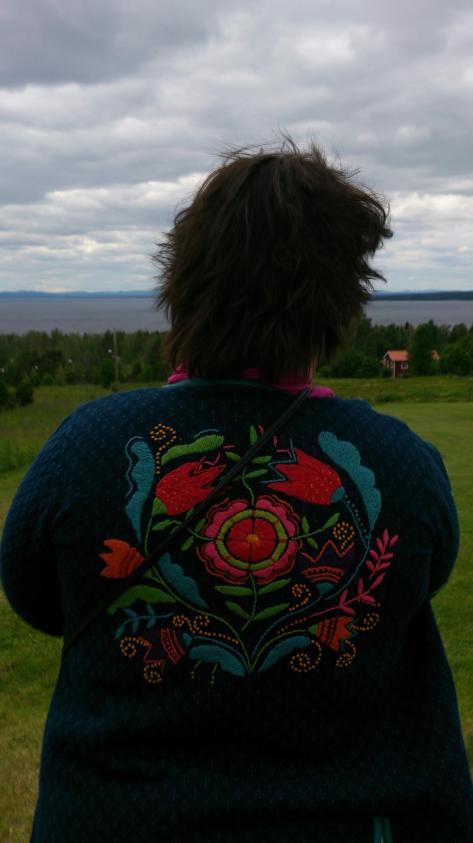
Med ansiktet mot Siljan

Facing Lake Siljan

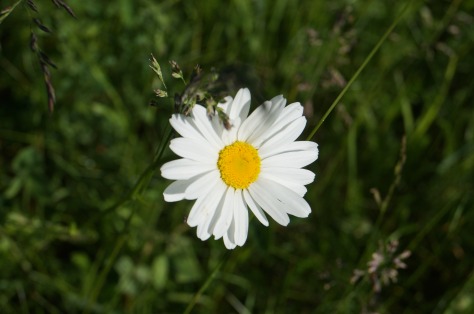
In this post I’d like to share a few photos from this morning when I was out walking. I hope you enjoy the scenery! The flowers are all typical for this time of the year and we use them when we make wreaths for our Midsummer celebration. This year I will most likely spend my Midsummer’s Eve in San Francisco, California, so I deciced to just add a little Midsummer feeling two weeks ahead of time… 😉 First a picture from long ago… Thank you Mom and Dad for sharing the typical traditions of our country!
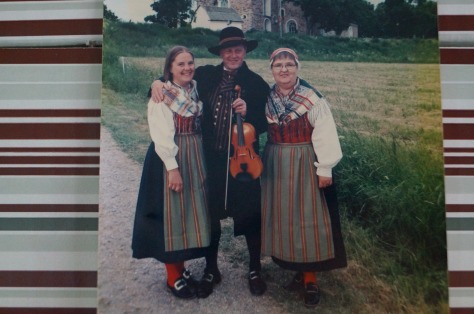
Jag och pappa och mamma

Åsa, Dalke and Inger

Almost every Midsummer’s Eve all my life, I’ve spent in a church village called Stora Skedvi. I’d like to share a few of those very typical fiddle tunes with you, although here they are not played by my father’s group of fiddlers… First a march called #Trettondagsmarschen, that is usually played as the opening of #Bingsjöstämman, a get-together for fiddlers and those who love folk music, usually held the first week of July every summer. The second march is called #Rättvikarnas gånglåt and is also very famous.

Trettondagsmarschen

Rättvikarnas gånglåt

A couple of hundred years ago, people used this kind of music to endure longer walks, such as when they walked from their part of Sweden to the capital city of Stockholm for work opportunities there. It was easier to walk when someone played the fiddle… But instead of Spotify and iTunes for us, the fiddlers also shared their music willingly for dances in the evenings when all had stopped to rest for the night. A typical dance in my part of Sweden would be a ”polska” (Polish, as in from Poland), #Karis-Pers polska which is a slow dance with a high degree of sensuality between the two dancers, a man and woman… But a valse like #Bränd-Pers vals would also be appreciated by the dancing crowd. In some parts of Sweden it is possible to still dance these more traditional dances to live groups of fiddlers.

Karis Pers polska

Bränd-Pers vals

The celebration of Midsummer in all parts of Sweden is very traditional, but Dalarna is known for the tight connection  between folkmusic and folkloristic traditions in general.  Fiddlers playing their special music first of all, but also playing to typical dances for kids and adults. Crowds gather round Maypoles dancing together for fun as in ”Små grodorna” (the little frogs), or other such songs.

In Dalarna where I live, every little village proudly present a unique variety of traditions, unlike that of the village a few kilometers away. The food may vary, too, although most people would have sill (pickled herring) and fresh potatoes with sour cream and crisp bread with butter and cheese. Many would probably also have some strawberry cake with lots of thick cream (jordgubbstårta).

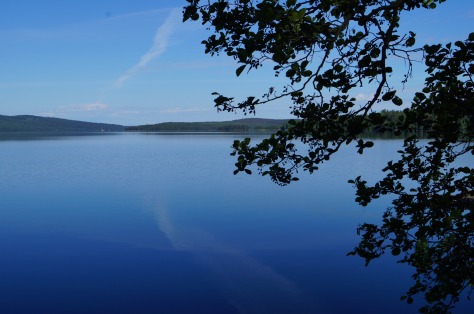
Midsommarblomster#asaolePrästkrage

This year I will not be home for Midsummer. I will most certainly think of days in the past when I celebrated Midsummer, but I will also find ways to make this year’s Midsummer’s Eve memorable, although I will spend it abroad. I wish you all a lovely summer and hope you will follow my blogposts from over there… Look out for blogposts with the hashtag #Swedish tourist in the USA
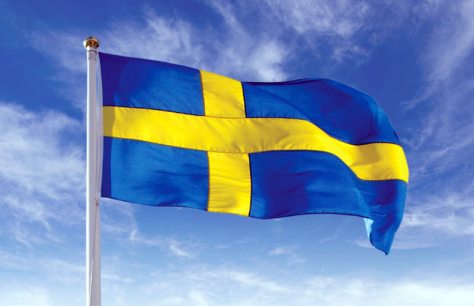
svenska flaggan


Would you like a second opinion on my version of Swedish Midsummer? 😉

http://


Tvåhundranittionde åseriet- Sexton tusen!

Nu har bloggen haft 16 000 visningar! Tack alla ni som läser det jag skriver. Nyligen publicerade jag en serie inlägg som handlade om musik i SVA-undervisningen. Inläggen hittar du enklast genom att söka här på bloggen med #Musikupplägg att samtala om. I sommar kommer ett antal blogginlägg att handla om upplevelser från en turistresa i USA. Då är det enklast att söka här på bloggen med #Turist i USA. Efter sommaren återgår bloggen till att vara en mix av reflektioner om undervisning, boktips och däremellan en del minnen från lärargärningen. Till hösten hoppas jag även hinna med att göra fler filmer med undervisningstips att lägga upp på min YouTube-kanal #åseriklipp.

Turist i USA- Musikminnen och Monterey Bay Aquarium

”It was a morning in May, on a beach outside Monterey… She walked alone in the sand, had her shoes in her hand, let her mind go astray… He was a Santa Cruz boy, held his head up with pride and joy. He was riding the surf to where the sea meets the turf and every wave was his toy” (från sången Angelica and Ramone)

Vi var tre tjejer som satt i ett flickrum och spelade kassettband och sjöng med… Det var Björn Skifs som framförde en Secret Service-låt som heter Angelica and Ramone och det var en jättefin sång, tyckte vi… Så som det var på den tiden, hände det ju att man hade spelat in kassettbandet, så att inte riktigt hela låten kom med på första sidan… Musiken tystnade mitt i en låt för att kassettbandet tog slut där… Precis så var det med det kassettband vi brukade lyssna på och sjunga till just den här låten… Vad hände då? Vi sjöng vidare en halv strof utan Björn Skifs…varje gång…för att vi ständigt glömde bort att bandet tog slut just DÄR och för att vi kunde låten så väl att det gick av bara farten att sjunga vidare, utan att fästa avseende vid sådana petitesser som tekniska missöden…

Hursomhelst… Monterey… Redan då, på sjuttiotalet, undrade jag var den platsen låg… Jag kunde inte alla orden i låten, men lärde mig uttala dem genom att sjunga med. Namnen på platser kunde man väl googla, tänker du? Nja… Nu är ju jag lite ÄLDRE än själva Google… I mitt fall blev det så att jag fick slå upp platsnamnet i en atlas och för att klara av att hitta platsen, behövde jag förstå det där systemet med både siffror och bokstäver som man vanligtvis hittar i ett register i en atlas;  s 162 F3, t ex. Det var ju inte så svårt när man fick kläm på det, men i dagens läge kan säkert inte alla skolelever DET, men i stället kan de utan minsta problem hitta en liten stad i västra USA på fem sekunder, alltså snabbare än vad man hittar en nål i en höstack…Google, denna vän i nöden… Monterey är en liten stad som ligger vid Stilla havskusten i Kalifornien, USA. Enligt Google (2016) finns där ca 28 000 invånare, med en befolkningstäthet på 1290 invånare per kvadratkilometer. I min hemstad är vi sjutton invånare per kvadratkilometer och håller till på en yta som är femtiofyra gånger större än den som man delar på i Monterey…

Kvällsbild från Monterey Bay Aquarium

Men skillnaden i yta och befolkningstäthet är inte det viktigaste för mig vid mitt förestående besök i Monterey. Betydligt mer intressant är stadens akvarium, där ett stort antal sjölevande däggdjur och fiskar finns representerade. Med den fantastiska placeringen alldeles vid havet, får man redan innan man går in i byggnaden en maritim känsla. Monterey Bay Aquarium är det tionde största akvariet i sitt slag i världen. De bedriver forskning på plats och har en mängd olika program på gång för att bevara sällsynta arter och deras möjlighet att klara sig i naturliga miljöer. De förklarar sitt arbete och engagemang genom denna video:

Om Monterey Bay Aquarium

Det blir intressant att uppdatera denna bloggpost senare i sommar när jag har varit på plats i Monterey och sett akvariet med egna ögon, men så länge nöjer jag mig med att glädja mig i förväg! Förutom just Monterey, kommer jag att skriva om vanliga turistorter som Miami, San Francisco, Los Angeles och Philadelphia och självfallet även om övriga turistmål som vi passerar på vår resa. Följ min blogg i sommar, där jag delar mina intryck från resan med dig. För mig är bloggen som en form av dagbok, men i efterhand, när jag kommer hem, skriver jag säkert om andra reflektioner jag fått under resan. Håll till godo! 🙂

#Turist i USA, #asaole

Twohundred and Seventy-Third Asic- A World of Language Learning Starts in Your Computer

Londonbild 1_OLÅ

I’d like to share with you how learning can become interesting to young students if focus on learning derives from questions raised by the students rather than the teacher. I was teaching a mixed group of students in grade four and five in the Swedish compulsory school system. The students all had very few contacts with native speakers of English or with students from other countries. I wanted them to improve both their written an oral English and thought of different ways. It was in the middle of the annual summer vacation and as usual I spent time thinking of the coming school year. Isn’t that typical for a teacher? I know I’m not the only teacher who spends time planning for future teaching while their off of school.

Anyway, I thought of the idea of getting some kind of pen-pal for each and every one of my students. At this time I had just got my first personal computer through work and I wasn’t very familiar with how to use internet as a resource. I was therefore searching for different websites in order to find addresses to PEN-pals. It wasn’t until I came across the website http://www.epals.com with the very new word #epals, that I realized that PEN-pals were completely outdated! I was thinking like a dinosaur! Briefly, ePals is a website where teachers or students or for that matter teachers AND students can get in touch with each other in order to collaborate in different projects. It doesn’t have to be international projects, but in my case it was.

From the start I didn’t plan to collaborate at all with any American teachers. I was focused on the UK, since I was going to the UK in September in 2000. I spent a couple of hours reading different profiles in the ePals website and then I wrote my own profile. Already while I was browsing the site, I got a few mails in my inbox. There were two of them from American teachers and one of them was from a British teacher. They all seemed very nice, but since I was in a hurry to get my project going, I wrote to the British teacher, telling him about my plans to go to the UK and I also fired off my question about the two of us meeting each other to plan our future collaboration with our students. I wrote “Since I come to the UK in September, I hope we can meet and plan for our mutual project!” Then, since I was in a hurry and also because I know that teachers don’t like to spend time doing the wrong things, I wrote back to the two other teachers politely telling them that unfortunately I had already found a teacher in Britain whom I wanted to collaborate with and thus I didn’t need to write to them…

The “British” teacher replied to my email saying something like “It’s not that I don’t WANT to meet you, but how exactly did you think we could meet if you go to the UK and I live in New Jersey?”
Anyone who gets an email with that comment could have given up, but I’m not that kind of person. I wrote back. The “British” teacher wasn’t at all British and the REAL British teacher, whom I mistaken for being American, was of course already lost and gone, so what options did I have??? I started off brushing up my own English, by writing back and forth to this particular American teacher, who seemed to be a nice person already from the start. He was a teacher in a class in the same age span as my students, so after a few weeks of planning we started off writing emails between the two different schools.

At first, we instructed our own classes to write more general letters about themselves and share photos and details about the school system or what the school looked like. But gradually as the students got to know each other a little better, they started to ask their own questions and compared the learning situations in Sweden and New Jersey. My students, who were used to several breaks during school days, were shocked to notice that the students in the American school had fewer breaks and also lacked a nice lawn and a playing-ground at school. Outside the American school was instead a parking lot.

There were a lot of similar topics that gave students in both ends of our mutual collaboration a chance to challenge their language skills. In the American end students had a more cultural based viewpoint to our project, whereas in Sweden the focus was mainly on language and how to express oneself. One thing lead to another and the American teacher and I also visited each other’s schools and got the opportunity to see through teaching what it was like to teach in a completely different school setting than the one we were used to, respectively. I remember from MY teaching during one single day in the American school, that it was weird to be addressed Mrs Olenius. I also found it interesting to interact with the student in MY way, rather outspoken and joking, and notice how a few of the American TEACHERS frowned. It seemed to me as if they were taking their ROLE as teachers much more seriously than I do, which was interesting to note.

Later, my American friend visited me and my class in Sweden. He had brought with him a few interesting lessons to teach and one of them was in Physics, where he wanted to show the students how an American Hurricane builds up, by using two large bottles that he quickly moved in order to make it seem like a hurricane inside the bottles. An interesting thing with his experiment is the obvious difference between the ways we would do such an experiment and the way he did. He ended up getting eager students around him who wanted to do the experiment themselves, not just look at him doing it. In Sweden I’d say most teachers would give their students the opportunity to try out such an experiment by themselves. Another thing the American teacher probably noticed is that his usual reference to the famous Wizard of Oz didn’t work in Sweden. Why not?

A Swedish student in grade five generally wouldn’t know what kind of movie that is.
I’m happy to say that this American teacher and I have been friends for a long time now and thanks to him, I have learnt a lot about America that is more positive than I could ever imagine. Maybe it was meant to be that I mixed the American teacher with the British?

Vemvet

Two Hundred and Seventy-First Asic- If you give a Magpie a Cookie…

Mouse

Years ago when my oldest daughter was a couple of years old, she got this little book as a gift from one of my dearest friends in the USA. I was told by him that the story was very much appreciated by young children and along with the book my daughter also got a little stuffed animal in the shape of a mouse, dressed like the mouse on the cover of the book. The book is the kind of repeating story that children love to listen to and there are many other books similar to this in many other countries, for instance in Sweden where I live. We learn to love the stories, although adults tend to love the first few times we read them, while children seem to like them although it may be the hundredth time its read to them…

I was thinking of this book today, because the story about the little mouse who is likely to want more and more from the boy in the book, is acting like the magpie in my garden. I was sitting in my garden today, together with one of my friends. It was lovely weather and we enjoyed the sunshine after a days work. We were first right under the oak tree, but after a while when the sun was moving, we moved, too, since our bench was now in the shade. We left the set table with cookies and tea under the oak tree…but moved the bench to a spot where the sun was still warming.  Suddenly my friend said: ”Look! The magpie is stealing something from the table!”

To her surprise I was merely saying ”Oh!” in the same kind of voice we use for cute little animals we love, or for little children… I had to tell her that this was most likely ”my” magpie from the birds nest in my apple tree on the other side of our house… And my friend looked as if the next thing to say would be ”So?!” It turned out that we had different experiences from magpies and their behavior, but shared the point of view that they are pretty smart. I decided to give the magpie a cookie. But I didn’t act at once. Instead we chatted on and after a while the magpie returned for another try at the table… My friend commented that maybe It would be TOO much of an offer to give the magpie ALL my cookies, so then I clapped my hands and the magpie flew off again… After it was gone, I removed every cookie except one. I left it on the chair and my friend and I got back to our bench a few meters away to wait and see whether the magpie would dare to try and get the cookie… She did!
drömmarMy only disappointment was that the magpie flew off to a garden two houses off from mine…

Really?! I couldn’t believe I was feeding the wrong magpie!!!…and with freshly baked cookies, too!!

Now I only dread the rest of the story, because if you give a magpie a cookie, she will most certainly come back for a glass of milk…but when I give her the milk, she will ask for a straw…

More about my magpie experiences are found in this link:

http://wp.me/p4uFqc-1e

magpie #skata

Twohundred and Sixteenth Asic- Snowzilla, Milk and Cookies!

The major storm Snowzilla has now started its journey through the twenty states on the east coast of the USA… It was in a way very interesting to watch TV from a completely empty Washington DC where the Swedish TV reporter seemed all alone in the streets, sharing his report with us… We have snow every winter, but according to the TV reporter from Swedish TV4, some of the states suffering from Snowzilla, hardly get any snow an ordinary winter and may have difficulties getting rid of it, once the storm has passed.

I have a few friends in the USA. They have one thing in common… They all share stories about what one would do if a storm of any kind is predicted… Obviously everyone go to the store, get loads of food in general, but milk and cookies in particular, in order not to ”starve”during the storm… I’m sure we go to the store, too, but I also notice that this desperate ”I HAVE to go to the store” doesn’t seem to be as common here as over there… Maybe we have a more ”longterm” idea for our grocery shopping than Americans do? Milk and cookies??? Meat and potatoes would be more of the Swedish way in that case… 😉

From my heart, I hope you all wake up to a wonderful white world where very little is damaged or ruined by the storm and the only remaining issue is the layer of beautiful snow everywhere…  I also hope you have your cameras ready to take photos, to share with the rest of us and with your grandchildren one day! Winter is an amazing season. Quiet, white and cold! Well… I understand the very storm isn’t quiet!!! Snowzilla is probably very loud! Light a candle and listen to her! It might be the storm of your life! Enjoy!!!

b088e-stearinljus-bmp


For those of you who would like to know the sound of Swedish… and also follow the coverage in our biggest national Newspaper regarding the storm ”Jonas” I have now added a newspaper clip with a movie.  It’s Sunday evening; and a Swedish reporter doing his job interviewing people in NYC. According to the reporter, the film is from Saturday morning:

Peter Kadhammar interview’s NYC citizens

The ninetyfirst åsic- To help students understand and find connections is what teaching’s all about!

For two weeks I have had the wonderful opportunity to be among students and teachers at #Pitman Middle School in #New Jersey, #USA. I have been monitoring instruction in many different classes and seen many very good examples of teaching. My main focus has been ESL-teaching and I have seen examples of that both in primary schools and in adult classes of different kinds. Some of the adult students were part of a program for parents and were taught in classes with students from many different countries. They were preparing for a test and if they’d pass the test that would help them qualify for being American citizens. Other adults I met learned language for their own good, so to speak. They had different private reasons for taking the course and were taught in a smaller group within a local college. In every one of these differents setting and with every single teacher I have noticed high quality and a good knowledge both in what an ESL student needs and also teaching and instruction in general. When in class, I can see that many of the teachers have the same idea as I have, i.e to teach through themes or concepts rather than details. Today, since it is Halloween here, I have noticed that younger kids in primary schools here learn about the local legend #The New Jersey Devil. According to the legend he was the thirteenth child of a worn out woman who didn’t want her child. She cursed him and said ”to the devil with him!” and since then he is haunting #the Pine Barrens in New Jersey. The story is told this day since this is his birthday.

All teachers and students seem very into the idea of Halloween, even if not all schools celebrate with costumes and dresses. One of the classrooms I visited today, a classroom where Spanish is the main subject, focused on the differences between Halloween and the Mexican tradition for Dia de las Muertas  (the Day of  the Dead). The American kids get a chance to comment on what is similar or different when they compare these two holidays. The teacher help them along the way and try to get them to precise what they mean. She asks questions like ”How do you mean?”  ”What would you have thought if a loved one came back to life?” The point for the teacher is to explain that the Mexican Holiday is not at all scary or horrific, but rather a nice way of remembering your loved ones who passed away. The teacher then connects to the American people’s connections to the date 9/11 and the kids all get a chance to share the stories their parents have told them about 9/11. The idea is to show the kids that by remembering and talking about sad or scary memories, those memories get a little easier to talk about each time. Then she wraps it all up by saying THAT is what the Mexicans do when they celebrate THEIR holiday. They stick to the nice memories of a person and cherish those memories in a more happy manner, although they are dressed or disguised into skeletons etc. I was very happy to get the chance to see this lovely explanation of what the different festivities are all about. To help students understand and find connections is what teaching’s all about! I have written in Swedish about the importance of this in my tenth åsic and in my seventyeighth åsic. Those of you who read Swedish are of course welcome to read and for my English readers I plan to translate my blogposts gradually when I find time to do so.

Thank You and Farewell #Pitman Middle School

The ninetieth åsic- My New Favourite Tree

Quercus_rubra_1.jpg (582×671)

For a couple of weeks I have had the opportunity to experience a very mild and nice autumn here in Pitman, NJ. One of the days we had +28C which is not at all like the temperature for October in Sweden. In my 71st åsic(#Sjuttioförsta åseriet), I wrote about the maples in Sweden and how I used to collect the colourful leaves in the autumn. I have always loved trees and since I live in a part of Sweden where forests are a part of the nice scenery, I always find a walk in the forest very soothing if I need to relax or find new energy. I have walked along nice streets here in Pitman, where mainly tall maples and oaks give gardens their share of fallen leaves. One kind of the tree was unfamiliar to me, but I could tell from what it looked like that it had to be a maple or an oak, so I picked up a leaf and brought it with me to #Pitman Middle School, where I asked everyone I met: ”Is this a maple or an oak?”. Most people said: ”I don’t know but I think it is…” and then two people very quickly said: ”It’s an oak, no doubt!” Now I KNOW it is an oak, since I have done what most people do nowadays… I googled it… It turned out to be a red oak.

The fallen red oak leaves has the same SOUND as the fallen Swedish maple leaves when you walk through them… The other day I took a shortcut home and ended up very far away from home in an empty yard…learning that just as ”genvägar är senvägar” , shortcuts tend to be longcuts…

One good thing by taking the ”shortcut” was that I had to walk on a narrow path in a little forest, passing a railroad to get back home. The fallen leaves in a thick layer sounded like the maple leaves from my childhood and around me both squirrels and chipmunks ran about. I knew I was very close to houses, but the trees and animals made me fly away in thoughts for a while. The beauty of coloured leaves is still the same, no matter where I am. It gives me a feeling of gratefulness to see all the colours, hear the dry sound of the leaves as I walk through them. The sunrays hardly pass through to the ground and there are merely dark soil and old leaves for the squirrels to run about in. In its lack of colours, the ground already seems ready to meet the winter. In my lack of inner compass, I also seemed ready to meet the winter… Luckily I made a correct guess and soon found my way back to Broadway again…

The eightyninth åsic- From Påskkärring to Tomten in Twenty Minutes!

I have had another interesting day in Pitman Middle School filled with interaction with students and teachers. Today’s topic was a bit different from the other days, since one of the students wanted to know how we celebrated Halloween. I quickly commented on that, but then I shared photos of the tradition from Easter Thursday which is more like the American ”trick or treat” than anything else in our tradition. Kids dress out as witches, but not EVIL witches. They are supposed to be more CUTE than evil or ugly. A påskkärring is supposed to be a witch soon going off to ”Blåkulla” on her broomstick. The idea for the kids is to draw or write nice cards saying ”Happy Easter” and then walk from door to door with these greetings. If they are lucky people give them a little treat in return, but there is NO tricking…just the treat… They will keep the collected treats either in an old coffeepot or in a basket.

inbjudning-8-300x232.jpg (300×232)

I then got the question whether there were any other Holidays I would like to mention. I picked Midsummer, since that may be interesting if you haven’t experienced it. First of all, Midsummer is a fantastic time of the year anywhere in Sweden, thanks to the Nordic light, but in the Northern part of Sweden the sun doesn’t set at all for a couple of days, which gives your summer’s night a magic touch. Midsummer can be celebrated in many ways, but traditionally we would gather to raise a maypole covered with leaves and flowers and then dance round the maypole, both old and young. One of the most popular song has very easy lyrics and we all sang it as kids. It is called ”Små grodorna” which means ”The little frogs”.

It is said about Midsummer that you dream of your spouse to be if you gather seven flowers and jump over seven fences. But you have to be quiet if you don’t want to break the spell! You pick the flowers, put them under your pillow and in your dream you will meet the very person who will be your husband or wife. 

HVT26Midsommarmat.jpg (510×571)torsdag+011.jpg (320×240)

Suddenly someone wanted to know whether it was true that our Santa Claus doesn’t look quite like the American… so then we talked for a while about Tomten and the tradition of celebrating Christmas on Christmas Eve rather than  on Christmas Day.

20772452-origpic-bc1600.png (393×381)

I was happy to have a computer to use to show pictures and talk about different details and finally I shared what TV-show most families watch on Christmas Eve. Kalle Ankas julafton… Donald Duck!

Glad påsk! (= Happy Easter)

Glad midsommar! (= Happy Midsummer’s Eve!)

God Jul! (=Merry Christmas)

The eightysixth åsic- Höstlöv, höstlov, hostlov, Fall Break!

foto-canvas-canvastavlor-24.jpg (600×375)barn_host.JPG (510×315)hosta-300x252_150299504.jpg (300×252)


Four different spellings means four different things, of course they do, but let’s take a closer look at it!

  1. höstlöv= autumn leaves→ when days get colder and leaves change colours from green into more colourful yellow, orange or red
  2. höstlov=fall break→ when Swedish school kids have a week off while teachers either go to conventions or work with their local projects, or get a chance to get some busy time back.
  3. hostlov= a coughing  ”break” meaning that the planned ”höstlov” would be a week when you had to stay in bed because of coughing… 😦
  4. Fall break=höstlov
  5. Ö→In Swedish we have three different letters that you can’t find in English. They are å, ä and ö.

If I would use a computer keyboard here, in the US, I would need to find some solution to writing the Swedish letters, which would cause problems since I’m not that much of a computer person. Instead I tend to write ”Swedish” with the computers I find here, but replacing the å, ä and ö with a, a and o. There! See??? Already we have a chance to mix them up, since å and ä are not the same as a and a… So how would one tell whether the intention is to write å or ä? Knowing what reading is about, one might pretend to be Sherlock Holmes and try to find out by checking the meaning of the words around…or perhaps being Swedish might be of help…? Check these two chunks of Swedish, but spelled without the å or ä:

  1. Ett far kan braka.
  2. Titta en bat!

Let’s say you don’t know Swedish at all… Then you would think it’s something wrong with the grammar in the first sentence, I guess… or you would just assume that this person has missed out a word of maybe is dyslectic.

The first sentence may mean several things in Swedish, but knowing Swedish properly means knowing whether you would use ”en” or ”ett” (comparable to the use of ”a” or ”an” in English). A Swedish person would know that if ”far” in the first sentence actually is correct (meaning ”father”) then there has to be ”en” rather than ”ett” if written with correct use of grammar. Suppose this person assume it is a father then… On to the problem with ”braka”… That word is a verb and you would mainly use it to describe what happens if a construction of some sort break apart, such as if a tree falls over a shed in your garden, you would say that the tree fell over the shed: ”skjulet brakade sönder”. The use of ”braka” might also suggest the sound of something, not necessarily something nice… Suppose you lunch was beans… After a while you really have to fart… If that happens and you can hear a sound, you would in colloquial or dialectal Swedish say ”han brakade” meaning ”he farted”. Then, what happens with the first sentence is that you have different options now, right? Either the meaning is ”en far kan braka” meaning ”a father can fart” or we need to doublecheck the meaning of the word braka… Is there any chance for that word being spelled with either å or ä??? Oh… as a matter of fact, both would be possible to use… ”En far kan bråka” means ”a father can be messing/fighting”… ”En far kan bräka” means that the father makes the sound of a sheep. Would a father to that? Yes, maybe if he plays with his kids or something, but it is more likely that we didn’t guess right when we picked either å or ä here… So then… What next??? I suggest for us to go back to the noun… ett far… We already know that ett far is not how we would say in Swedish. We would say ”en far” if it HAD meant father…but suppose it doesn’t? ”Ett får”= a sheep, YES!!! A sheep can bleat= ”ett får kan bräka”. Guess what??? This is what you and I do in a matter of SECONDS when we read a text!!! I think that’s amazing! Don’t you?

Let’s repeat the concept…by checking the second sentence!

”Titta” means ”look”… ”en” means ”a”… bat is a word in English, but not in Swedish. A Swedish speaking person has two options here. One is to assume that the word ”bat” means the currency they use in Thailand and then also assume that the person who wrote it has missed an ”h”  in ”baht”, but more likely is for the person to read between the lines and understand that nobody would comment on Thai currency in that way and rather suggest that the ”bat” has to be spelled with either ”å” or ”ä”. When picking one of these this time it’s easy! Why is that? Well, there IS no such word as ”bät” in Swedish, so problem is solved with ”båt” meaning ”boat” and the sentence will be ”Look, a boat!”

By reading between the lines, one can get a lot of language learning, don’t you think?