Tvåhundratjugofemte åseriet- Wollter, Mankell och Miles- Vilket Dream Team!!!

Sven Wollter och Henning Mankell

Som ung bodde jag ett år i Stockholm med planen att bli bofast där. Det där året, 1987-87, minns jag med glädje främst för att jag och min väninna hade möjlighet att ta del av så många kulturevenemang som staden erbjöd. Vi såg Cyrano de Bergerac med Sven Wollter mer än en gång när han hade huvudrollen på Stockholms stadsteater… Filmen ”Om kärlek” blev också en film vi såg flera gånger. Det hände till och med en gång att vi gick på ett öppet politiskt möte som skulle hållas i Björns trädgård på Söder, för att Sven Wollter den dagen var deras huvudtalare… Sedan dess har jag följt Wollter på ett mer indirekt sätt, genom TV, tidningar och biofilmer.

Att han nu har bestämt sig för att genomföra sin ”sista föreställning” på teatern, fick mig att spontant säga ”Nej!!!!!!”, men vid en viss eftertanke så slog det mig att om det är någon jag unnar att få en härlig tid som pensionär, så är det Sven Wollter. Viktigt är också att tillägga att de flesta av oss andra hoppar av yrkeslivet vid 65 år, medan Sven Wollter bjudit oss på många fina rolltolkningar också efter den åldern. Den där nyheten om hans förestående ”sista föreställning” fick en extra dimension när jag såg att den kopplade samman Sven Wollter med Henning Mankell, som är en av de svenska författare som jag beundrar allra mest.

Länk till intervju med Wollter inför den sista föreställningen

För en tid sedan när Henning Mankell gick bort, skrev jag av mig lite av den där ”läsarens sorg när en författare går bort” och det kändes skönt att ha skrivandet som en ventil. I texten jag skrev då, framgår att jag förutom deckarna gärna läste de där andra texterna.

Länk till ett tidigare åseri, från tiden vid Mankells bortgång

Mankell var även aktiv inom teatervärlden och för just mig personligen är det extra intressant att Sven Wollters sista föreställning blir just ”Driving Miles” av Henning Mankell, regisserad av Eva Bergman, författarens fru. Miles Davis musik ackompanjerar fint detta kulturmöte! Eftersom det verkligen vore just ”public service” att ”Driving Miles” får större spridning, hoppas jag att SVT kommer att finnas på plats för en inspelning av föreställningen! Tack på förhand!

 I ett annat åseri har jag skrivit om Wollters bok Hon Han och Döden:

http://wp.me/p4uFqc-133


Tvåhundraartonde åseriet- Skolbibliotekens roll för ungas läsande

Som tonåring hade jag förmånen att gå i en skola där det fanns en skolbibliotekarie och en assistent i biblioteket. Dessa båda damer var väldigt intresserade läsare själva och det tror jag var ett vinnande koncept. Förutom den egenskapen var de oändligt hjälpsamma och lyckades verkligen väl med att hitta böcker till oss alla i klassen. De frågade om våra intressen, vad vi brukade läsa, vilka skolämnen vi tyckte var mest intressanta. Mitt vuxna jag gissar att medan vi ägnade kraft åt att besvara alla de där frågorna, så använde de uteslutningsmetoden och valde bland tänkbara titlar i förhållande till de svar de fick av oss på frågorna de ställde.  Slutligen kunde alltså skolbibliotekarien säga tvärsäkert till mig:

– Då tror jag att den här boken kommer att passa dig alldeles perfekt!

…och dessutom kunde hon vara säker på att jag skulle komma tillbaka några dagar senare med frågan:

– Finns det fler i samma serie?

Jag var naturligtvis bokslukare… På högstadiet hade jag redan avverkat massor av typiska slukarböcker och i efterhand är jag väldigt tacksam för de här två eldsjälarnas genuina intresse för sitt jobb, för hade de inte envisats med att jag borde prova något annat än Kitty och spöket på stora skuggan, så kanske jag inte hade gjort det…eller jo, det hade jag nog…men inte DÅ…

bokvägg

Den där första gången som skolbibliotekarien kom fram till mig med en bok, så var det ”Borta med vinden” av Margaret Mitchell. Den var tung som en tegelsten och dubbelspaltig i nära nog A4-format och dessutom hade den över 400 sidor, men… Den hade ju också sitt innehåll, eller hur? Därför var det ju så att när jag sedan hade läst boken och visste hur bra den var, så gick jag förstås tillbaka till samma bibliotekarie och bad om en ny lika bra bok… Det var då jag fick den i min hand, den bok jag sedan plöjde alla delar av… ”Mina drömmars stad” av Per-Anders Fogelström. I dagarna har jag lyssnat på boken, via Storytel. Än idag är den oerhört fängslande och det som lockade mig då, är lika intressant NU, nämligen den inramning av Stockholmshistoria som man får på köpet.

Det är min övertygelse att vi är många i det här landet som inte skulle ha blivit ”läsare” om vi inte varit omgivna av enträgna och kunniga bibliotekarier, både i skolan och på stadsbiblioteket. Att de var inlästa och kunde mycket om skönlitteratur är en sak, men de kunde även hjälpa klasskamrater som inte läste lika gärna eller med samma flyt. De lyckades på något sätt förse oss alla med varsin bok och trots att vi gick på högstadiet, så hade vi lästimme… Jag tror att det var jättebra! När jag som lärare arbetat med gymnasieungdomar har jag ibland noterat att vissa av dem är väldigt ovana läsare och att de inte heller befinner sig i en omgivning där läsning är självklart. I en framtid kommer det att märkas ännu mer än det gör idag. Skolbibliotek är viktiga för lärandet och skolbibliotekarierna har en fantastiskt viktig roll också för att elever som kommer till dem får höra från någon annan än klassläraren, ämnesläraren eller föräldrarna vad som är viktigt med läsning.

Det är ju oändligt länge sedan jag gick i högstadiet på Västra skolan i Falun, men jag minns ändå med tacksamhet att det var precis där jag bytte från att läsa slukarböcker till att övergå nästan omgående till skönlitteratur för vuxna. Jag hade just då inte tagit klivet på egen hand. Det behövdes en skolbibliotekarie…

Färglada böcker med vit bakgrund

Twohundred and eleventh asic- As cold as in ”To Build a Fire”, by Jack London?

Today we had round -20C in my town. The crisp air and the cold did not bother me, since I had planned my walk in the forest thoroughly and was dressed in warm winter clothes.

Many years ago I read the wonderful short story To Build a Fire by Jack London. If you haven’t read it, then DO! It is one of the best short stories I have ever read. Here’s a link to the full text:

To Build a Fire by Jack London

I learned from reading the story long ago that whatever we think we accomplish, we never win a competition with Nature! Jack London tells his story from the point of view of a man who decides to leave the main trail and seek another way, thinking maybe it will be a shortcut… London lets us know that the protagonist is new in the area. He has never spent a winter in Yukon Territory before. Then the author adds:

”The trouble with him was that he was without imagination.”

That is all information we need, really… We understand that he will not be fully prepared for what he will experience in this unfriendly and cold whiteness. When London describes the extreme cold, we understand the danger, but does the man?

”He knew that at fifty below spittle crackled on the snow, but this spittle had crackled in the air.”

The man does realize that it has to be below fifty, but that doesn’t lead him into the conclusion that he will not manage in this weather for long. Throughout the story several situations point out how unaware the man seems to be of the hidden dangers in the surrounding landscape. The man chews tobacco and his beard is filled with ice and along the telling of the story we notice how the beard is slowly built up like an ice-muzzle. If he will take a pause, he will not be able to eat or drink…

London describes many aspects of the Yukon winter that this man is not familiar with and as he paints the icecold scenario the reader slowly comes to the insight that this will lead to a disaster of some sort. The protagonist is followed by a dog, a native husky that knows enough of this weather as to wait for the man to soon build a fire… but the man does not stop to build a fire… As the dog once breaks through and wets his forelegs when being forced by the man to cross over at a hidden creek, the man first admires the dog’s instinct to quickly get rid of the wet and ice, then he foolishly removes his own gloves to help the dog…unaware of the risk for his own sake. His fingers instantly turn numb and that is in a way the beginning of the end…

When I took a walk today, I was taking one single step aside of the track, because I was searching for a better angle for my photo… Afterwards, my boots were filled with snow that first melted for a while, then re-froze and from being perfectly comfortable with my situation I was now slowly getting more and more cold. I was however lucky to know I was only fifteen minutes from home. I didn’t even need to think of building a fire… Instead I went indoors, thinking I was lucky who lived in the middle of a town and not in Yukon Territory, but also remembering this wonderful short story by Jack London with warmth. What a great piece of literature that is!

Tvåhundrafjärde åseriet- IB- eller Geijer- affären, det är frågan…

Ibland är jag alldeles för gammal för att förstå vissa saker som mina barn utan problem hanterar. Ibland är jag på tok för ung för att begripa sådant som mina föräldrar har full koll på… För närvarande lyssnar jag med mycket stort intresse till Ordens makt och vanmakt av Jan Guillou. Författaren har själv gjort inläsningen och det är verkligen underhållande att lyssna, speciellt när han härmar andra, som t ex Jan Myrdal eller när han uttrycker sig extra fyndigt. Det finns en sekvens där Guillou säger att han har ”trampat i klaveret” och därpå följer ett resonemang om hur han verkligen förstår att det vore rimligt att i det läget stå alldeles stilla och vara tyst, men att han av ungdomligt oförstånd inte alls gjorde det… han gick i stället i svaromål, men inte bara en gång, utan flera… Han säger att han trots att han hade foten i ett dragspel, inte förstod att det varit klokt att ligga lågt…

Detta var ett år innan IB-affären och Guillou menar att han på så sätt fick den medieträning han behövde för att bättre hantera alla de många turerna i IB-affären. Det är spännande att lyssna på hur det hela nystades upp och det passar mig att förstå detta i långsam och metodisk takt med Guillous uppläsning i stället för att snabbt ögna igenom en Wikipediaartikel som ger en översiktsbild… Samma uppfattning har jag av  min egen potentiella möjlighet att förstå Geijeraffären…

Jan Guillou och Leif GW Persson, så som jag minns dem när jag först förstod vilka de var…

För ett par år sedan lyssnade jag på ljudboken Gustavs grabb av Leif GW Persson. Där lägger GW ut texten om Geijeraffären och på sitt noggrant metodiska vis lämnar han inget åt slumpen. På så sätt får jag med ytterligare en intressant aspekt, nämligen  känsloläget hos GW, precis på samma sätt som Guillou gav mig sin version och sin bakgrund till händelseförloppet…

Båda dessa ”affärer” är väldigt omfattande och har var och en på sitt sätt stor betydelse för det offentliga rummet i Sverige. De tangerar grundlagarna, offentlighetsprincipen, men också det förtroende vi borde känna för politiker i den absoluta makten. Källkritik och grundlagsskyddat meddelarskydd, journalister som samarbetar med poliser på olika nivåer… Listan kan göras lång över gemensamma drag. Det som ändå är slående för min egen del är hur dessa båda män, Jan Guillou och Leif GW Persson, av så tydligt politiska skäl och egen personliga uppfattning om hur ett samhälle borde vara, agerade  i sina respektive yrkesroller då  och därefter har orkat beskriva i bokform för oss som inte var med, så att vi har en möjlighet att förstå hur allt hängde ihop. Två enastående berättare, så olika och ändå så lika… Ytterst har de bidragit för det demokratiska samhället Sverige, kastat ljus på skumraskaffärer och mygel med precision och finess.

OM jag skulle få tid i framtiden, så kan jag tänka mig att läsa vissa av de många förstahandskällor som finns tillgängliga i öppna arkiv angående både IB-affären och Geijeraffären, men avslutningsvis nöjer jag mig med att uttrycka min stora beundran för de två författarnas formuleringskonst. Vill man inte läsa om just de här nämnda ”affärerna” tipsar jag gärna om andra läsvärda böcker av dessa författare, nämligen Bombmakarens kvinna av Leif GW Persson och Madame Terror av Jan Guillou, som tangerar ett annat angeläget ämne, nämligen terrorism.

Etthundranittiotredje åseriet- Recension av Svetlana Aleksijevitjs bok – En bön för Tjernobyl

Den 26 april 1986 inträffade kärnkraftsolyckan i Tjernobyl. De svenska myndigheterna var först av västländerna med att larma om att något inte stod rätt till, eftersom man kunde notera ökade strålningsvärden vid svenska anläggningar. Det visade sig dock komma från någon annan plats och snart stod det klart att det var ifrån Tjernobyl i Ukraina. 1986 var jag en ung vuxen, 19 år gammal. Visst var jag orolig och visst blev jag bestört och alldeles i början var jag beredd att aldrig mer äta någonting som funnits i en skog på Sveriges östkust, men i takt med att tiden gick åt jag hjortron och renkött igen, trots varningar i medier, eftersom jag resonerade som så att en gång ska jag ändå dö och då spelar det inte någon roll om jag gör det av bestrålade hjortron eller en renstek.

Hjortron

Medan jag kunde avfärda problemen med strålningen så lättvindigt fanns människor i omedelbar närhet till kärnkraftverket i Tjernobyl som inte gavs någon möjlighet att faktiskt välja. De var exponerade för ofattbart stark strålning utan några som helst åtgärder de första 36 timmarna, varefter den första större evakueringen skedde. I mitt yrke som lärare hanterar jag ofta källkritiska frågor. Bland många kriterier som jag funderar över vad gäller sanningshalten i en text, är ”närhetsprincipen”, det vill säga hur nära den är som ”berättar”. Om jag återkopplar till min egen nittonåriga tanke, så hade jag tillgång till fakta från t ex Strålsäkerhetsmyndigheten och kunde ta ställning till om jag var i omedelbar fara eller inte. Informationen fanns på den tiden inte lika smidigt som nu, ett en knapptryckning bort…men genom information i TV och radio och även i skolan, fick jag tillräckliga kunskaper för att känna mig förberedd att välja hur just jag skulle hantera situationen.

Under de senaste dagarna har jag läst boken ”Bön för Tjernobyl” av nobelpristagaren i litteratur 2015, Svetlana Aleksijevitj. Hon har gått till väga med denna bok på samma sätt som hon gjort med de övriga delarna i serien ”Utopins röster”. Hon har besökt och samtalat med hundratals människor, spelat in intervjuerna med enkla små bandspelare, transkriberat dem, sparat kärnfulla citat och därefter kokat ned det mest intressanta till en samling ögonvittnesskildringar. I just den här boken är det för min del extra hudnära, eftersom jag ju faktiskt minns händelsen.

Jag har tidigare läst både ”Kriget har inget kvinnligt ansikte” och ”De sista vittnena” som handlar om andra världskriget från kvinnors respektive barns perspektiv. Båda de böckerna utgår ifrån människor från Belarus som upplevt kriget och som berättat om händelser och erfarenheter från krigsåren för Aleksijevitj. Gemensamt för alla de berättelser författaren har samlat ihop är att hon lyckats fånga krigets grymheter på ett ytterst personligt sätt från varje informants perspektiv. Man upplever krigets fasor genom informanternas ögon, rått, obarmhärtigt och fruktansvärt. I ”Bön för Tjernobyl” har Aleksijevitj genom de många informanterna gett en helt annan bild av kärnkraftsolyckan i Tjernobyl än vad jag någonsin hade kunnat föreställa mig.

Det är hur människor resonerat med sig själva som är mest intressant med boken, som jag ser det. Vi får följa hur informanterna gradvis ändrar uppfattning, först är de säkra på att det är farligt när ett kärnkraftverk brinner och röken ovanför kraftverket är blå. Men när myndighetspersoner intygar att elden är släckt och läget är under kontroll, så invaggas många i den felaktiga tanken att allt är riskfritt. Dessutom är väldigt många i området inte alls ifrågasättande när det snart förestående firandet av första maj ska gå av stapeln. De allra flesta firar, trots att de är bara några kilometer bort ifrån kraftverket. Vissa informanter berättar hur man menat att det varit viktigt att stå enade mot ”fienden”, medan andra menar att det var befängt att inte inse att ”fienden” denna gång var själva strålningen.

En efter en vittnar de om betydande slarv med skyddsutrustning, bristande säkerhetskontroller, ofullständiga eller obefintliga hälsokontroller och nästan ingen utdelning av  t ex jodtabletter. Förutom detta berättas om fruktansvärda händelser i samband med olika uppdrag inom säkerhetszonen, upprepade fall av maktmissbruk från befäl på olika nivåer i hierarkin, tragiska sjukdomsfall och dödsfall som inträffat enbart för att människor fördes bakom ljuset angående hälsorisker. Om jag då återkommer till min tanke om källkritik, så menar jag att jag tror dem, alla dessa vittnen. Många av informanterna är fysiker, läkare, ingenjörer och andra högt utbildade personer. De ger ett mycket trovärdigt intryck. En tanke som slagit mig är att flera av informanterna upplyst om att den sarkofag som byggdes över kärnkraftverket skulle ha en livslängd på trettio år… Det är min förhoppning av det nya höljet blir klart i tid, med tanke på konsekvenserna om så inte sker. Boken är ett skrämmande tidsdokument och precis som Svetlana Aleksijevitj säger i början, så handlar inte boken om historia, utan om vår framtid. Så är det verkligen.  Boken borde läsas av alla, ingen nämnd ingen glömd!

Läs mer:

Strålsäkerhetsmyndighetens webbsida

Om bygget av det nya höljet runt kraftverket i Tjernobyl

Etthundranittioandra åseriet om Bön för Tjernobyl

One Hundred and Ninetysecond Asic- Voices from Chernobyl: The Oral History of a Nuclear Disaster by Svetlana Alexievich- A Book Review

When Svetlana Alexievich gathered the material for her book Voices from Chernobyl  she made interviews with people who shared their experiences from the time of the explosion in the nuclear power plant. Sweden was the first country where high levels of radioactivity were first noted after the event in Chernobyl. Soon enough it was clear that the radioactivity was caused by another nuclear power plant than the Swedish.

I was nineteen 1986 and learned from authorities in our country that I ought to leave the berries from the forest and not fish and hunt if I lived on the east coast of Sweden. For all my life I had picked berries and made jam and enjoyed a lot of time in the forest. Now that was supposed to be dangerous and nobody knew whether activities outdoors would be dangerous, too. I remember being angry with the authorities in the Soviet Union for building a Nuclear Power Plant that was not safe enough. Svetlana Alexievich´s book remind us that the people who died to save the rest of us are our heroes. But did they have to die?

When we read Alexievich´s book we understand that authorities sometimes lied about the danger in order to get things done. They also used the military system as an excuse. When a young soldier refused to go to Chernobyl after knowing that he was supposed to clean the place from radioactive pollution, he was forced to go, or else he would be imprisoned or executed. The book is quite open with this and I now understand why the author has not always been welcomed by authorities in her country. I am however happy that she chose to write this book. When truth is revealed, it’s always easier to deal with the messanger, but this time the messanger got her story to be printed and spread, which is good for all of us.

According to the eye witnesses in Alexievich´s book and according to interviews made in different movies, such as the one I link to below, authorities did not inform the local inhabitants of the acute danger in the nearby area round the power plant and for the first 36 hours they did not even evacuate. The people in Pripyat, the closest town, could see the fire from a distance and they noticed that the smoke was blue and shiny. Locals were soon falling ill and had symptoms like headache, vomiting etc. At first the authorities let people go on with their lives as if this accident in the Nuclear Power Plant was not such a big problem. But as they realized the danger, they arranged for an evacuation, 36 hours after the explosion. They told people to pack for three days, but most of them have never had a chance to return to their homes in Chernobyl. Still many of the things are left behind, since they are contamined with radioactivity and lots and lots of things were actually buried in the ground.

Svetlana Alexievich´s book is quite dysthopic in a way. She writes in her foreword that she thinks that although the book deals with a part of our history, she claims it deals with our future. She starts off with a shared experience with a content I almost wish I hadn’t read. The first eye-witnessed story is from the widow of one of the firemen who died shortly after the explosion. We follow her and her husband as he ends up in a hospital in Moscow where he was taken secretly without his wife’s knowing. The widow does not spare a moment, but shares every horrific detail from his last days in life with all the strange symptoms and horrific wounds and thus my reading is already destined to go on until I have read the entire book.

Many of the stories are interviews or monologs where we notice how officers tell young soldiers to follow orders and when they do, they are forced to go into the evacuated zone to do the most disgusting jobs one can imagine. Afterwards they are changed and there is nothing they can do about it. Their health is ruined and although some of them earned some extra money or were decorated with medals, they paid with their health. Some of them speak as heroes and mean that without them the disaster had been worse, but some of them speak as victims and let us know that they regret their participation in the cleaning of the nuclear power plant area, since that has ruined their lives completely.

Page after page share the same feeling of lost future and dreams that will never come true, but also meet people with a stubborn will to stay in the area despite the danger. Many of the interviews show how the Chernobyl catastrophe actually made people in the area talk. They share their feelings and thoughts in a way they didn’t do before. The people who were evacuated live in a constant connection with their lost homes and the life they used to live in Chernobyl. By reading this book I became even more aware of the danger of nuclear power and also sadly aware of the impact in people’s life such a disaster causes. The book has to be read!

Please watch this documentary in case you need to fill in the gap concerning facts about what happened in Chernobyl in April 1986:
https://www.youtube.com/watch?v=dS3WvKKSpKI
If you prefer reading, then please just follow this link:
https://en.wikipedia.org/wiki/Chernobyl_disaster#Announcement_and_evacuation
 …or want to know more:

http://www.stralsakerhetsmyndigheten.se/In-English/About-the-Swedish-Radiation-Safety-Authority1/


Etthundraåttioåttonde åseriet- De bästa böckerna år 2015

wordle

Jag läste nyss en artikel från ”Vi läser” som handlade om vilka som varit årets bästa böcker under 2015. De intervjuade fick frågor om årets största läsupplevelse, om vilken bok som varit årets viktigaste och vilka böcker som inneburit en besvikelse för läsaren. Läs gärna vad de svarade här:

http://vilaser.se/aretsbastabocker2015/

För mig som är lärare kan ju ”läsår” betyda både det ena och det andra… 😉

…men just nu syftar jag på de böcker jag läst under år 2015. Trots en omfattande arbetsbörda har jag verkligen hunnit med att läsa mycket. Jag tror att jag har Storytel att tacka för det. Även tidigare lyssnade jag ofta på ljudböcker, men det var inte alls lika behändigt som nu. Det har varit bekvämt att kunna göra andra saker samtidigt medan en bra bok är sällskap i den där sysslan man ägnar sig åt.

Under det gångna året har jag läst på ett ganska systematiskt sätt. Till exempel har jag alltsedan ”Brobyggarna” av Jan Guillou kom ut, valt att låta den serien vila, eftersom jag inte kom längre än några sidor i ”Dandy” innan jag tappade intresset. Men 2015 var det som att jag bestämde mig för att om jag någonsin ska kunna läsa de andra böckerna i serien så MÅSTE jag ju ta mig förbi det som jag inte upplevde som fantastiskt med just Dandy. Lyckligtvis hade jag ändrat uppfattning och läsningen av boken innebar denna gång inget som helst motstånd. Snarare blev det som ett slags ”arbete” att lyssna på boken medan jag ägnade mig åt sådant som skulle göras i hemmet. Snart hade jag läst alla de utgivna delarna, ”Mellan rött och svart”, ”Att inte vilja se” och ”Blå stjärnan”. Det är ju helt omöjligt att säga att en av dem är ”bra” medan de andra i så fall skulle vara ”sämre”. Han skriver fantastiskt bra och innehållsrikt och en av de största fördelarna med Jan Guillou tycker jag är att jag upplever att jag kan lita på hans historieskrivning, helt enkelt för att jag har lyssnat på hans kommentarer om hur han går till väga när han arbetar. Nu väntar jag med spänning på nästa del…och nästa… Jag vill veta hur det går för de olika karaktärerna i bokserien.

En annan författare jag förstås fortsatte följa är min favoritförfattare Henning Mankell, som ju äntligen skrev uppföljaren till min favoritbok ”Italienska skor”. I ”Svenska gummistövlar” knyter han ihop säcken och vi får svar på de frågor vi hade om både Fredrik och Louise från den första boken. Jag är glad över att Mankell hann skriva den här boken, för den var viktig för mig. På höstkanten läste jag även ”Den orolige mannen” och ”Eldens hemlighet” med behållning, även om det finns andra böcker av författaren som jag uppskattat mer.

Eftersom ”alla andra” läste Fifty Shades of Grey av E.L James, gjorde jag det också. Jag förstår varför den fått så stor uppmärksamhet. Den var suggestiv och svår att lägga ifrån sig eftersom man ville se hur det skulle sluta. Filmen har jag däremot inte sett och den lockar mig inte heller. Jag är nog en typisk ”bokperson”. Bland andra böcker som skapat en eftertanke var t ex Leif GW Perssons ”Bombmakaren och hans kvinna”. Den var så verklighetstroget skildrad att man ibland glömde att den var en skönlitterär skapelse. Efteråt hade jag ibland svårt att komma ihåg ”att det inte hade hänt” det som ”hände” i boken. Bra jobbat, GW!

Just brott hängde jag kvar i när jag följde ett boktips från en vän. Hon hade läst ”Sju dagar kvar att leva” av Carina Bergfeldt och jag kände varken till boken eller författaren innan. Jag är glad att jag följde boktipset, för det gav mig en lång rad nyttiga insikter om både det ena och det andra. Bland annat innehåller boken en hel del fakta om det amerikanska rättssystemet och om kriminalvård i USA och hur den skiljer sig från den svenska modellen. Det, liksom de huvudsakliga livsöden som författaren fokuserade på, var den främsta behållningen med boken, tycker jag. Mycket läsvärd!

På sommaren när jag är ledig ägnar jag mig gärna åt tegelstenar. En sådan var ”Carthage” (”Kartago” på svenska) av Joyce Carol Oates, som jag läste på engelska för att läsning är ett så fint sätt att hålla igång ett språk. Just den här boken var, precis som så många andra av Carol Oates böcker, en riktigt härlig inre resa. Man får så många insikter genom att följa med henne i den berättelse hon just då presenterar. Det råkade vara ett lyckligt sammanträffande att jag helt nyligen hade läst Bergfeldts bok, eftersom jag direkt hade nytta av mina nyvunna kunskaper om kriminalvården. Så många av Carol Oates böcker har satt djupa spår i mig. Bland många kan jag nämna ”Det var vi som var Mulvaneys” och ”Mitt i livet” och ”Fallen”. Det är alltid värt besväret att kämpa lite i början när hon ”målar” sin miljö. Sedan kommer belöningen i den komplexa storyn. I år ville jag återigen att hon skulle få Nobelpriset, men NU i efterhand är jag glad att det verkligen blev Svetlana Aleksijevitj. Om två av hennes böcker har jag skrivit på engelska i #One Hundred and Eightyfirst Asic och i #One Hundred and Eightysecond Asic. Det kommer så småningom en tredje recension, också den på engelska.

Bland de böcker jag ändå vill lyfta fram speciellt kommer också Korparna av Tomas Bannerhed. Före 2015 hade jag aldrig hört talas om honom. Nu när jag har läst boken ”Korparna” kommer jag aldrig att glömma honom. Så underligt kan det vara! Har du endast tid att läsa EN enda bok, så måste det ändå få bli något helt annat, nämligen ”Inferno” av August Strindberg. Jag kan inte för mitt liv begripa varför jag inte har läst den långt tidigare, för typ trettio år sedan eller så! Den förklarar allt du inte har förstått om författaren. Allt!


One Hundred and Eightysecond Asic- ”The Last Witnesses:the Book of Unchildlike Stories” written by Svetlana Alexievich (1985)

The Last Witnesses: the Book of Unchildlike Stories written by the Belarusian Nobel Prize Winner of 2015, Svetlana Alexievich, tells another story than ”War Does Not Have a Woman’s Face”. This time Alexievich shows her excel by sharing hundreds of children’s memories from Belarus during the Second World War. I thought my reading ”War Does Not Have a Woman’s Face” would have prepared me for every surprising or somewhat appalling detail in The Last Witnesses: the Book of Unchildlike Stories but the fact is, I could not anticipate the way Alexievich had made the interviewed adults share so many exclusive moments from the past, filled with pain, horror and fear. Many of the children had been left behind by parents who either went to fight the enemy in the front army or in partisan groups and left their children with relatives. Many children were still in orphanages at the end of the war. Many parents never came back and their children still miss them:

”I’m already fifty-one, I am a mother myself, but I really do want a mother!” says one of the surviving children when interviewed by Alexievich.

What makes this book extraordinary is the way the author let short excerpts of longer interviews carry a few main topics that together form a war narrative we have never ever read before. The main topic is of course ”What happened in Belarus during the war?” however from a child’s point of view we rather see other topics, such as ”What happened to me when I lost my parents in the war?” or ”How could I survive although I didn’t have anything to eat except potato peels and grass?” and ”How could I survive and become an ordinary citizen after what I endured during the war?” What is even more interesting is that the reader is invited to read between the lines and make sense of all the narratives.

The Last Witnesses: the Book of Unchildlike Stories is close to the limit of what is bearable to read. One of the reasons why it gets under your skin might be that Alexievich has told the interviewed narrators to try and remember the way they thought when they were children. Obviously Alexievich succceeded since the narratives all seem to be told by children and not by adults remembering their childhood! From each narrator, Alexievich has found a central quote and the story is in a way interrupted by those quotes, changes topic quite often, but since the quotes are followed by the names of the narrator and their occupation as adults, the structure of the novel makes sense and the reader has a chance to a short glimpse of the adult reflection, too, since many of them end their narrative with a short comment about ”now”.

When reading the book, I think a lot of the many cups of tea that Alexievich must have had in the homes of the war veterans…and I also marvel about the way she has found something special in each narrative to tell us, however never repeating herself. Actually each narrator tells a completely unique story. They all share memories from the war from the point of view of a child, however the focus differ and thus a kind of quilt of stories takes form in my imagination. I read about personal loss, of fear, hunger, famine, children joining the army. I read about children who cannot go to school because they have to work in a factory or about children who don’t recognise their parents when they (if lucky enough!) meet them again after the war. But underneath the sad and depressing surface I also read about patriotism and pride, about never giving up and never revealing secrets to the enemy. The post war Belarus was completely destroyed and needed to be built up again and some of the narratives shared experiences from the postwar building up period when every survivor was needed, even the children.

But why would this book be necessary to read? The children suffered in so many different ways, but without the adult mind it was impossible for them to fully comprehend why there had to be a war. They needed to grow up in order to do so. We owe it to them to pass it on to next generation what a great loss they experienced when losing their parents, their childhood, their health and their innocence. Again, like when I wrote my previous book review: #This is a book that has to be read and spread!

One Hundred and Eightyfirst Asic-”War’s Unwomanly Face” written by Svetlana Alexievich (1985), A Book Review

War’s Unwomanly Face written by Svetlana Alexievich (1985),  is based on recorded witness testimonies and detailed analyses of an enormous material of interviews with female war veterans from Belarus. Each one of the women served the Soviet Union during the Second World War and find personal ways to share their stories. The stories are also very different from each other since the women all had different occupations, such as soldiers, farm workers, doctors, nurses, pilots, chefs etc. Very little from the eye witness testimonies is possible to connect to figures and places only, as usually when we read other historical data. Instead the shared memories all dig deeper into the unspoken question, what is human and what is not? We also meet emotional effects of war and mental problems, longterm health issues that the women suffer from in the aftermath of war. Was it worth it to serve the country during the war? If so, according to whom?

War’s Unwomanly Facereveal war reality as simply ugly, sad and extremely destructive. But it also share a completely new perspective since the usually male dominated genre of war stories, now consists of old women´s  stories and their sometimes shattered memories of the past.  The author has met with and listened to hundreds of women, at first unwillingly sharing memories from the past, knowing they may not be able to share without hurting themselves and the listener.  In their opinion so many of their memories are too difficult to tell….In their memories from the past we meet girls who lied about their age in order to serve the army, young girls, devoted to camrate Stalin, who never hesistated to give their lives for the future of their country. Young women who do not fully understand that the war may lead to death or to losing their friends and relatives. They welcome the sodliers marching by and they eagerly wait to serve the army themselves, not at all fully aware of the long term consequences.

Old women now, but young girls then, tell us how they never gave a second thought to their ambition to fight the enemy no matter what. They carried heavy weapons, dressed in uniforms way too big, since every equipment in the army was designed for men, not women. They experienced hardship in so many ways, but also shared the strength of comradeship, friendship and team work in impossible conditions. The women left their families, to join the army and more or less all of them recall how they during the war suffered from personal losses of friends and relatives who died or were wounded. They also experienced famine, fatigue and outbreaks of diseases. Many of their friends never returned from the war and the women who have shared their stories with Svetlana Alexievich all carry the heavy load of memories that are like a constant nightmare.

The Belarusian author Svetlana Alexievich never really hesitated whether this would be a necessary story to share or not. Others however, did… According to the author herself, people around her who read parts of the material, tried to convince her to erase some of the disgusting details and others even tried to talk her out of the whole project. They said; What could possibly be interesting with women participating in war?

War’s Unwomanly Face has made an everlasting impact on me! The many shared memories from female participants in the Second World War were so pure and realistic and told in such openhearted and individually different ways that one has to read on and on to learn more. Each one of the stories share a new angle of the war from a day to day basis and when you thought you had read the absolutely most disgusting part, there is another one, even worse. My imagination would never had reached as far as these true stories do.

#This book has to be read and spread! 

The ninetyfifth åsic- The Yellow Wall and The Blue Wallpaper

Charlotte Perkins Gilman’s The Yellow Wallpaper is an American short story read  by many, but how many of the readers have spent a fortnight of pure creative language learning in a yellow classroom ? The teacher had painted her classroom herself and turned the dark dull room in the basement into a positive oasis for learning. All walls were painted in a bright yellow colour. Her combination of gifts from previous students, her own creations or things she had got here and there, together with wisdom on little plaques or instruction posters with different themes like weekdays, phrases or words for certain occasions, gave the impression of a nice and welcoming place where the soul of learning was more important than anything else. Soul in English almost sounds like sun in Swedish, sol.

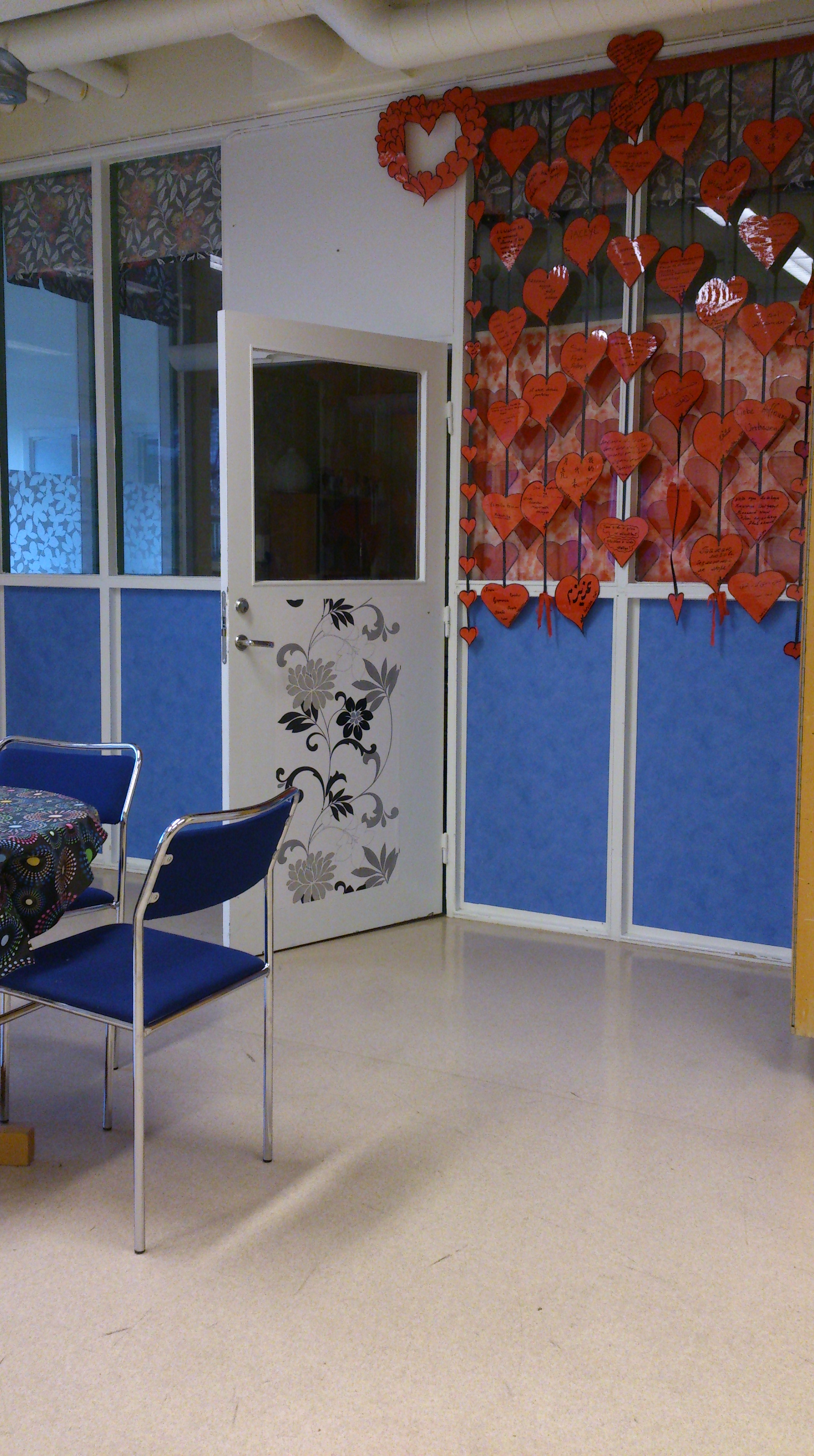
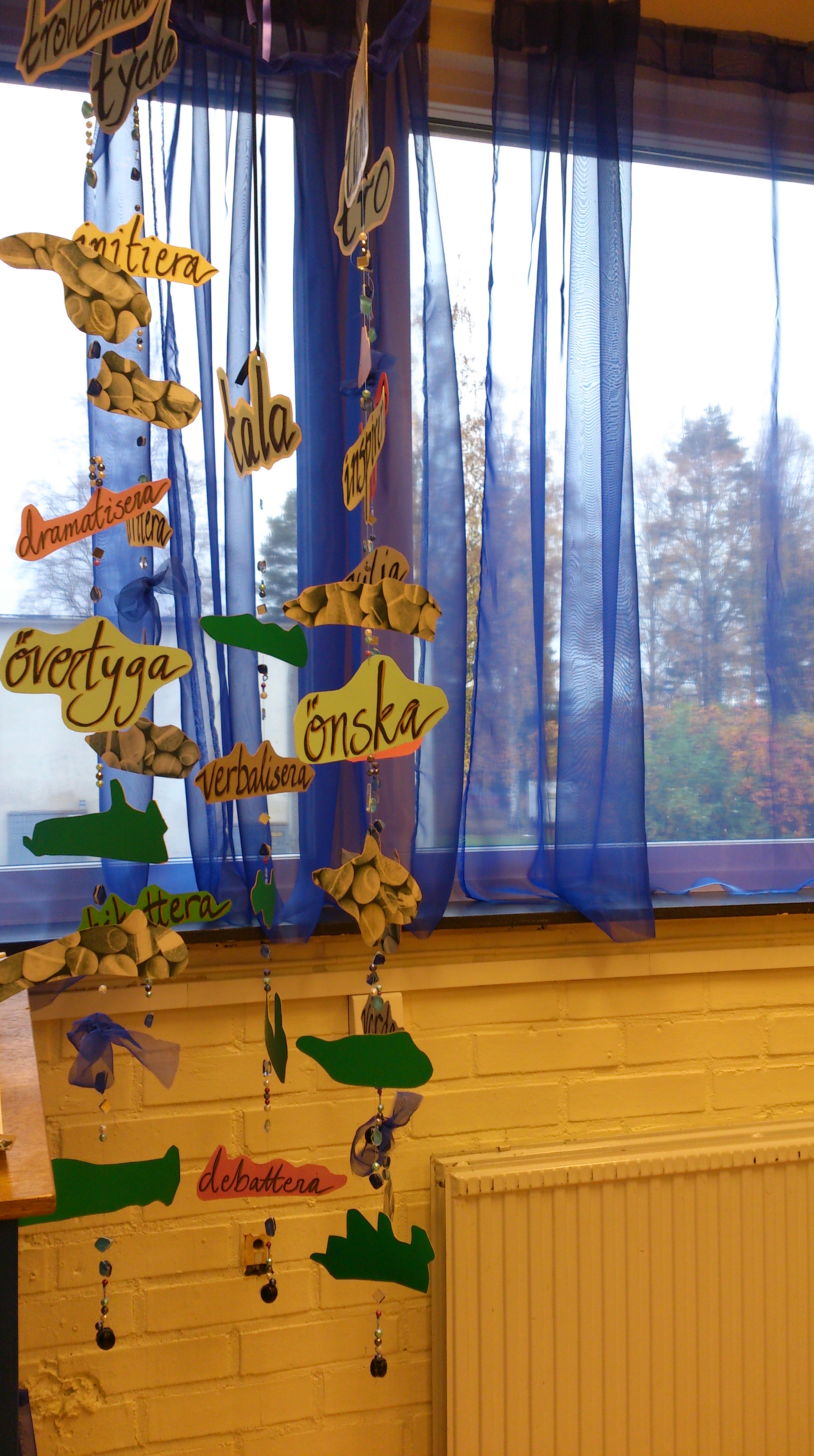
My classroom is not painted by me and it is not yellow either, but I have hanged The Blue Wallpaper myself and I have added a lot of blue accents, such as glass, fabric or decorations. Blue is my fave color and it also lead my thoughts to water or to a realxing feeling that makes me calm. In one of the corners of my room I have a waterdoor… In another corner are verbs connected to language use. The many hearts on the window to our pentry is decorated with thoughs or words on the theme LOVE. I think my students are important in many ways. I also find their background, culture and languages important. I think it is necessary for a classroom where languages are taught, that you actually can see that we speak different languages. All those languages are important. Knowing several languages is a true wisdom!

BLÅTT och GULT

 DSC_0016DSC_0017DSC_0015


The teacher I visited was teaching about weather expressions in Spanish when I was there and both the students and herself were happy… and yellow is the happy color that perfectly suits a classroom for Spanish lessons. A saying by an ”unknown” author that suits the yellow classroom very well:

Keep your face to the sunshine and you cannot see the shadow