The three hundred and eightyseventh åsic- A light in the dark

#asaole, asa-och-zombie-i-smithsville

A recycled blogpost from my visit in Pitman New Jersey 2014!

Today I have had a wonderful day with my friends in Smithville. I had lots of time to marvel over the celebration of Halloween, that in a way already started with a planned ”Zombie Parade” that would take place this evening. People were dressed out as zombies and it was very interesting to note that there was no difference in age. Old or young didn’t seem to matter…

I am brought up with the thought of All Saints Day as a serious day when one go to the graveyard and put candles there to show respect for the dead. I have also many years sang in church in different choirs. The music was always very religious and filled with sorrow. Last year my daughters and I took a late walk to the graveyard when it was pitch dark outside. The darkness and the many nice lanterns made our walk exciting and solemn at the same time as it was creating a bonding that served as a platform for deep thoughts about life. We shared our viewpoints of what will happen after death and also what people we missed most of all when they had passed away. The moment in the graveyard was very far from my experience today.

I can’t wait to see what Friday will bring. Then I’m told that many kids in the neighbourhood will come to ask ”Trick or Treat”. I’m excited about it, but at the same time surprised at the fact that the Americans seem to go ”all in” for their celebration of Halloween. I met some of the ”walking dead” today and this couple made an impact on me, since they were no ten-year-olds. Scary!

DSC_0080


The three hundred and eighty-sixth åsic- Höstlöv, höstlov, hostlov, Fall Break!

A recycled blogpost from my visit in Pitman New Jersey 2014!

#höstlöv, #asaole

barn_host.JPG (510×315)hosta-300x252_150299504.jpg (300×252)


Four different spellings means four different things, of course they do, but let’s take a closer look at it!

  1. höstlöv= autumn leaves→ when days get colder and leaves change colours from green into more colourful yellow, orange or red
  2. höstlov=fall break→ when Swedish school kids have a week off while teachers either go to conventions or work with their local projects, or get a chance to get some busy time back.
  3. hostlov= a coughing  ”break” meaning that the planned ”höstlov” would be a week when you had to stay in bed because of coughing… 😦
  4. Fall break=höstlov
  5. Ö→In Swedish we have three different letters that you can’t find in English. They are å, ä and ö.

If I would use a computer keyboard here, in the US, I would need to find some solution to writing the Swedish letters, which would cause problems since I’m not that much of a computer person. Instead I tend to write ”Swedish” with the computers I find here, but replacing the å, ä and ö with a, a and o. There! See??? Already we have a chance to mix them up, since å and ä are not the same as a and a… So how would one tell whether the intention is to write å or ä? Knowing what reading is about, one might pretend to be Sherlock Holmes and try to find out by checking the meaning of the words around…or perhaps being Swedish might be of help…? Check these two chunks of Swedish, but spelled without the å or ä:

  1. Ett far kan braka.
  2. Titta en bat!

Let’s say you don’t know Swedish at all… Then you would think it’s something wrong with the grammar in the first sentence, I guess… or you would just assume that this person has missed out a word of maybe is dyslectic.

The first sentence may mean several things in Swedish, but knowing Swedish properly means knowing whether you would use ”en” or ”ett” (comparable to the use of ”a” or ”an” in English). A Swedish person would know that if ”far” in the first sentence actually is correct (meaning ”father”) then there has to be ”en” rather than ”ett” if written with correct use of grammar. Suppose this person assume it is a father then… On to the problem with ”braka”… That word is a verb and you would mainly use it to describe what happens if a construction of some sort break apart, such as if a tree falls over a shed in your garden, you would say that the tree fell over the shed: ”skjulet brakade sönder”. The use of ”braka” might also suggest the sound of something, not necessarily something nice… Suppose you lunch was beans… After a while you really have to fart… If that happens and you can hear a sound, you would in colloquial or dialectal Swedish say ”han brakade” meaning ”he farted”. Then, what happens with the first sentence is that you have different options now, right? Either the meaning is ”en far kan braka” meaning ”a father can fart” or we need to doublecheck the meaning of the word braka… Is there any chance for that word being spelled with either å or ä??? Oh… as a matter of fact, both would be possible to use… ”En far kan bråka” means ”a father can be messing/fighting”… ”En far kan bräka” means that the father makes the sound of a sheep. Would a father to that? Yes, maybe if he plays with his kids or something, but it is more likely that we didn’t guess right when we picked either å or ä here… So then… What next??? I suggest for us to go back to the noun… ett far… We already know that ett far is not how we would say in Swedish. We would say ”en far” if it HAD meant father…but suppose it doesn’t? ”Ett får”= a sheep, YES!!! A sheep can bleat= ”ett får kan bräka”. Guess what??? This is what you and I do in a matter of SECONDS when we read a text!!! I think that’s amazing! Don’t you?

Let’s repeat the concept…by checking the second sentence!

”Titta” means ”look”… ”en” means ”a”… bat is a word in English, but not in Swedish. A Swedish speaking person has two options here. One is to assume that the word ”bat” means the currency they use in Thailand and then also assume that the person who wrote it has missed an ”h”  in ”baht”, but more likely is for the person to read between the lines and understand that nobody would comment on Thai currency in that way and rather suggest that the ”bat” has to be spelled with either ”å” or ”ä”. When picking one of these this time it’s easy! Why is that? Well, there IS no such word as ”bät” in Swedish, so problem is solved with ”båt” meaning ”boat” and the sentence will be ”Look, a boat!”

By reading between the lines, one can get a lot of language learning, don’t you think?

The three hundred and eighty-fifth åsic- ”HALF&HALF” or Completely Wrong!

A recycled blogpost from my visit in Pitman New Jersey 2014!

I don’t drink regular milk since I have a lactose intolerance. For my visit here in the US I had to make sure there would be something to replace my usual products with and today it was time to fill the fridge again. After we got back home I wanted to comment on ”milk” in general and since ”my” family here drink something that they call ”HALF&HALF” (a mixture of milk and cream as I understand it). I wanted to know what that was. So I asked…and they both laughed. I didn’t quite get what’s wrong, but i found out soon enough. They repeated what I said and I still couldn’t get it. I said it again, ”HALF&HALF”. Then they said: ”We don’t say that!” I couldn’t understand, because on the box it clearly says ”HALF&HALF” and that was what I said, over and over again. Finally I ASKED them what THEY said then… They said, too: ”HALF&HALF”, but their sound of the ”A” was as far from mine as the distance from here to Buckingham Palace! We all laughed and made fun of the different pronunciations and what would happen if you loudly would shout out in the store HERE, but with my pronunciation: ”Dear, please go and get some ”HALF&HALF”!!

My reflection is that if my friends hadn’t pointed out that we in fact used different pronunciations for the expression, I wouldn’t have noticed. I know that may seem weird to some of you, but different accents don’t ”bother” me anymore and I know my own accent is a strange mixture of different accents. A few people in school last week suggested I’ve got an Irish accent, which I enjoyed, since I have never been there… 😀

The three hundred and eighty-fourth åsic- Fika as an ice-breaker is never wrong!

A recycled blogpost from my visit in Pitman New Jersey 2014! 

There are many times I have marvelled over the word fika and how it doesn’t seem to have any translation in many other languages. Today was another of those times! 

This morning at the ”Sweden Day” at the school I visit I shared the concept of FIKA and explained what it is to the members of the staff. I was surprised that so many seemed to like the idea of FIKA and that made me think of a completely different situation some years ago. I talked to an American woman, who was married to a Swedish man.

This woman had learned by being in Sweden what fika was, and her idea of it was pretty much like the one I wrote on the whiteboard today (which I share above). As we talked we realized that the two of us had talked to Americans about the concept of fika, but in different parts of the country. I have only met people on the East Coast and she had just talked to people in California about it. Both her friends and mine had to some extent started to USE the word fika in the American English. What I now hope for, is for both the actual WORD and also the CONCEPT to spread across the continent. That would be amazing!

One of the teachers who had fika with me this morning, came back to the classroom after a while and asked me how to use the word in a sentence if he wanted to invite someone for a fika. So now, let’s spread it! There are different ways to invite, depending of the situation, but in English you can say like this if you like:

  • Do you want some fika?
  • How about some fika?
  • Are you up to some fika?

Fika can mean just a cup of coffee or tea, or it can mean coffee+ a sandwich, or it can mean coffee+a bun, or it can mean, coffee+ bun+ cake+cookies+ tårta, which is a Swedish kind of cake with no frosting/icing, but more likely whipped cream. The funny part is that fika also can mean ALL of the mentioned categories… There are really SO many different connections to the word in Swedish that it is very difficult to explain. Instead it is necessary to see the phenomenon as something ELSE, but ”having coffee”. It is a chance to SHARE with friends. What do we share then? It is not just the COFFEE, but thoughts, ideas, gossip, memories, jokes… Having a fika with someone is paying attention to that person, having a good time together with someone for a while. That is why I want the word to spread… So please, help me ”spread the word”… 😀

TILL MINA ELEVER är här en liten ”språkruta”:

Ska vi ta en fika? Hänger du med och fikar? Kom så fikar vi! Nu skulle det sitta fint med en fika! En slät kopp (= kaffe utan något fikabröd till) fika räcker! Vi ses på fiket! Vi hinner kanske med en språngfika om vi skyndar oss? Jag har fikarast mellan nio och tio varje morgon. Men jag brukar kvällsfika vid TV:n också. Stina kör långtradare och hinner inte med så långa raster, men ibland stannar hon på ett långtradarfik. 


The three hundred and eighty-third åsic- Uppe med tuppen!- Being an early bird!

A recycled blogpost from my visit in Pitman New Jersey 2014!1946345_1200_675.jpg (612×344)

I have noticed that one good thing with travelling across time zones is that there is a good chance to change bad habits! 😀

I agree completely with the Swedish saying ”Morgonstund har guld i mund”

Generally I do get up in the morning and start my day, but I’m not really awake…Here, six hours after my regular time zone, I have decided to get up whenever I feel alert, although it’s not ”six o’clock” as usual… Today the hour I woke up was 5.30 and I didn’t mind!


väckarklocka.jpg (250×217)

Yesterday night when I accidently woke up in the middle of the night, I got a snapchat from one of my daughters. I replied…although I was tired, saying ”it’s in the middle of the night!” HER snapchat was a very alert and neat pic of herself and her friend singing and playing the guitar at school and I thought: ”Oh, NO! Not NOW! I’m TIRED!” …but it also made me aware of the wonder of TIME.

I’d say TIME is a phenomenon human beings invented. My host HERE would say ”We (the AMERICANS) invented time!” … And honestly, since time flies, I don’t have time to do my homework and find out for real who ”invented” what we all refer to as time.

time-flies.jpg (550×366)

I do however enjoy the many aspects of time that make a life worth living. What if we never had any sunsets? What if you couldn’t wake up an early morning in late May in Sweden go and get your Dalademokraten, and have a cup of coffee outdoors while letting the sun warm your face. What if you couldn’t catch a flight to the USA and try to leave the sunrise behind you? There is however one thing I don’t appreciate about the way WE adjust to time. I understand why we all need to do the daylights saving change of time but having said that, I must admit I’m probably the most tired person on earth when we change all our clocks in the spring. I am probably also the luckiest person next weekend when I get my reward for struggling every morning for several months. Kronblom might be TOO lazy, but he is for sure the caracter I think of, connected to the words ”lazy” or ”relax”.

kronblom_431628a-1.jpg (440×294)

Here, during my visit in NJ, I have noticed that I do have a serious chance to give myself the treat of feeling alert at five in the morning! That’s amazing and I love the calm and relaxed morning I get in return for getting up early. The lunch break in Sweden is up, but here we haven’t yet started our day. When I get back from school this evening, my Swedish friends will be on their way to bed… I can now see why there is a slight problem finding decent hours to chat online with a person from another part of the world. Being here is being ”right in the middle of things” when it’s a decent hour on the other side of the Atlantic Ocean… I’d better keep that in mind when I get back home to Sweden again! It has been said many times in Latin (Carpe Diem), not quite as many in Swedish, but it is an important thing to remember:

Fånga dagen! 

The three hundred and eighty-second åsic- Second Day in an American Teacher’s Hectic World

Everybody likes Pitman, #asaole

A recycled blogpost from my visit in Pitman New Jersey 2014!

At home I don’t teach English, but Swedish as a Second Language. This evening I had the great opportunity to visit an adult learner’s group in Spanish at a College not far from where I am. The students were all taking lessons in Spanish, but volunteered to talk to me about what the conditions are for adult learners at this level in the school system. I found our conversation most interesting and will share their viewpoint with both my students and my teaching friend at basic level of English.

Earlier today I first met with a few children with special needs. I shared with them a few thoughts on what it is like to live in a country where we have monopoly money and a” fairy-tale-like” reality with a king…

I also had a chance to contribute with Swedish words in grade six while they were taking a Spanish lesson about furniture in different rooms of a house. Then I discussed with a group of eightgraders why so many Swedes left Sweden a hundred years ago.

I then had a nice and long chat with one of the teachers who has been a resident of Pitman almost all her life, apart from a short period down south. She told me all there is to know about the little town and I was happy to learn all that first hand, rather than read about it.

On Friday a few of the teachers have planned for a Sweden day, where the students will be getting a whole lot of information about Sweden, but also try some typical Swedish activities. I will contribute with a slideshow about Sweden and explain why the Dala horse is a symbol for  Sweden. The collaboration with an art teacher at this school also led to an idea where we let the kids know a little about how one can paint a typical ”kurbits”.

Tomorrow we’re off to Atlantic City, my teaching friend and I. We will study ESL as the NJ authorities wants it to be. I look forward to that very much. I don’t need anyone to rock my cradle! I am exhausted, but I’m having so much fun! Teaching is my life! ❤

Three Hundred and Eighty-First Asic – Nobel Prize in literature 2016, Part 3


Nobelpris_medaljWhen the Secretary of the Swedish Academy announces this year’s winner of the prestigeous Nobel Prize in literature, many of the bookmakers have been biting their nails for a few days. As always we also meet different experts who share their particular viewpoint, such as the literature critics invited to the studio at SVT today:

nobelstudion_2016

Will this year’s winner be one of the favorites or not? I keep hoping for Joyce Carol Oates, year after year. I think the committee has put a spell on her for some reason, since she never seems to be good enough in the competition.

According to Swedish newspapers this year, for instance Dagens Nyheter (DN), names like Ngugi wa Thiong’o (Kenya), Bob Dylan (USA),  Ali Ahmad Said Asbar more known as Adonis (Syria) or Haruki Murakami (Japan) have been mentioned as possible winners.

Nobel Prize in literature 2016 goes to Bob Dylan for having created new poetic expression within the American Song Tradition

Now that we know the winner, I guess the hunt for books starts right away! Everyone likes to read the Nobel Prize winner in order to follow the debate… I would most certainly be one of them who would like to give my opinion for questions such as Is this good literature or not? Did you like this year’s winner? 

Three Hundred and Seventy-Ninth Asic – Nobel Prize in literature 2016, Part 1

What Makes a Good Book Good Enough?

That is one of the things that keeps me busy when I start reading any book whatsoever… Like many other students I was forced to read several books by Nobel Prize winners in school as a teenager, and I guess my teachers picked the novels for different reasons… One of the authors I started to like by reading in school was John Steinbeck. I was thrilled by the way Steinbeck built up his characters in ”Of Mice and Men” and how the story developed.  From a few hints on how George and Lennie had to move on again, after something terrible had happened, I realized I was already thinking; What had happened? As a young reader of a classic novel I was thrilled enough to keep reading until the very last page… I also read ”The Pearl” with great interest and without any effort, but for a novel like ”The Grapes of Wrath” it takes 455 pages before you know the end of the story. As a young reader, I did not meet that challenge, but this summer, during a vaction in California, ”The Grapes of Wrath” was my perfect companion. I drove past the road sign with ”Salinas” and I went to Monterey and the Monterey Bay Aquarium where a section in the Museum describes John Steinbeck’s writing and I was happy to know that in my car, the book was waiting for me to turn the next page and the next…
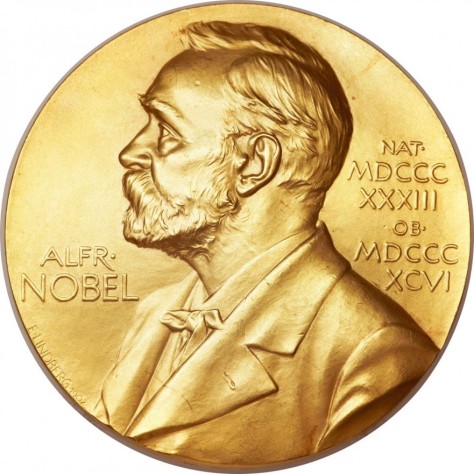
Nobelpris_medalj

John Steinbeck received the Nobel Prize in 1962,

”for his realistic and imaginative writings, combining as they do sympathetic humour and keen social perception”

To me as a Swedish reader, both when I was young and now, I  must say Steinbeck really made a difference. I can see his deep engagement concerning important issues in society and although ”The Grapes of Wrath” was written in 1938 and first published in 1939, the content is extremely important also in 2016. In Europe where I live, migration is an every day topic, since many thousands of people are on the move between different countries. Some end up in camps or in asylum seeking procedures where bureaucratic systems cannot handle the massive number of applications quickly enough. Migrants today, face the same kind of ignorance and racism as the Okies (people from Oklahoma, moving to California) in Steinbeck’s novel. Migrants both now and then, left for the thought of a better future, filled with hope, but also fear. Their plans may be delayed or sometimes changed, and for a few the plans and hopes may never be fulfilled, due to accidents or other problems along the way.

Describing the process of change in a person’s life, like Steinbeck does in ”The Grapes of Wrath”, is a delicate matter, since it is walking on a thin line between being true or being pathetic. Neither can you exaggerate too much nor be too shallow. When the story begins we meet the American state Oklahoma when the weather conditions have been very poor for a long time. Draught and winds have left the land destroyed and every corn field has a layer of dust that makes the corn worthless. The protagonist Tom Joad, is an ex-convict from Mac Alester, where he sat four years for homicide. Now he is out on parole. Tom Joad comes back home in company with an old friend of the family, Jim Casy. In order to find job and better opportunities the Joads decide to leave Oklahoma for California. During the long trip from Sallisaw, Oklahoma to California both Grandpa and Grandma die. Tom’s brother Noah, and his sister’s boyfriend Connie leave the family for different reasons, but the rest of the family stick together. Ma and Pa, Tom and his brother Al, their sister Rosasharn who is pregnant and the younger children Ruthie and Windfield all come to California after a very tough trip through several states, over mountains and finally through the desert.

The novel very closely describes the extremely poor conditions for migrant workers in California in the thirties. Racism, cruelty and violence together with greed seems to be the rule and being from Oklahoma, means being an Okie, which is a stigmatised group at the time. No matter how hard they work, they seem to face very little understanding and empathy from the Californians. The Joads and the other Okies move from one workplace to the other and get less paid for each time they move, so it seems. For several reasons Tom gets in trouble again.
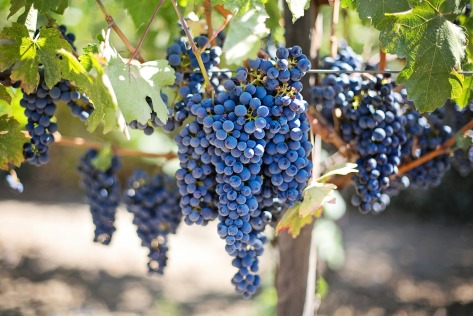
vindruvor

Throughout the novel, Steinbeck give descriptions of the surrounding landscape and certain topics of interest. One of the chapters is like a dialogue between a car salesman and an Okie buyer and written with humor, although the underlying message is that many poor Okies were fooled by the car dealers, selling off good cattle or mules in trade for a jalopy. Another such chapter is a very nice description of a few instruments, the harmonica, the guitar and the fiddle and how they blend in together for the coming dance evening, when a certain piece of music is played. That is also where ”Swedes up in Dakota” (p 342) are mentioned, which is fun to read for me as Swedish.

But apart from these humorous chapters, there are also some very critical topics, as when Steinbeck describes how land owners had too much fruit and too much potatoes, too many pigs and instead of giving the food to the extremely poor workers, they poisoned the potatoes, drowned the pigs and drenched the fruit in kerosene, only for the pleasure of not giving it to the starving workers. That is when ”The Grapes of Wrath”(p 349) is uttered…

For a period of time, the Joads live in the Weedpatch camp, which is a state camp. For the first time in their lives, Ruthie and Windfield see toilets. The workers are all involved in taking care of the camp together, making sure it is kept clean. Here the Joads meet other people they can trust and make friends with and for a moment the reader is fooled to think this book has a happy ending…

I highly recommend ”The Grapes of Wrath” if you would like to get a glimpse of migrant life from the inside. The novel reveal several complex issues and through the Joads and their discussions throughout the novel, you and I get a chance to consider those issues, too. With the coming election in the USA, the voters can decide whether there will be harder times or not for migrant workers from abroad, picking fruit and cotton in California for the benefit of American producers. Some of the migrants came there just like the Joads, with the hope of a better future. Some of the current Californians are likely to be decendants from Okies who came in the thirties.

Let us read books like ”The Grapes of Wrath” and never forget what made us the ones we are today.
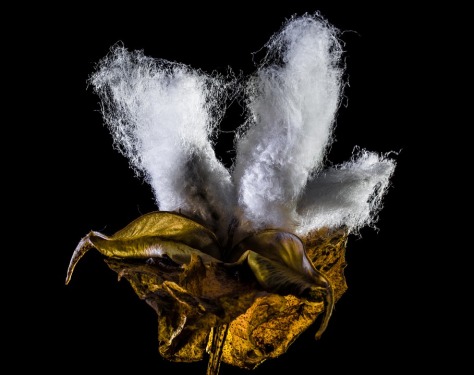
cotton-capsule

Three Hundred and Eightieth Asic – Nobel Prize in literature 2016, Part 2

About a year ago I was eagerly waiting for the announcement of the Nobel Prize winner in literature for 2015. It turned out to be Svetlana Alexievich, an author I had never even heard of. I spent the next few weeks reading her books. I then wrote a few Asics on the topic and here is one of them:

The Last Witnesses: the Book of Unchildlike Stories written by the Belarusian Nobel Prize Winner of 2015, Svetlana Alexievich, tells another story than ”War Does Not Have a Woman’s Face”. This time Alexievich shows her excel by sharing hundreds of children’s memories from Belarus during the Second World War. I thought my reading ”War Does Not Have a Woman’s Face” would have prepared me for every surprising or somewhat appalling detail in The Last Witnesses: the Book of Unchildlike Stories but the fact is, I could not anticipate the way Alexievich had made the interviewed adults share so many exclusive moments from the past, filled with pain, horror and fear. Many of the children had been left behind by parents who either went to fight the enemy in the front army or in partisan groups and left their children with relatives. Many children were still in orphanages at the end of the war. Many parents never came back and their children still miss them:

”I’m already fifty-one, I am a mother myself, but I really do want a mother!” says one of the surviving children when interviewed by Alexievich.

What makes this book extraordinary is the way the author let short excerpts of longer interviews carry a few main topics that together form a war narrative we have never ever read before. The main topic is of course ”What happened in Belarus during the war?” however from a child’s point of view we rather see other topics, such as ”What happened to me when I lost my parents in the war?” or ”How could I survive although I didn’t have anything to eat except potato peels and grass?” and ”How could I survive and become an ordinary citizen after what I endured during the war?” What is even more interesting is that the reader is invited to read between the lines and make sense of all the narratives.

The Last Witnesses: the Book of Unchildlike Stories is close to the limit of what is bearable to read. One of the reasons why it gets under your skin might be that Alexievich has told the interviewed narrators to try and remember the way they thought when they were children. Obviously Alexievich succceeded since the narratives all seem to be told by children and not by adults remembering their childhood! From each narrator, Alexievich has found a central quote and the story is in a way interrupted by those quotes, changes topic quite often, but since the quotes are followed by the names of the narrator and their occupation as adults, the structure of the novel makes sense and the reader has a chance to a short glimpse of the adult reflection, too, since many of them end their narrative with a short comment about ”now”.

When reading the book, I think a lot of the many cups of tea that Alexievich must have had in the homes of the war veterans…and I also marvel about the way she has found something special in each narrative to tell us, however never repeating herself. Actually each narrator tells a completely unique story. They all share memories from the war from the point of view of a child, however the focus differ and thus a kind of quilt of stories takes form in my imagination. I read about personal loss, of fear, hunger, famine, children joining the army. I read about children who cannot go to school because they have to work in a factory or about children who don’t recognise their parents when they (if lucky enough!) meet them again after the war. But underneath the sad and depressing surface I also read about patriotism and pride, about never giving up and never revealing secrets to the enemy. The post war Belarus was completely destroyed and needed to be built up again and some of the narratives shared experiences from the postwar building up period when every survivor was needed, even the children.

But why would this book be necessary to read? The children suffered in so many different ways, but without the adult mind it was impossible for them to fully comprehend why there had to be a war. They needed to grow up in order to do so. We owe it to them to pass it on to next generation what a great loss they experienced when losing their parents, their childhood, their health and their innocence. Again, like when I wrote my previous book review: #This is a book that has to be read and spread!

Threehundred and seventy-eighth Asic- Trump or not, that’s the question!

The battle between Hillary Clinton and Donald Trump has been one of my favorite soap operas this year, but as we are getting closer to Election Day I must admit that I am surprised that Mr Trump is still counted as a possible future President of the United States of America. But having said that, I also know that a number of Americans I talked to this past summer, were not at all as surprised as I am. This was clear to me when my family and I were visiting the USA as tourists in Florida, California and New Jersey. Since I enjoy talking politics I kept asking people I met about their opinion in the coming election. Interestingly they all seemed to enjoy the topic and shared their viewpoint with a stranger like myself.

The first person I talked to was a cab driver in Miami. He was a Haitian and on my question about the potential of the two candidates and their chances to become presidents he said that neither of the two were good enough for this wonderful country, but if he had to pick one, he would vote for Mrs Clinton AND…he said; the Cubans around Miami would most likely vote for Mr Trump, for the reason that they were all still very disappointed with the JFK leadership in the sixties. They would not likely change their opinion no matter what candidate would run for president now… They would all vote Republican, according to the cab driver.

A few days later we met another cab driver in San Fransisco. He was of Swedish origin and had his opinion crystal clear. Mr Trump was his choice… The reason was that Mrs Clinton was not to be trusted and had been involved in too many political decisions that she could be criticized for. I said that from  my point of view, there were plenty of things that one could easily criticize Mr Trump for, too, but the cab driver claimed that the most important issue for the President of USA, would be keeping an economic balance and who would be better at doing that but a billionaire?

A lady whom I talked to for a while when lining up for the ferry to Alcatraz shared the viewpoint that Mr Trump was just playing around. In her opinion Mrs Clinton and Mr Trump were involved in a conspiracy, since they have known each other for many years and may have decided that Mr Trump would be running for President only to make sure Mrs Clinton would easily win…

Last but not least, a member of staff in the National Constitution Center, held the viewpoint that there had to be NEW THINKING and then Mrs Clinton would be disqualified for the reason that she had been a politician for way too long…

Four different opinions from four different Americans, but with one thing in common… They all seemed to be fed up with the SYSTEM and just wanted the Election Day to come, to get it over with. Lately when the tone in TV debates have been worse than ever, I am likely to agree. I want the Election Day to come, so we get the answer to the thrilling question: Who will be the President of the United States?