Twohundred and thirty-third Asic- London, always safe and secure!

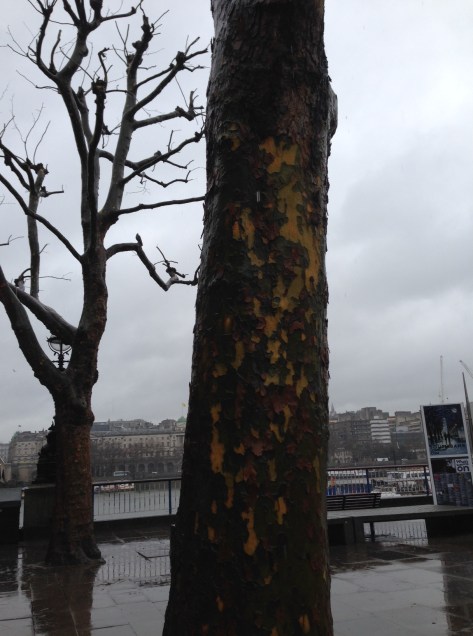
I’ve been to London several times and it doesn’t really matter how often I visit this busy city of the world. There are always new things to see. The London fire in 1666 or the Blitz during the second world war are both examples of disasters from the past. Nowadays London may suffer from occasional terror attacks, but just like before London seems to be a city to trust… I always feel safe and secure when I walk the streets of London. I never worry. To me, the people I meet seem just as relaxed, too, as if there wasn’t anything to worry about. I do however notice that the huge trees in the parks do suffer… they seem to be victims of a no longer clean environment. Maybe the smog will win in the end?

IMG_1811

To me it seems as is the only serious threat London City may not cope with in the end IS environmental issues. This morning I watched the BBC for a weather forecast, but I also caught a glimpse of the news where a report of recent pollution was in focus. Obviously some parts of London deal with levels above what is recommended.

IMG_1813

When speaking about environment I have noticed that many things here are organised, such as the painted walls outside Royal Festival Hall. The minute before I noticed this ares, that may be a skateboard park, we had walked past a tunnel for pedestrians, right under Waterloo Bridge and I had noticed that there were almost no tags or grafitti on the walls. I guess the authorities have invited the grafitti-painters to share their artistery in a limited area…I enjoyed what I saw! ❤

Twohundred and Twentyeighth Asic- Harper Lee from Now and Then

Mockingbird

It’s been more than twenty-five years since my teacher told me to read ”To Kill A Mockingbird” for an Assignment in English. I remember two things from the book: 1) I understood! 2) I didn’t understand! To you that may seem to be a contradiction, right? It’s not. It’s just a matter of meaning… I understood the ENGLISH and that made me very happy and proud, since English is not my first language. But reading in a language that is not one’s first language rise other different questions, such as ”what is this book really about?”…and I didn’t quite catch it… I remember I needed lots of help from my teacher back then. What the teacher helped me with was the cultural setting, the typical South of the USA and what it might have been like to grow up in Alabama at the time for To Kill a Mockingbird.

Last year I read in a newspaper that the author had finally released ”Go Set a Watchman” and I decided to read it for two different reasons: 1) I wanted to understand.  2) I had heard that this book was what Harper Lee wanted to publish in the first place when she first contacted the editor. I had also read that Harper Lee was asked to remove certain parts of her script or to re-write it, because the content was not appropriate according to the editor. I also knew that ”Go Set a Watchman” would be originally written without any such editing and I found that very interesting.

I have not re-read ”To Kill a Mockingbird” yet. I will of course. But that will be later. Instead I’d like to share with you what was the most interesting impression I got from reading Go Set a Watchman. It was REAL. I felt as if I was there, too, with Scout, or Jean Louise as she’s called most of the time in this book. There are two topics in particular that I find real. First it’s this tension between different groups of the society, referred to in the book as colored or white, although you may prefer other ”labels” now. The tension is there in both directions and it is obvious to the reader that people do not trust each other, do not mix with each other if not necessary. We read most of this particular topic from the point of view of Atticus’ sister Alexandra or from Jean Louise herself.

The next topic that draw my attention is when Jean Louise is forced by Alexandra to entertain a group of young women from the area. Alexandra has baked cakes and cookies for the event and her main interest is for Jean Louise to re-establish old connections with friends from her childhood and youth, and maybe find a reason to stay, instead of returning to New York where she now lives. It’s just that Jean Louise it not really interested. The way Harper Lee has written this part of the book is absolutely brilliant. It’s written in short abruptly cut comments, just the way other people’s conversations sound if you’re not a part of them and may not even collect everything that’s said. As if you were eavesdropping… After a while of reading this collection of short comments, I know more about those young ladies than if Harper Lee had attempted to draw a sketch of each and every one of them. And even more interesting, I also catch between the lines what Jean Louise think of all these young women, since she moves from one little group of ladies to the other, not really participating, merely listening. This part of the book made it worth the while to read it.

For one reason or the other Harper Lee was asked to edit in her script, to remove certain parts of the script… The result was ”To Kill a Mockingbird”… I must re-read it, as I said above…but now that I haven’t I prefer to just rest in the thought that I didn’t really like ”To Kill a Mockingbird” when reading it then, twenty-five years ago. I do however LIKE ”Go Set a Watchman”. I like Harper Lee’s sense of humor and I like her way of drawing a sketch of the society as it was then. But most of all, I as a reader, enjoy the fact that nobody has cut and edited this script. It’s supposed to be just as it was from the very beginning, and although the setting in the book is two decades after the events in ”To Kill a Mockingbird” it’s written before that book. To me, Harper Lee was a lot better in original than when that editor of hers had decided to remove ”controversial” parts… To write a book about life, when life seems like a struggle, may be hard enough, but to write it and have it translated and spread all over the world is a wonder. Harper Lee obviously did this twice! Thank you for the reading experience you gave me, Harper Lee! ❤

Two Hundred and Twentysecond Asic- Maybe it’s because I’m NOT a Londoner…

…that I love London so? My top sights that I tend to re-visit whenever I go to London are: 

  1. Victoria and Albert Museum ( …for the huge amount of things to see, the variation and professional exhibition and to get a glimpse of the uncountable collections of Queen Victoria and Albert)
  2. Covent Garden ( an Opera House, of course, but outside, in the square you will find people of all kinds, listening to music, watching street performances, having a relaxed and enjoyable time together in a beautiful setting of old buildings and little shops and cosy restaurants).
  3. Shakespeare’s ”The Globe”(This beautiful museum let you experience London as it was when Shakespeare lived there!)
  4. Natural History Museum (Amazing!!! SO much fun to do and see!)
  5. British Museum (one of THE best Museums in the world)
  6. Leicester Square (wonderful place where you can buy tickets for musicals and shows)
  7. Harrod’s (for the incredible exclusive display and for the many possibilities to watch wealth from a short distance…)
  8. Dillon’s (for the reason that there are no books in English that this bookstore doesn’t store)
  9. Hamley’s (for the wonderful feeling of finding all different kinds of toys in a huge five story building…)
  10. The Whispering Gallery (A perfect sight for kids and their parents if you enjoy physics…)

I don’t really know how many times I have visited London, but I have always enjoyed being there. It’s a wonderful City with international pulse that I enjoy tremendously!  In my opinion, strolling around is the best way to see London, but both buses and the tube is very safe and easy accessible, too. I guess it’s just a matter of taste.  I also enjoy going by taxi in London. Some drivers are quiet, of course, but I have been lucky enough to find drivers who enjoy chatting. If you read Swedish, read #sextonde åseriet

Londonbild 1_OLÅLondon tunnelbana


LondonflaggaI always try to visit a few of the Museums in London, and among others I think Victoria and Albert Museum is the very best. The collection of varied items let me understand, to some extent, what impact Queen Victoria made on the British Society. One thing I never miss to admire is the collection of cast iron. It’s wonderful!

victoria-and-albert-museum_1

I once went to Greenwich to actually stand with one foot in the West and one in the East, just for fun. On the site I noticed so many other things that I enjoyed, that just standing there on the Meridian seemed less important than the other impressions I got there. It is a wonderful place to be, especially when fruit trees are in blossom! But honestly, I find almost every moment in London interesting and rewarding and I don’t even mind the rain…I every corner there are umbrellas and other souvenirs to buy! 🙂

Souvenirer i London

Covent Garden is another place I always return to, since the atmosphere is so relaxed there. I also find the little shops in the surrounding area very pleasant. A walk in Notting Hill reveals the Asian touch with Indian curry served in every little restaurant, whereas Soho offers Chinese food at its best, but my all time favorite is a pub lunch. Maybe ”Steak and Kidney Pie” or a ”Ploughman’s Lunch”? Places like Fortnum and Mason’s are worth the effort to visit, too. Have some ”High Tea” and enjoy scones with clotted cream and jam!

I do however not expect to find any places where there are no tourists… Instead I hope for the Londoners to share their beautiful city with the rest of us when we visit for a few days. When walking on Bond Street or Piccadilly Circus, I almost always notice people around me speaking any of the Nordic languages, such as Swedish, Danish or Norwegian. Thus I have learned not to comment too much on others when I’m in a crowd… I wouldn’t want a person saying

”Jaså, är det fler svenskar här?!” 🙂

Twohundred and Sixteenth Asic- Snowzilla, Milk and Cookies!

The major storm Snowzilla has now started its journey through the twenty states on the east coast of the USA… It was in a way very interesting to watch TV from a completely empty Washington DC where the Swedish TV reporter seemed all alone in the streets, sharing his report with us… We have snow every winter, but according to the TV reporter from Swedish TV4, some of the states suffering from Snowzilla, hardly get any snow an ordinary winter and may have difficulties getting rid of it, once the storm has passed.

I have a few friends in the USA. They have one thing in common… They all share stories about what one would do if a storm of any kind is predicted… Obviously everyone go to the store, get loads of food in general, but milk and cookies in particular, in order not to ”starve”during the storm… I’m sure we go to the store, too, but I also notice that this desperate ”I HAVE to go to the store” doesn’t seem to be as common here as over there… Maybe we have a more ”longterm” idea for our grocery shopping than Americans do? Milk and cookies??? Meat and potatoes would be more of the Swedish way in that case… 😉

From my heart, I hope you all wake up to a wonderful white world where very little is damaged or ruined by the storm and the only remaining issue is the layer of beautiful snow everywhere…  I also hope you have your cameras ready to take photos, to share with the rest of us and with your grandchildren one day! Winter is an amazing season. Quiet, white and cold! Well… I understand the very storm isn’t quiet!!! Snowzilla is probably very loud! Light a candle and listen to her! It might be the storm of your life! Enjoy!!!

b088e-stearinljus-bmp


For those of you who would like to know the sound of Swedish… and also follow the coverage in our biggest national Newspaper regarding the storm ”Jonas” I have now added a newspaper clip with a movie.  It’s Sunday evening; and a Swedish reporter doing his job interviewing people in NYC. According to the reporter, the film is from Saturday morning:

Peter Kadhammar interview’s NYC citizens

Twohundred and Fifteenth Asic- A Day to Remember

I sit in my classroom, monitoring my students writing an essay. Since my students write in a language that is not their first language, I thought it fair to do the same… I write in MY second language, English, when they write in Swedish… Here’s my text on the topic ”A Day to Remember”, but I guess in my example it will spread over more than just one single day:

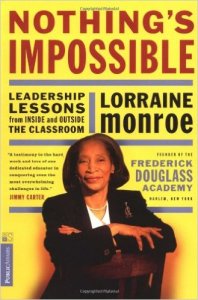
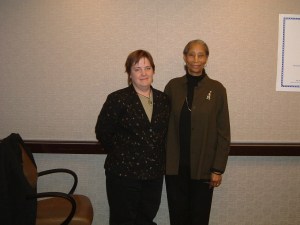
It had been a tough start filled with unexpected events and flight delays, but one memorable Monday morning in October 2003, I met up with the others in a group of Swedish teachers who had the great opportunity to meet the legendary principal Dr Lorraine Monroe for a four-day-long conference about School Development, Instruction and Teaching in NYC. During the flight I gave Dr Monroe a thought. What would she be like? According to her book, Nothing’s Impossible, she had first worked as a teacher, then she had become a principal, changed the way of teaching and instructing in her actual school and that had, in the long run, led to overwhelmingly good results in schools in Harlem, New York City. Dr Monroe’s ideas about school development were very focused on learning and in a way very strict and not at all negotiable ( Please read Dr Monroe’s book for more information!).

Nothing's impossible

We have a very democratic way of teaching in Sweden. We ask our students for their opinion in many different situations an ordinary day in school and lessons often has an element of discussion or mutual understanding. It is not meant to be a one-way-communicated ”lecture”. Learning is a joint effort…  At the time when I was in NYC I was taking a University course and thought it might be suitable to interview Dr Monroe for my project. She accepted and that was probably ”THE” most interesting talk I have ever had with anyone about ”teaching and instructing”… But let’s go back to the first meeting… The skyscrapers on Manhattan were taller than I had expected and being in NYC was fantastic! Meeting Dr Monroe in person was way beyond every anticipation I had before. She was, apart from being intelligent, also a born entertainer, wittily telling jokes. The conference was of high quality and we met brilliant teachers, devoted principals and engaged counselors from different schools in Harlem NYC. In comparison with the interesting lecturers, Dr Monroe was still outstanding. 

We made a few visits to schools in Harlem. I thought I’d check one of the things that Dr Monroe had said the day before. She had claimed that in her schools I could ask any student I liked if they could answer the question ”What did you learn during the lesson you just left?” Every student I asked, could share with me what they had learnt and since we had monitored the lessons the students were referring to, we could tell that they actually learned. The other teachers in my conference group had the same experience and we said this would be the first thing to ask our students back home! I think many students in the classes I taught back then would answer ”I don’t know… What do you mean? What did I learn??? I don’t understand your question!” At that point in my career, in 2003, I didn’t understand how important a META level is in learning… Now I try to help students gather information, draw conclusions, spend time thinking and reflecting and thus allow them to understand and comprehend. After that day in October 2003 I try to keep my lessons very strict in content. I also try to wrap it up at the end of a lesson, in order to help students to organize their thoughts. The students in my classroom now will more likely have a correct answer to the question about their learning…

My interview with Dr Monroe back in 2003 again, started off with my question ”In what way do you negotiate with your students?” She seemed to be hooked on my QUESTION, as if it was wrong… and repeatedly said ” I don’t negotiate with my students!” I thought, being Swedish and speaking my second language, that I had said something that was difficult to understand… Therefore we had a long interesting chat about what the WORD negotiate meant… Obviously we both agreed on the meaning of the word, so I again asked my question, but surprisingly enough still got the same reply! Later on, after half an hour of discussion I understood… I had taken for granted that  of course Dr Monroe did negotiate with her students, but HOW?  But, the point was taken. She actually did not negotiate with her students…simply because (and she explained that) some things aren’t negotiable… 

Ever since that day I have always thought about how different RESULTS we may get in schools were ”everything” is negotiable, compared to schools were very little is… Anyone can understand that students who never ever question their teachers have a different school situation than those who constantly say to their teacher: ”Why are we supposed to to this?”, especially if the teacher is used to give such a question an answer… Dr Monroe said many times during that week in NYC: Focus on learning! The interview with Dr Monroe was an eye-opener for me as a teacher. I didn’t change everything when I returned to Sweden, but I did change a lot. I didn’t even change it into ”The Monroe Doctrine” but I did borrow a few of her ideas and I am forever grateful to her for being there in that interview and very patiently letting me understand her thoughts about negotiation (or not!) and about teaching and instruction in general. In my teaching career meeting her was absolutely A Day to Remember


Twohundred and eleventh asic- As cold as in ”To Build a Fire”, by Jack London?

Today we had round -20C in my town. The crisp air and the cold did not bother me, since I had planned my walk in the forest thoroughly and was dressed in warm winter clothes.

Many years ago I read the wonderful short story To Build a Fire by Jack London. If you haven’t read it, then DO! It is one of the best short stories I have ever read. Here’s a link to the full text:

To Build a Fire by Jack London

I learned from reading the story long ago that whatever we think we accomplish, we never win a competition with Nature! Jack London tells his story from the point of view of a man who decides to leave the main trail and seek another way, thinking maybe it will be a shortcut… London lets us know that the protagonist is new in the area. He has never spent a winter in Yukon Territory before. Then the author adds:

”The trouble with him was that he was without imagination.”

That is all information we need, really… We understand that he will not be fully prepared for what he will experience in this unfriendly and cold whiteness. When London describes the extreme cold, we understand the danger, but does the man?

”He knew that at fifty below spittle crackled on the snow, but this spittle had crackled in the air.”

The man does realize that it has to be below fifty, but that doesn’t lead him into the conclusion that he will not manage in this weather for long. Throughout the story several situations point out how unaware the man seems to be of the hidden dangers in the surrounding landscape. The man chews tobacco and his beard is filled with ice and along the telling of the story we notice how the beard is slowly built up like an ice-muzzle. If he will take a pause, he will not be able to eat or drink…

London describes many aspects of the Yukon winter that this man is not familiar with and as he paints the icecold scenario the reader slowly comes to the insight that this will lead to a disaster of some sort. The protagonist is followed by a dog, a native husky that knows enough of this weather as to wait for the man to soon build a fire… but the man does not stop to build a fire… As the dog once breaks through and wets his forelegs when being forced by the man to cross over at a hidden creek, the man first admires the dog’s instinct to quickly get rid of the wet and ice, then he foolishly removes his own gloves to help the dog…unaware of the risk for his own sake. His fingers instantly turn numb and that is in a way the beginning of the end…

When I took a walk today, I was taking one single step aside of the track, because I was searching for a better angle for my photo… Afterwards, my boots were filled with snow that first melted for a while, then re-froze and from being perfectly comfortable with my situation I was now slowly getting more and more cold. I was however lucky to know I was only fifteen minutes from home. I didn’t even need to think of building a fire… Instead I went indoors, thinking I was lucky who lived in the middle of a town and not in Yukon Territory, but also remembering this wonderful short story by Jack London with warmth. What a great piece of literature that is!

Det hundrade åseriet/The hundredth åsic- A Moment 22 for many teachers

In 1992, I started off as a class teacher of twelve-year-olds in grade six. My exam covered Swedish, English and the four different subjects that are called ”SO” in Swedish, i.e, Geography, Social Science, History, and Religion. I was supposed to teach grades 1-7 in the Swedish Compulsory School System.  In 1992, it wasn’t unusual for teachers to teach both subjects they were skilled for as well as subjects where they didn’t have any exams. In my case my first job as a teacher was a position as a ”class teacher” with both Math, Science and Art. You may think:

”So what? If you have graduated, it doesn’t matter what subject you teach!”

I strongly object to that point of view. It DOES matter! First of all you need more time to prepare lessons properly in subjects where you have no academical skills or grades. Secondly you may not find suitable examples for students to understand complex structures or important details. Students who need extra attention from the teacher in order to ”get it”, would be better off with a skilled teacher in Math, rather than a teacher in Swedish, who tries her very best.

A Moment 22

The subjects you love most of all, will be neglected since you need to make an effort and focus on subjects you didn’t even want to teach in the first place. The estimated time for planning of lessons will be up when you start planning for your own favourite subjects.

An ordinary day when you have planned all for today’s lessons and come to school early enough to have a cup of coffee with your teaching friends, you notice that your dear friend in the classroom next to yours is on sick-leave. You hope for her (it’s often a she!) soon being back, but you also realize that you will be the one to fill her position in class, ALTHOUGH you have a classroom filled with students, too… What can you do about it? Not much, really. Hmmmm… 55 kids instead of 27? What is my options for today’s teaching…? As I said, I had planned it all from the start, right? But NOW, I will have to just dump my own plan, and also probably dump my teaching friend’s plan, because I am ONE teacher with TWO classes… I HOPE that is history by now!!!

I taught in a school where our policy was to be our own ”subteachers” in a flexible system. Quality??? Excuse me… We didn’t discuss that topic much. It was more about money. But why wasn’t it just possible to find a teacher who would be in our regular staff as an extra resource? Money… Again… OK… Then if there is no way to hire a TEACHER…can’t we just find SOMEONE????

For way too long it has been possible for principals in Swedish schools to hire ”teachers” who lack the required qualifications for teaching. Qualified teachers have also for way too long been responsible for ”helping” those subteachers in their job, instead of  teaching their own students with high quality. But why complain? It can’t be that difficult to help a friend who know nothing about teaching, right? No, not if it would be ONCE or maybe TWICE, but if it’s the rule rather than an exception, then it’s not fair at all. It is unfair to the students, both in my class and in the class where the subteacher works. We are all losing focus from our ongoing learning proccess.

A possible scenario

You rush into your own classroom, inform the students that  you will have to start a lesson together with a subteacher in the nextdoor classroom and will be back soon. Then you help the subteacher to find books or material, tell the students to help the subteacher as much as possible, also inform the subteacher about students with special needs, such as diabetes or epilepsy. You also try to write a short list of important details, such as at what hour you take a break, when students leave for PE, or when lunch is served. In some schools there is a binder filled with ”all a subteacher needs to know”, but despite the binder, many subteachers may either not have time to read the information, or are completely new to teaching and have never been in this particular school. Sometimes they are 18 years old and lack every experience there is to ask for. You help this person the best you can anyway, because you know it will turn out for the worse if you do nothing at all. Luckily, many subteachers have been teaching for a long time and also know the students in a few schools in their local community quite well. Then the options for a win-win-situation is a lot better. OK…It’s time to rush back to your own class and start off what you had planned for! Guess what? The students haven’t started doing what you asked them to… Instead you need to re-start the activity and sometimes you will have a hard time getting every student’s attention again. When you finally think, ”Yes!” and your class seems to be focused again, you hear a knock on your classroom door… The subteacher needs more help…

The results for Swedish school children in PISA and other international tests have never been as poor as the last few years. In my opinion it is possible to explain the failure as a misuse of resources and a slow motion in change or maybe blame the many changes in our school system. When will there be time to focus on learning again?

I am happy to say that I rarely hear about problems like these nowadays. I am also happy to say that some of the subteachers I have been teaching side-by-side with were really nice persons who did a wonderful job. A certain blonde whom I tried to persuade to become a teacher, instead decided to become a nurse. The lucky patients know who I mean! 

 sjukhus_91762714.jpg (380×230)