The three hundred and eighty-fifth åsic- ”HALF&HALF” or Completely Wrong!

A recycled blogpost from my visit in Pitman New Jersey 2014!

I don’t drink regular milk since I have a lactose intolerance. For my visit here in the US I had to make sure there would be something to replace my usual products with and today it was time to fill the fridge again. After we got back home I wanted to comment on ”milk” in general and since ”my” family here drink something that they call ”HALF&HALF” (a mixture of milk and cream as I understand it). I wanted to know what that was. So I asked…and they both laughed. I didn’t quite get what’s wrong, but i found out soon enough. They repeated what I said and I still couldn’t get it. I said it again, ”HALF&HALF”. Then they said: ”We don’t say that!” I couldn’t understand, because on the box it clearly says ”HALF&HALF” and that was what I said, over and over again. Finally I ASKED them what THEY said then… They said, too: ”HALF&HALF”, but their sound of the ”A” was as far from mine as the distance from here to Buckingham Palace! We all laughed and made fun of the different pronunciations and what would happen if you loudly would shout out in the store HERE, but with my pronunciation: ”Dear, please go and get some ”HALF&HALF”!!

My reflection is that if my friends hadn’t pointed out that we in fact used different pronunciations for the expression, I wouldn’t have noticed. I know that may seem weird to some of you, but different accents don’t ”bother” me anymore and I know my own accent is a strange mixture of different accents. A few people in school last week suggested I’ve got an Irish accent, which I enjoyed, since I have never been there… 😀

The three hundred and eighty-fourth åsic- Fika as an ice-breaker is never wrong!

A recycled blogpost from my visit in Pitman New Jersey 2014! 

There are many times I have marvelled over the word fika and how it doesn’t seem to have any translation in many other languages. Today was another of those times! 

This morning at the ”Sweden Day” at the school I visit I shared the concept of FIKA and explained what it is to the members of the staff. I was surprised that so many seemed to like the idea of FIKA and that made me think of a completely different situation some years ago. I talked to an American woman, who was married to a Swedish man.

This woman had learned by being in Sweden what fika was, and her idea of it was pretty much like the one I wrote on the whiteboard today (which I share above). As we talked we realized that the two of us had talked to Americans about the concept of fika, but in different parts of the country. I have only met people on the East Coast and she had just talked to people in California about it. Both her friends and mine had to some extent started to USE the word fika in the American English. What I now hope for, is for both the actual WORD and also the CONCEPT to spread across the continent. That would be amazing!

One of the teachers who had fika with me this morning, came back to the classroom after a while and asked me how to use the word in a sentence if he wanted to invite someone for a fika. So now, let’s spread it! There are different ways to invite, depending of the situation, but in English you can say like this if you like:

  • Do you want some fika?
  • How about some fika?
  • Are you up to some fika?

Fika can mean just a cup of coffee or tea, or it can mean coffee+ a sandwich, or it can mean coffee+a bun, or it can mean, coffee+ bun+ cake+cookies+ tårta, which is a Swedish kind of cake with no frosting/icing, but more likely whipped cream. The funny part is that fika also can mean ALL of the mentioned categories… There are really SO many different connections to the word in Swedish that it is very difficult to explain. Instead it is necessary to see the phenomenon as something ELSE, but ”having coffee”. It is a chance to SHARE with friends. What do we share then? It is not just the COFFEE, but thoughts, ideas, gossip, memories, jokes… Having a fika with someone is paying attention to that person, having a good time together with someone for a while. That is why I want the word to spread… So please, help me ”spread the word”… 😀

TILL MINA ELEVER är här en liten ”språkruta”:

Ska vi ta en fika? Hänger du med och fikar? Kom så fikar vi! Nu skulle det sitta fint med en fika! En slät kopp (= kaffe utan något fikabröd till) fika räcker! Vi ses på fiket! Vi hinner kanske med en språngfika om vi skyndar oss? Jag har fikarast mellan nio och tio varje morgon. Men jag brukar kvällsfika vid TV:n också. Stina kör långtradare och hinner inte med så långa raster, men ibland stannar hon på ett långtradarfik. 


The three hundred and eighty-third åsic- Uppe med tuppen!- Being an early bird!

A recycled blogpost from my visit in Pitman New Jersey 2014!1946345_1200_675.jpg (612×344)

I have noticed that one good thing with travelling across time zones is that there is a good chance to change bad habits! 😀

I agree completely with the Swedish saying ”Morgonstund har guld i mund”

Generally I do get up in the morning and start my day, but I’m not really awake…Here, six hours after my regular time zone, I have decided to get up whenever I feel alert, although it’s not ”six o’clock” as usual… Today the hour I woke up was 5.30 and I didn’t mind!


väckarklocka.jpg (250×217)

Yesterday night when I accidently woke up in the middle of the night, I got a snapchat from one of my daughters. I replied…although I was tired, saying ”it’s in the middle of the night!” HER snapchat was a very alert and neat pic of herself and her friend singing and playing the guitar at school and I thought: ”Oh, NO! Not NOW! I’m TIRED!” …but it also made me aware of the wonder of TIME.

I’d say TIME is a phenomenon human beings invented. My host HERE would say ”We (the AMERICANS) invented time!” … And honestly, since time flies, I don’t have time to do my homework and find out for real who ”invented” what we all refer to as time.

time-flies.jpg (550×366)

I do however enjoy the many aspects of time that make a life worth living. What if we never had any sunsets? What if you couldn’t wake up an early morning in late May in Sweden go and get your Dalademokraten, and have a cup of coffee outdoors while letting the sun warm your face. What if you couldn’t catch a flight to the USA and try to leave the sunrise behind you? There is however one thing I don’t appreciate about the way WE adjust to time. I understand why we all need to do the daylights saving change of time but having said that, I must admit I’m probably the most tired person on earth when we change all our clocks in the spring. I am probably also the luckiest person next weekend when I get my reward for struggling every morning for several months. Kronblom might be TOO lazy, but he is for sure the caracter I think of, connected to the words ”lazy” or ”relax”.

kronblom_431628a-1.jpg (440×294)

Here, during my visit in NJ, I have noticed that I do have a serious chance to give myself the treat of feeling alert at five in the morning! That’s amazing and I love the calm and relaxed morning I get in return for getting up early. The lunch break in Sweden is up, but here we haven’t yet started our day. When I get back from school this evening, my Swedish friends will be on their way to bed… I can now see why there is a slight problem finding decent hours to chat online with a person from another part of the world. Being here is being ”right in the middle of things” when it’s a decent hour on the other side of the Atlantic Ocean… I’d better keep that in mind when I get back home to Sweden again! It has been said many times in Latin (Carpe Diem), not quite as many in Swedish, but it is an important thing to remember:

Fånga dagen! 

The three hundred and eighty-second åsic- Second Day in an American Teacher’s Hectic World

Everybody likes Pitman, #asaole

A recycled blogpost from my visit in Pitman New Jersey 2014!

At home I don’t teach English, but Swedish as a Second Language. This evening I had the great opportunity to visit an adult learner’s group in Spanish at a College not far from where I am. The students were all taking lessons in Spanish, but volunteered to talk to me about what the conditions are for adult learners at this level in the school system. I found our conversation most interesting and will share their viewpoint with both my students and my teaching friend at basic level of English.

Earlier today I first met with a few children with special needs. I shared with them a few thoughts on what it is like to live in a country where we have monopoly money and a” fairy-tale-like” reality with a king…

I also had a chance to contribute with Swedish words in grade six while they were taking a Spanish lesson about furniture in different rooms of a house. Then I discussed with a group of eightgraders why so many Swedes left Sweden a hundred years ago.

I then had a nice and long chat with one of the teachers who has been a resident of Pitman almost all her life, apart from a short period down south. She told me all there is to know about the little town and I was happy to learn all that first hand, rather than read about it.

On Friday a few of the teachers have planned for a Sweden day, where the students will be getting a whole lot of information about Sweden, but also try some typical Swedish activities. I will contribute with a slideshow about Sweden and explain why the Dala horse is a symbol for  Sweden. The collaboration with an art teacher at this school also led to an idea where we let the kids know a little about how one can paint a typical ”kurbits”.

Tomorrow we’re off to Atlantic City, my teaching friend and I. We will study ESL as the NJ authorities wants it to be. I look forward to that very much. I don’t need anyone to rock my cradle! I am exhausted, but I’m having so much fun! Teaching is my life! ❤

Twohundred and Seventy-Eighth Asic- Anticipating Summer Vacation makes the Month of May seemingly Endless…

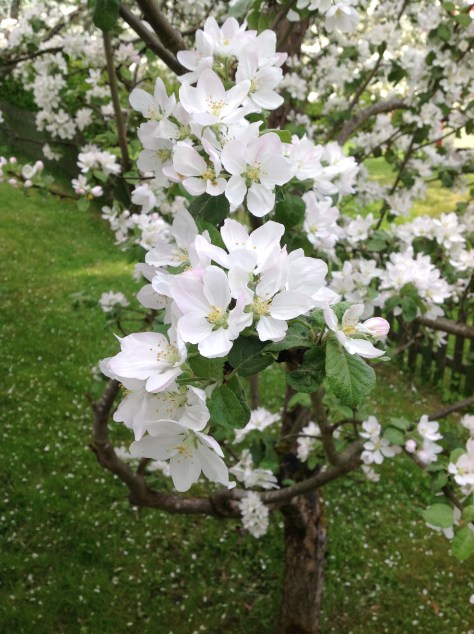
Apple Blossom

It’s not over yet, one more week to go before the Month of May has come to an end… It’s funny how this month is connected with an everlasting workload at work and a fantastic bloom everywhere I lay my eyes… Apple blossom, flowers, the scent of Lily of the Valley when I pass my neighbor’s garden…

In Sweden where I live, we have the wonderful Nordic Light to support us when we feel tired this time of the year. Somehow I don’t really get tired, but a workload of grading at school makes me exhausted to the limit of what I can take in my profession. I have however noticed as years pass by, that I always manage to hand in all the grades in time, send out the papers to the students and clean my desk at work before I leave for summer vacation.

Added this year is our moving to another building. The four teachers in my staff room are now packing up our things and that is a bit sad. We have had a nice time together.  Personally, I have enjoyed my current position and classroom, too. But honestly, I know that wherever I move with my teaching, I have always enjoyed it, once I’m settled in the new place. What I DO mind a bit is the disorganized chaos before everything is set…but I guess I’ll have to live with that for the time being. It’s just a matter of days…:)

One month from now, I’m already on summer vacation, thinking of the past school year, hopefully with both satisfaction and a bit of loss, just as always on a sunny summer’s day!

#klocka


Twohundred and Seventy-Third Asic- A World of Language Learning Starts in Your Computer

Londonbild 1_OLÅ

I’d like to share with you how learning can become interesting to young students if focus on learning derives from questions raised by the students rather than the teacher. I was teaching a mixed group of students in grade four and five in the Swedish compulsory school system. The students all had very few contacts with native speakers of English or with students from other countries. I wanted them to improve both their written an oral English and thought of different ways. It was in the middle of the annual summer vacation and as usual I spent time thinking of the coming school year. Isn’t that typical for a teacher? I know I’m not the only teacher who spends time planning for future teaching while their off of school.

Anyway, I thought of the idea of getting some kind of pen-pal for each and every one of my students. At this time I had just got my first personal computer through work and I wasn’t very familiar with how to use internet as a resource. I was therefore searching for different websites in order to find addresses to PEN-pals. It wasn’t until I came across the website http://www.epals.com with the very new word #epals, that I realized that PEN-pals were completely outdated! I was thinking like a dinosaur! Briefly, ePals is a website where teachers or students or for that matter teachers AND students can get in touch with each other in order to collaborate in different projects. It doesn’t have to be international projects, but in my case it was.

From the start I didn’t plan to collaborate at all with any American teachers. I was focused on the UK, since I was going to the UK in September in 2000. I spent a couple of hours reading different profiles in the ePals website and then I wrote my own profile. Already while I was browsing the site, I got a few mails in my inbox. There were two of them from American teachers and one of them was from a British teacher. They all seemed very nice, but since I was in a hurry to get my project going, I wrote to the British teacher, telling him about my plans to go to the UK and I also fired off my question about the two of us meeting each other to plan our future collaboration with our students. I wrote “Since I come to the UK in September, I hope we can meet and plan for our mutual project!” Then, since I was in a hurry and also because I know that teachers don’t like to spend time doing the wrong things, I wrote back to the two other teachers politely telling them that unfortunately I had already found a teacher in Britain whom I wanted to collaborate with and thus I didn’t need to write to them…

The “British” teacher replied to my email saying something like “It’s not that I don’t WANT to meet you, but how exactly did you think we could meet if you go to the UK and I live in New Jersey?”
Anyone who gets an email with that comment could have given up, but I’m not that kind of person. I wrote back. The “British” teacher wasn’t at all British and the REAL British teacher, whom I mistaken for being American, was of course already lost and gone, so what options did I have??? I started off brushing up my own English, by writing back and forth to this particular American teacher, who seemed to be a nice person already from the start. He was a teacher in a class in the same age span as my students, so after a few weeks of planning we started off writing emails between the two different schools.

At first, we instructed our own classes to write more general letters about themselves and share photos and details about the school system or what the school looked like. But gradually as the students got to know each other a little better, they started to ask their own questions and compared the learning situations in Sweden and New Jersey. My students, who were used to several breaks during school days, were shocked to notice that the students in the American school had fewer breaks and also lacked a nice lawn and a playing-ground at school. Outside the American school was instead a parking lot.

There were a lot of similar topics that gave students in both ends of our mutual collaboration a chance to challenge their language skills. In the American end students had a more cultural based viewpoint to our project, whereas in Sweden the focus was mainly on language and how to express oneself. One thing lead to another and the American teacher and I also visited each other’s schools and got the opportunity to see through teaching what it was like to teach in a completely different school setting than the one we were used to, respectively. I remember from MY teaching during one single day in the American school, that it was weird to be addressed Mrs Olenius. I also found it interesting to interact with the student in MY way, rather outspoken and joking, and notice how a few of the American TEACHERS frowned. It seemed to me as if they were taking their ROLE as teachers much more seriously than I do, which was interesting to note.

Later, my American friend visited me and my class in Sweden. He had brought with him a few interesting lessons to teach and one of them was in Physics, where he wanted to show the students how an American Hurricane builds up, by using two large bottles that he quickly moved in order to make it seem like a hurricane inside the bottles. An interesting thing with his experiment is the obvious difference between the ways we would do such an experiment and the way he did. He ended up getting eager students around him who wanted to do the experiment themselves, not just look at him doing it. In Sweden I’d say most teachers would give their students the opportunity to try out such an experiment by themselves. Another thing the American teacher probably noticed is that his usual reference to the famous Wizard of Oz didn’t work in Sweden. Why not?

A Swedish student in grade five generally wouldn’t know what kind of movie that is.
I’m happy to say that this American teacher and I have been friends for a long time now and thanks to him, I have learnt a lot about America that is more positive than I could ever imagine. Maybe it was meant to be that I mixed the American teacher with the British?

Vemvet

Tvåhundrasextionionde åseriet- Små citroner gula och andra frukter av läsning… Del 2


små citroner gula #asaoleDetta blogginlägg är fortsättningen på Tvåhundrasextioåttonde åseriet- Små citroner gula och andra frukter av läsning… Del 1.

http://wp.me/p4uFqc-CA

Vi läser boken Små citroner gula av Kajsa Ingemarsson, jag och mina elever. För de som vill finns möjlighet att jämföra boken med filmen med samma namn. För den som av något skäl inte kan läsa hela romanen, är filmen också en vän att hålla i handen. Man kan se filmen, läsa lite i boken och jämföra. Sedan kan man se filmen igen och fortsätta läsa ytterligare lite i boken, men dessutom kan man samtala med både kurskamraterna och med mig som lärare om det som man förstår både språkligt och kulturellt. Att träna upp sin läsförmåga och med den sin läsförståelse är något som kräver tid och tålamod. Ofta har man god hjälp av stöttning av olika slag. Som pedagog i grupper av vuxna andraspråkselever ser jag ofta hur olika läsbakgrund får betydelse för andra aspekter i språktillägnandet. Därför är det naturligt för mig att jobba mycket med förståelse av det vi läser.

Filmen och boken är i grunden ganska lika, men det finns också mycket som skiljer sig markant. DET jobbar vi också med. Jag vill att eleverna ska bli medvetna om att boken och filmen har olika styrkor och svagheter och tillsammans hittar vi också det som gör boken ”bra” och det som gör filmen ”bra”, samtidigt som vi häpet kan konstatera att det inte är samma detaljer som vi har fastnat för…

Nio lektioner lägger jag ner på boken tillsammans med eleverna. De har i förväg fått ordlistor, instuderingsfrågor och ett antal innehållsfrågor av divergent karaktär, allt i syfte att så många som möjligt ska ges möjlighet att förbereda sig någorlunda för de gemensamma samtal vi har i gruppen. De som inte har hunnit läsa eller kanske har försökt, men inte klarat att läsa det tänkta avsnittet, får i stället hjälp av den gemensamma genomgången, eftersom de därigenom får språklig stöttning direkt i texten. Mitt eget högt ställda mål är naturligtvis att alla i gruppen ska förstå så mycket som möjligt av boken. Som ett extra delmål hoppas jag också få någon elev som tidigare aldrig har läst en bok på svenska att lockas att läsa fler… 🙂

Som allra sista moment skriver eleverna en text som ska vara en recension. Inför skrivtillfället har vi dels pratat om texttypen recension och vad det är, dels gått igenom boken på alla upptänkliga sätt. Den absolut sista lektionen innan skrivtillfället är en muntlig uppgift i seminarieform, där en elev i taget berättar om en episod i boken som hen av något skäl fattade tycke för. Det kan vara något som är språkligt intressant, något eleven kunde identifiera sig med i hög grad eller något som var svårt att förstå rent språkligt eller något som kanske uppfattades som sorgligt eller humoristiskt. Oavsett skälet till elevens fokus på denna episod, så bidrar elevens lilla miniredovisning till klassens samlade ”bank” av upplevelser i relation till boken. Detta är språkstöttande på så sätt att språkligt svagare elever kan få inspiration av elever som förstått boken bättre eller som på andra sätt ligger steget före.

Syftet med alla de olika vinklingarna i arbetet är att eleverna ska lyckas med att visa mig en god förståelse av texten och samtidigt nå en tillräckligt god språklig nivå i sin textuppgift. Med den gedigna underbyggnad vi har i läsprojektet har det hittills varit ytterst få elever som inte klarar detta. I stället har jag sett text efter text, som unik och olik de andra inlämnade texterna, visat på många intressanta uppgifter eller företeelser i boken som eleven uppfattat som angelägna. När eleven skriver om sådant som ligger hen varmt om hjärtat och om något som känns äkta och intressant och viktigt, blir texten också viktig. Eleven vinnlägger sig om att uttrycka sig så exakt som möjligt eftersom det hen vill säga känns viktigt att få fram till läraren.

Tvåhundrasextioåttonde åseriet- Små citroner gula och andra frukter av läsning… Del 1

stora citroner

Medan vi läser boken Små citroner gula av Kajsa Ingemarsson, jag och mina elever, så stannar vi upp i läsningen för att samtala om sådant i boken som kan vara av intresse. Eftersom eleverna studerar ämnet svenska som andraspråk finns det många olika infallsvinklar när vi letar i bokens text tillsammans. För dig som kanske inte har läst boken någon gång, kan jag berätta att den handlar om en ung tjej som heter Agnes, som redan efter det inledande kapitlet i boken blivit av med både jobbet och pojkvännen och måste börja om från början med många saker som hon tagit för givet i sitt liv. Agnes och det liv hon lever som ung ensamstående arbetslös, är något som många av mina elever kan identifiera sig med. De är också jobbsökande eller har nyss varit det. Vidare har många av eleverna känt på detta med personliga förluster, som också är ett genomgående tema i boken. Det är därför jag har valt boken. Det är hög igenkänningsfaktor även för den som inte är från vårt land från början.

Att Anges i boken jobbar inom restaurangbranschen bidrar också det till att vi kan dra paralleller med elevernas hemländer och jämföra likheter och skillnader. En elev kommenterade till exempel vid ett tillfälle att i hemlandet var det förbjudet för kvinnor att servera på restauranger. Därför fanns endast manliga kypare, vilket var en intressant aha-upplevelse för mig, men ofta får eleverna också den typen av insikter. När vi djupdyker i språket kan det bli till exempel som idag, då vi bland annat stannade vid uttrycket ”klä upp sig”, eftersom Agnes och hennes kompis Lussan gör det när de ska ”gå ut”. Ett tag pratade vi först om grunduttrycket ”att klä sig”, som alla utan problem hade koll på, men lite svårare blev det att på svenska uttrycka vad det innebär att ”klä om sig”, ”klä ut sig” och slutligen stannade vi alltså vid ”klä upp sig”.

  1. klä sig= ta på sig kläder
  2. klä om sig= byta kläder
  3. klä ut sig= klä sig i något som gör att man förvandlas till något annat
  4. klä upp sig= klä sig fin, för att till exempel gå på fest

Vi stannade även vid den dubbla betydelsen i ”gå ut”, som dels betyder att lämna ett rum eller en byggnad, dels betyder att gå på restaurang eller krogen till exempel en fredagskväll. En skillnad jag ofta märker i språkbruket hos mina vuxna elever och andra vuxna jag känner och umgås med är att eleverna, som ju studerar svenska, är mycket noggranna med hur de uttrycker sig. De lär sig korrekta uttryck och använder dem, så som de har lärt sig och ibland blir deras språkbruk därför mer korrekt än det är för en person som talat svenska i hela sitt liv. En av eleverna skulle mycket väl kunna säga till en svensktalande vän; ”Kan vi gå tillsammans till en restaurang och äta middag på fredag kväll?” Vi ser att det är helt korrekt uttryckt och har inget att anmärka på i språket, men de flesta av oss skulle i samma situation ha sagt: ”Hänger du med ut på fredag?”

Att hjälpa eleverna att hitta de där språkliga genvägarna är en del av mitt jobb som jag tycker är roligt att hålla på med. En annan situation i Små citroner gula som vi uppehöll oss vid en stund var hur Agnes väljer bort att åka hiss med sin granne David Kummel, eftersom hon vill visa honom en viss distans i just den situationen. Vi pratar om ”att hålla någon på armlängds avstånd” och hur även detta med avstånd när man talar med någon, kan vara olika i olika kulturer. Därifrån glider vi vidare i samtalet till hur ovanligt det är att någon möter någon annans blick i tunnelbanan eller på bussen. Vanligare är att man tittar i golvet, ut genom fönstret eller upp på den reklam som ibland är fäst i taket på tunnelbanevagnen. I tidigare elevgrupper har många elever roats av det faktum att normalläget för en svensk buss eller tunnelbana är att det är knäpptyst därinne. Varför pratar inte svenskarna med varandra? undrar eleverna. Med tiden har jag börjat undra detsamma…

Att läsa en hel roman är inte en lätt uppgift för en elev som inte har svenska som modersmål, men det verkar vara så att många tror mig på orden när jag säger att man får väldigt många värdefulla språkliga insikter av att läsa, för de kämpar verkligen med sin läsning av den här boken. Medan de direkt språkliga bitarna faller på plats, blir eleverna gradvis alltmer nyfikna på innehållet och den kultur som blottläggs i boken. När jag läser just den här boken, brukar jag alltid skicka en tacksamhetens tanke till Kajsa Ingemarsson, som så finurligt har blandat in alla de ingredienser som en utlandsfödd som tränar svenska som andraspråk kan behöva… Hela det första kapitlet är ett utmärkt exempel på vad franska lånord har bidragit med i svenskan. Senare i boken finns en lång rad dialoger, där vardagsspråk med uttryck som är bra att kunna är väldigt frekventa. Genom hela boken följer man samtidigt ett flertal relationer av olika slag, både släktband och kärleksrelationer, men även både goda och dåliga exempel på relationer mellan arbetskamrater eller chefer och arbetstagare. Till detta kan läggas specialuttryck inom trädgårdsskötsel, inom restaurang- och livsmedel, samt inom sjukvård och  i samband med begravning.

För mig som pedagog är boken därför en fantastisk guldgruva med massor av uppslag och idéer för att arbeta vidare. Men…de som inte kan eller förmår att läsa en hel bok då? Läs mer i del 2! 🙂

http://wp.me/p4uFqc-CG


Twohundred and Sixty-Fifth Asic- Fifteen Thousand Views

wordle_OLÅ_4

Today this blog reached 15,000 views!

Thanks for reading! 

Two Hundred and Sixty-Forth Asic- School Smart with Smart Phones?

A lot of facts can nowadays be easily found on the internet. Rote learning as it was when I went to school, will soon be forgotten and a five-year-old can google just about anything with no help from an adult. I sometimes feel old when I notice how my kids know things I spent a lot of time learning. I do however think that the young generation of today are lucky to be able to browse all these facts and photos and movies and easily finding out about things that took a very long time when I was a child. They can even find friends abroad and getting to know a person on the other side of an ocean, speaking with that person in real time through computers and smart phones and I can’t help remembering my pen-pals in other countries and how I used to wait for days and weeks for their letters back to me… 🙂

All the kids nowadays need to do is Google… At work I notice that the gap between those who know how to handle IT and those who do not is increasing. There will be no equality unless students get their computers thru school and also good instruction from skilled teachers. There will always be students with parents who either cannot afford a new computer, or maybe don’t understand to what extent their kid will be left out in school if they cannot be online and use internet as the rest of the kids. Being curious is a good start!

Even if we may think some things were better THEN than they are NOW, we need to at least try to go with the flow…

Otherwise we, the teachers, would soon be relics, too… Stored and filed side by side with flanellografs,

chalkboards and sandpits with sticks…

griffeltavla.jpg (637×510)

In subjects where a smartphone is a rich resource I don’t fully understand why schools still say students cannot use their phones in class, but I assume it’s a matter of students’ age. The teacher has a great opportunity getting things done a lot more easy by accepting the use of smart phones when it IS smart to use them. If I would stick to the rules of many classrooms today and say ”Don’t use your smart phone in class!” my students would have a tougher time learning Swedish. I do however need to stress that one of the reasons for smart phones to be a good alternative in my classroom is the fact that I teach adults. My subject is Swedish as a Second Language.

I have experience from working with teenagers or younger and having to address several situations each day where students have passed rules for the usage of their smart phones. Not all students respect rules and when students end up in recordings or photos that are posted on the internet that is a problem that takes a lot of important time off from the learning process in class. One way of dealing with problems such as that, is to remove the actual smart phone from the classroom situation. In many Swedish schools teachers collect the students’ phones before each lesson, in order for students not to use them in class. Thus the students are more focused on what their teachers say and what the lesson is all about, which is of course very important. I do however think that it is sad that such an extraordinary tool as the smart phone cannot be effectively used for learning purposes. If it’s a matter of disciplin, then the actual disciplin problem needs to be addressed. From here and on, this blog post is focusing on some of the benefits of using smart phones in learning situations.

Let me share a few examples from my own classroom, which is a language learning classroom with Swedish as a Second Language as the one and only subject. When we don’t find the solutions to meanings of words, the smart phones serve as dictionaries and saves a lot of time, compared to finding out by a visit at the local library, but that is not the only way to save time with a smart phone in a classroom! The students and I talk a lot about things we read, listen to or watch. I always try to help them by writing additional examples on my white board. This is however not a classroom with a SMART BOARD, but just an ordinary poorly equipped in-the-basement-classroom. When the white board is completely filled with comments, words and phrases connected to the topic we discuss,  I ask the students to simply use their smart phones and take a photo of my notes. That’s quick and easy and also a SMART way to use PHONES, although in the future,  I hope to be among the lucky ones who have smart boards in their classrooms.

Another thing with language learning is to use the phone for pronunciation. Many students in my classroom merely meet one person who speaks Swedish and I am that person. Although I try to give them several suggestions to where they can listen to Swedish, or perhaps meet Swedish people and talk to them, it is very difficult for some of them. Their smart phones is thus an excellent way to help them out with at least pronunciation of difficult words or phrases. More than anything else, the quality of the sounds of the nine Swedish vowels, when put in different positions of words or phrases are easy to repeat when students get back home, if they have recorded different examples in class. When students record my pronunciation and go back home and listen and repeat, their own pronunciation improves rapidly.

Ines Uusmann, Minister for Infrastructure, seemed to believe that the internet would be forgotten after a few years, although it is said that the reason why everyone remembers, is that the headline for the article was a fake quote. This is in fact (in Swedish, though…) what she said:

”Jag vågar inte ha någon alldeles bestämd uppfattning men jag tror inte att folk i längden kommer att vilja ägna så mycket tid, som det faktiskt tar, åt att surfa på nätet. […] Att sitta och surfa på nätet tar en himla massa tid. Vad är det bra för? […] Det kanske är så att det är något som vuxit upp nu. Alla pratar om internet men kanske är det övergående och sedan blir inriktningen mer specificerad”

Ines Uusmann citerad i Svenska Dagbladet, 12 maj 1996.

Källa: Rydén, Daniel, ”Dimmor på nätet”, Sydsvenskan, 4 mars 2007.